






(NAIROBI, KENYA) – Kenya’s fish industry is turning increasingly to processing and value addition as producers seek to bridge the country’s persistent fish supply gap while opening access to higher value domestic and international markets.
The push comes as fish production reached a record 189,150.6 tonnes in 2025, an increase of 12.3% from 168,424 tonnes a year earlier, according to the Kenya National Bureau of Statistics (KNBS).
The value of fish landed rose even faster, by 39.5%, to KES 54.9 billion ($424 million / GBP 334 million). The growth, however, is yet to close the gap between local supply and consumption.
The Kenya Fisheries Service (KeFS) says Kenya’s fish requirement would be about 510,000 tonnes a year if the country were to reach the African average consumption of 10 kilogrammes per person, based on a population of more than 51 million.
Production in 2024 stood at about 161,000 tonnes in the service’s assessment, leaving a substantial shortfall.
Government officials have more recently estimated the annual deficit at about 450,000 tonnes, underlining the size of the market that could be served by increased production, better handling and processing.
The gap has historically been filled partly through imports, while Kenya has also struggled to increase the amount of fish moving through formal processing and value added channels.
Industry players say this is where the emergence of more sophisticated processing operations could change the structure of the industry.
Kenya Fisheries Service Director General Daisy Muriuki has said the government is stepping up efforts to ensure fish consumed in the country is safe and meets the required quality standards.
She noted that the state was strengthening measures across the fisheries value chain, from production and handling to processing and consumption, to protect consumers and promote quality fish products.
“Fish is not only food; it is an opportunity to improve the health of our people, create jobs and put money in the hands of our farmers. We want to see more Kenyans embrace fish consumption and take up fish farming as a viable economic activity,” Muriuki said.
Instead of selling fish largely as fresh or whole products, processors can produce fillets, frozen products, ready to cook portions and other products with longer shelf lives and access to different categories of buyers.
Government data shows that aquaculture is already becoming an important source of supply.
Cage farming increased by 10.1% in 2025 to 28,100 tonnes, while pond fish production fell by 20.7% to 6,100 tonnes. The growth of cage farming has helped drive the broader expansion of aquaculture in recent years.
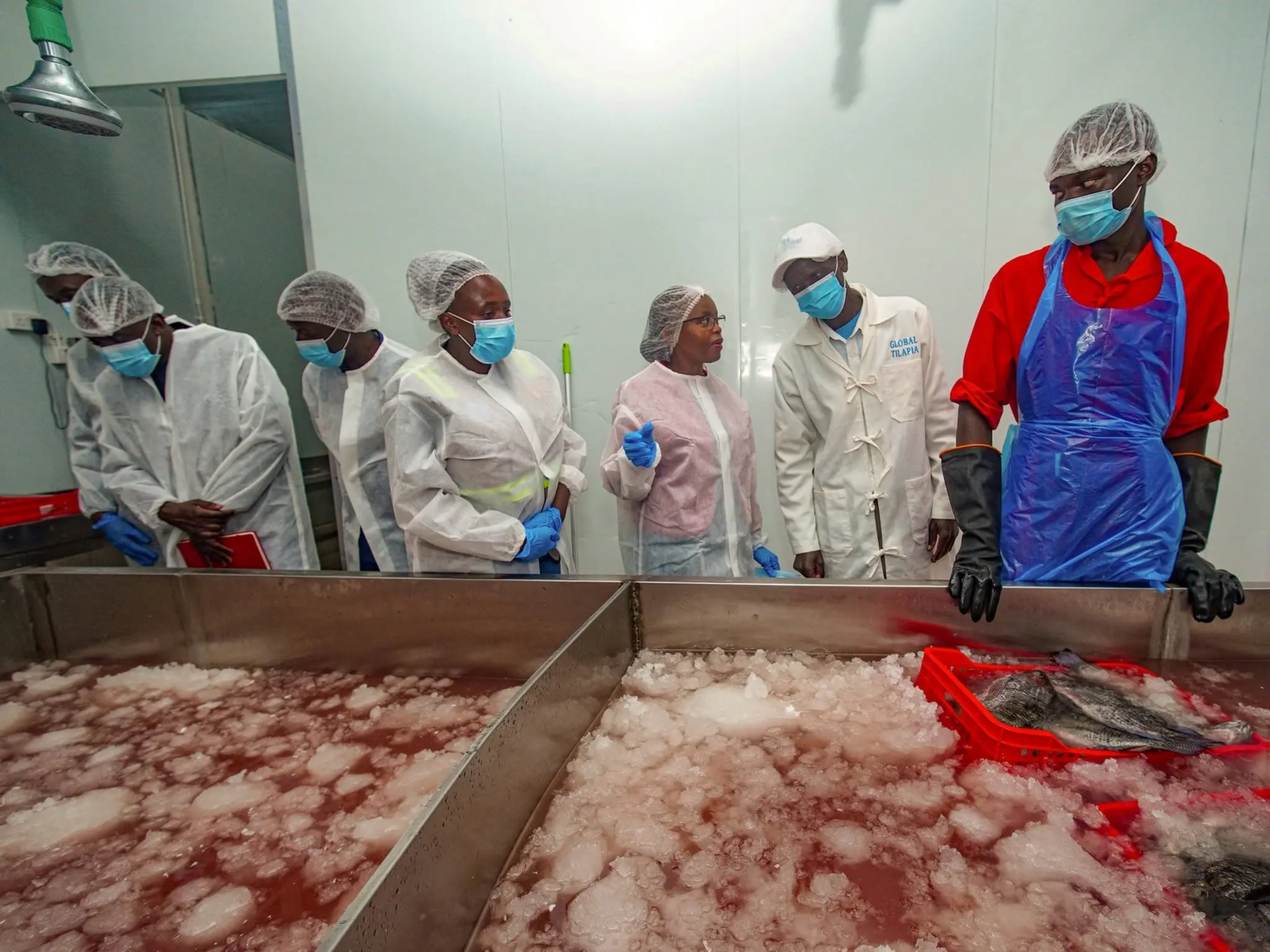
Global Tilapia, a Kenyan aquaculture and fish processing company, is seeking to position itself in this market after securing FSSC 22000 food safety certification.
The company says it is the first fish processing company in Kenya to obtain the internationally recognised certification.
“Achieving FSSC 22000 certification is an important step in our growth journey. It demonstrates that we are investing in the systems, processes and people needed to consistently deliver safe and quality fish products to our customers,” said Global Tilapia founder and managing director Joseph Mureithi.
“We believe this will strengthen customer confidence and create new opportunities for the business.”
The certification is significant because FSSC 22000 focuses on food safety management systems, regulatory compliance and controls across the food supply chain.
For processors seeking to supply large retailers, food service companies and institutional buyers, internationally recognised food safety systems can form part of the requirements for becoming an approved supplier.
But the wider opportunity extends beyond individual processors.
The Kenya Fish Marketing Authority has previously identified limited supply, low levels of value addition, inadequate infrastructure for handling and marketing fish and low quantities traded locally and internationally among the major constraints holding back development of the fish market.
Government programmes are consequently placing greater emphasis on processing, storage and market access alongside production.
The national fisheries strategy identifies value addition and improved market development as important areas for strengthening the sector.
KNBS data shows Kenya exported 9,343.3 tonnes of fish and fish preparations in 2025, up from 8,709.3 tonnes in 2024, indicating room for processors to develop products that can meet international market requirements.
The government’s 2024/25 performance report shows that exports of fish and fish products earned KES 5.9 billion ($45.6 million / GBP 35.9 million), exceeding the KES 4.8 billion ($37.1 million / GBP 29.2 million) target for the year.