









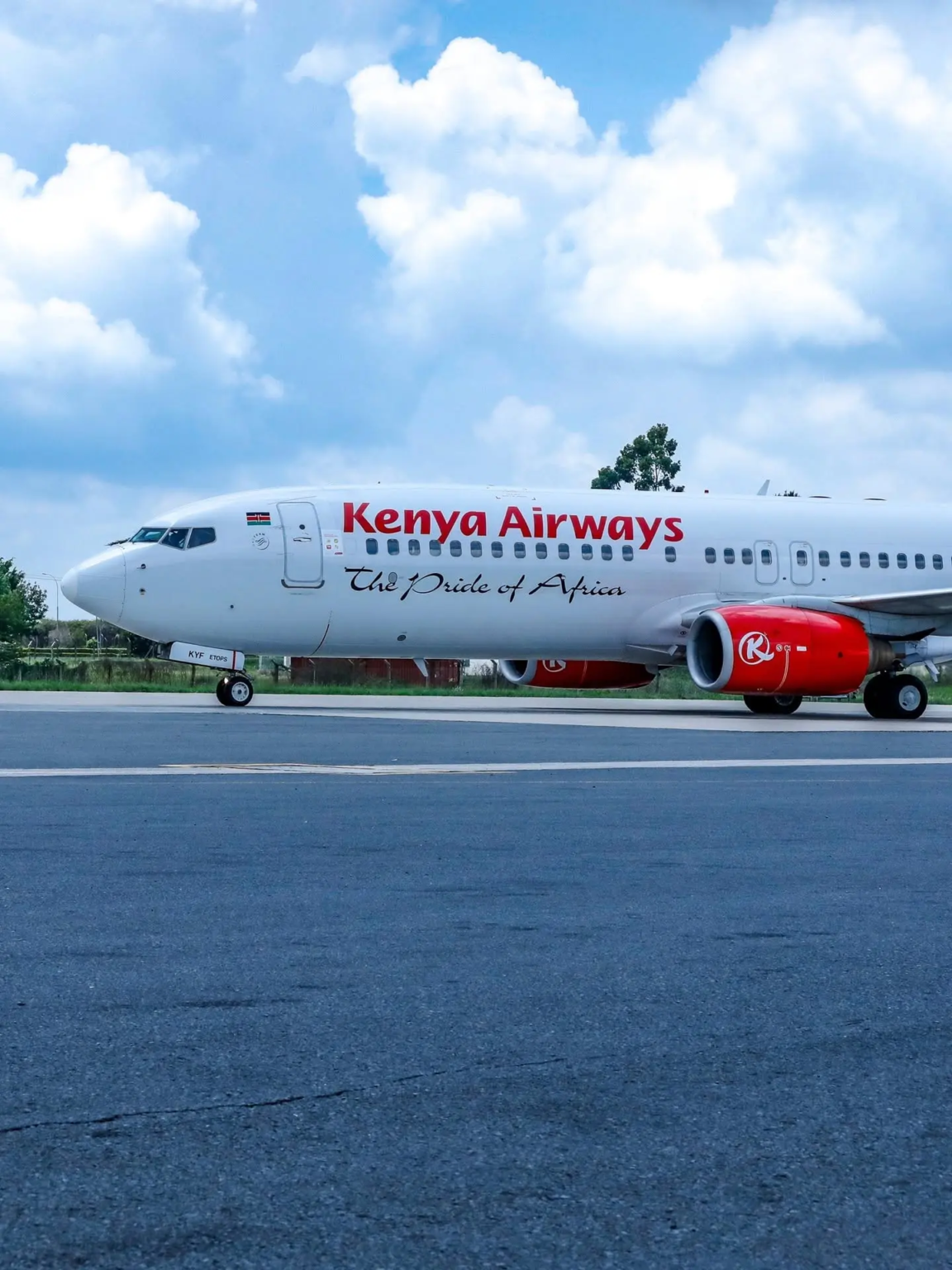
(NAIROBI, KENYA) – Kenya Airways has restructured its top management, changing reporting lines across several business segments as the national carrier seeks to steady operations amid mounting financial and operational pressure.
The changes, which took effect on 7th September 2026, come days after acting chief executive George Kamal resigned for personal reasons. At least four units previously housed under the Strategy and Innovation division have been moved to the Commercial division led by Julius Thairu.
The affected units are pricing and revenue management, network planning and alliances, media and public relations, and government affairs. Hellen Mathuka had headed the Strategy and Innovation division.
In an internal memo seen by Business Daily, the airline described the changes as an organisational realignment aimed at making Kenya Airways more competitive, commercially agile and operationally sound.
Judith Maye, the airline’s acting chief people officer, said the management changes were intended to strengthen alignment, sharpen accountability and speed up delivery against strategic priorities. She said the consolidation would create a more integrated approach to revenue generation, market positioning and stakeholder engagement.
The shift places functions that directly shape how the airline prices seats, deploys its network, manages its brand and engages governments and regulators under a single commercial umbrella. It gives Mr Thairu, the commercial manager who reports to the chief executive, greater control over decisions tied to sales and marketability.
Kenya Airways said the arrangement would allow pricing, network, brand and government relations to work as a single commercial system, enabling faster decisions and a more coordinated market strategy.
The head of fleet development has also been moved from Ms Mathuka’s division to the technical division. The airline said the change would ensure fleet planning is closely tied to engineering, maintenance and operational readiness, supporting smoother management of aircraft across their working lives.
The managing director for cargo has been moved from the strategy division to lead a separate unit reporting directly to the chief executive, as the carrier seeks to draw more revenue from cargo growth.
The restructuring comes at a difficult moment for Kenya Airways, which is working to repair its finances by restoring aircraft capacity and raising fresh capital. Insiders who spoke to Business Daily said Mr Kamal and his predecessor, Allan Kilavuka, had backed the now disbanded structure. The arrangement is said to have caused friction, with the commercial chief holding limited control over departments needed to carry out his role.
Kenya Airways’ net loss for the six months to June 2026 rose 31.9 % to KES16 billion ($123.8 million / GBP97.6 million), after costs climbed to a record level, driven by the Middle East conflict. Costs during the period rose 12 % to a record KES97.7 billion ($756 million / GBP596 million), up from KES86.7 billion a year earlier, widening losses from the KES12.2 billion ($94.4 million / GBP74.4 million) reported in the first half of 2025.
The increase was largely due to fuel costs, which rose to KES29 billion ($224.4 million / GBP176.9 million), about 32 % of operating costs, up 66 % from KES17.47 billion ($135.2 million / GBP106.6 million), which was 22 % of operating costs. Revenue rose to KES81.2 billion ($628.4 million / GBP495.4 million) from KES74.5 billion ($576.5 million / GBP454.5 million), helped by higher passenger numbers and demand on key routes, with several international travellers rerouted through African routes during the Middle East shutdown.