







(KYIV, UKRAINE) – The state should widen its programme for insuring against military risks and offer extra relief to help farms cope with financial losses caused by the near halt of seaborne exports, according to the deputy head of the All Ukrainian Agrarian Council, Denys Marchuk.
Speaking to media, Marchuk said a sharp rise in Russian strikes on port infrastructure and civilian vessels had brought maritime exports almost to a standstill. As a result, domestic purchase prices for grain are falling. Even when farmers harvest a decent crop, they cannot be sure they will raise enough money to finish the harvest and to pay for the autumn sowing campaign.
“We are not saying the situation is critical right now. But in two or three months it could really become threatening. If export disruptions continue, producers will not have the money to repay the loans they took out during the spring sowing campaign, and there will be no money for sowing this autumn,” Marchuk explained.
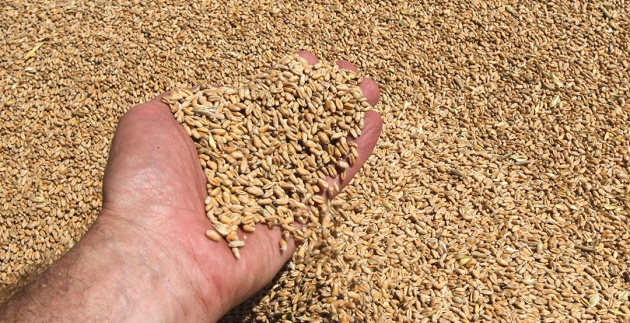
The council expects this year’s grain and oilseed harvest in Ukraine to be no smaller than last year’s, at roughly 80 million tonnes. Around 45 million tonnes will need to be exported. At the same time, carryover stocks from the previous marketing season stand at more than 10 million tonnes.
Although agricultural exports never stopped moving through alternative routes even after the maritime corridor resumed operations in 2022 and 2023, the intensity of those overland shipments has fallen sharply, with the exception of Danube ports. Overland transport is more expensive and cannot compete with sea freight on price.
“The capacity is still there, but it is not enough to meet the monthly export potential. One way or another, we are seeing a partial shift of flows to the Danube, and freight costs on that route for grains are rising. I think rail shipments will also pick up. More road transport is possible too, but that will mainly apply to grain from the western regions. For road haulage from central Ukraine, the economics are very poor, it is simply not profitable,” Marchuk said.
He argued that measures must be taken now to ease the financial pressure on farms. Possible steps include tax and credit holidays, cheap refinancing, and a review of the criteria for granting critical enterprise status to agricultural companies. Without exports, many farms will be unable to meet the general requirements linked to cash turnover.
At the same time, storage capacity at the ports needs to be restored, Marchuk noted, as that infrastructure has been heavily damaged by recent enemy strikes.
“In this context, the new government must get involved in expanding the programme that covers insurance risks arising from strikes by the aggressor state. At present, various types of equipment are covered by such war risk insurance, but agricultural products are not. I believe broadening this list is one of the most necessary steps,” he concluded.
Reuters has reported that massive Russian attacks on the port infrastructure of Greater Odesa and on civilian ships caused a temporary halt this week to vessel arrivals at deep water ports in territory controlled by Ukraine. This raises the threat of a blockade of seaborne exports and a further drop in domestic grain prices.
More than 20 Russian strikes on port infrastructure and vessels in the Black Sea were recorded in the first half of July. Twenty one people were killed. Shipowners and logistics companies, including Maersk, have stopped sending ships to the ports because of the critical war risks.