






(NAIROBI, KENYA) – Asset financing company Mogo Kenya has doubled its local bank borrowings to KES 1.6 billion ($13,076), deepening its reliance on domestic lenders to fund a rapidly growing consumer loan portfolio.
The firm raised its credit facilities at I&M Bank and Ecobank Kenya from a previous KES 800 million ($6,538). Total local funding has now crossed KES 9 billion ($73.5 million), including inflows from private credit investors.
The expanded funding gives Mogo more Kenyan-shilling resources to finance customers buying motorcycles, cars, tuk-tuks and smartphones. It also reduces exposure to foreign exchange movements on its borrowing.
“Mogo Kenya has doubled its local bank funding to KES 1.6 billion ($13,076), up from KES 800 million ($6,538), following expanded credit facilities from Ecobank Kenya and I&M Bank,” the firm said.
“The company’s total local funding now stands at more than KES 9 billion ($73.5 million), the majority raised through one to three year private placement programmes arranged by Dry Associates Investment Bank, which have drawn a growing number of Kenyan institutional investors into Mogo Kenya’s investor base.”
The funding expansion comes as Mogo disbursed an additional KES 9.2 billion ($75.1 million) in the six months to June 2026. This took its loan book to KES 15.9 billion ($129.8 million).
Motorcycle and tuk-tuk financing accounted for KES 5.7 billion ($46.5 million) of the disbursements. Car financing contributed about KES 900 million ($7.3 million).
Smartphone financing, reintroduced in June 2025, generated KES 2.5 billion ($20.4 million) in disbursements during the six months to June 2026. This compares with KES 1.4 million ($11,431) in the whole of 2024.
The rapid growth of the smartphone portfolio has introduced a weaker performing category into the lending business. This raises questions about the quality of Mogo’s growing loan book.
Smartphone financing was cited for higher defaults, with the product having a non-performing loan ratio of 31.5%. This compares with a non-performing loan ratio of 5.8% for loans issued for boda boda purchases, according to a GCR Ratings credit report on Mogo.
The company said greater local currency funding would help finance loans issued in shillings. This limits currency mismatches that can arise when foreign currency borrowing supports domestic lending over time.
The funding push comes amid rapid growth in Kenya’s digital credit market. Licensed providers’ outstanding loans reached KES 153.8 billion ($1.25 billion) in June 2026, according to Central Bank of Kenya data.
The digital credit portfolio doubled from KES 76.8 billion ($627.4 million) in June 2025, while loan accounts rose to 8.9 million from 5.5 million.
The number of licensed digital credit providers reached 281 by September 2026, underlining intensifying competition for borrowers.
The Central Bank of Kenya began licensing digital lenders after complaints about high borrowing costs, aggressive debt collection and misuse of customers’ personal information by unregulated operators.
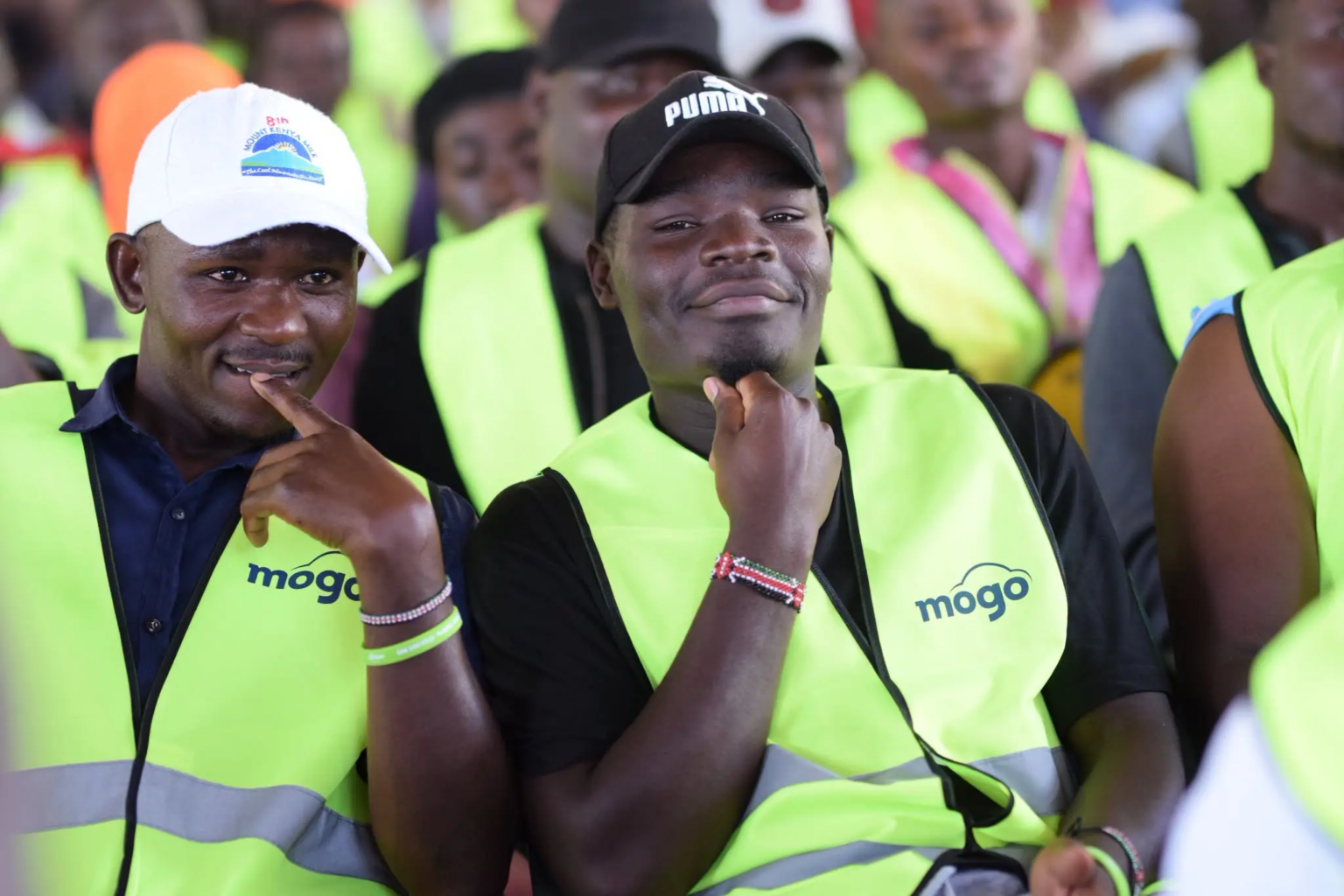
Mogo operates in this wider market through asset backed financing. Borrowers acquire equipment or devices and repay the loans in instalments while continuing to use those assets.
The model is particularly significant in motorcycle transport, where riders generate daily income and meet loan repayments as they work toward ownership of the assets.
Industry estimates put the boda boda sector’s annual economic contribution at KES 660 billion ($5.39 billion). It supports more than 2.5 million livelihoods across the country, including riders and their dependents.