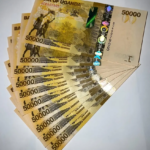








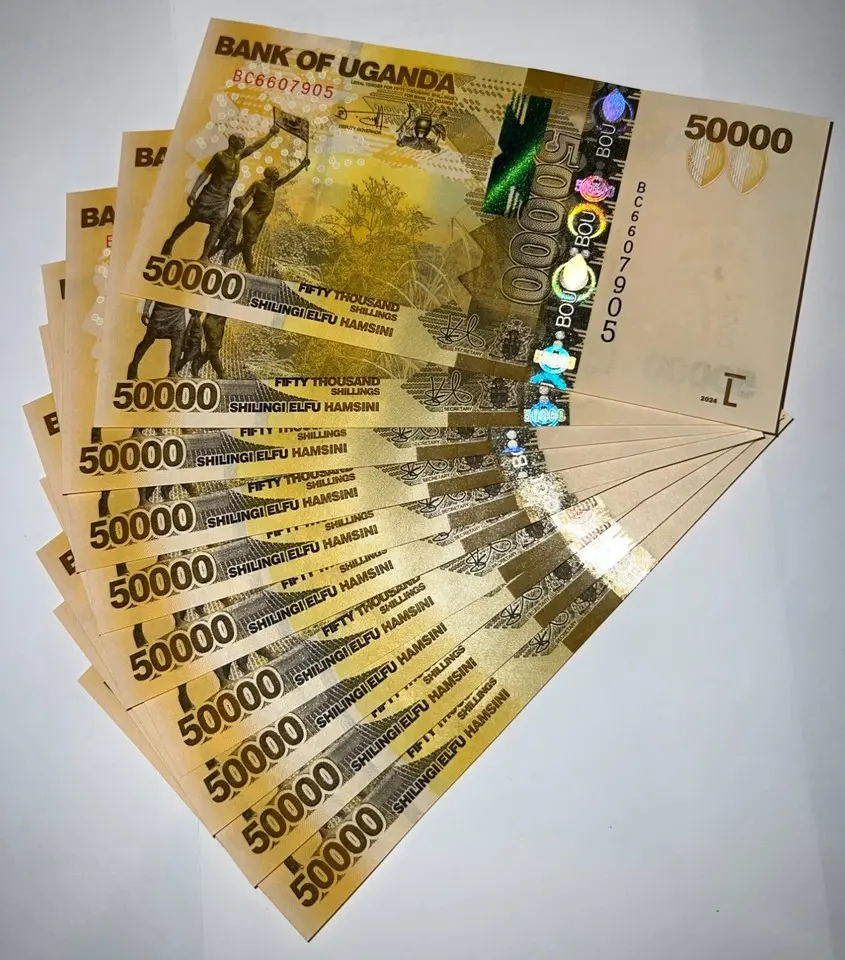
(KAMPALA, UGANDA) – Uganda’s depreciating shilling has added roughly Shs6.7 trillion ($1.8 billion) to the local currency value of the country’s external debt in just over three months, a new analysis shows.
The jump piles pressure on public finances as the country battles a widening external deficit, costly oil imports and rising demand for foreign exchange.
The Uganda Bankers Association (UBA) October Economic Bulletin estimates that the shilling’s fall from Shs3,665 per dollar at the end of June to Shs4,078 on 9th October raised the shilling value of external debt by about Shs6.7 trillion, equal to 2.7% of gross domestic product.
The increase stems from currency revaluation rather than fresh borrowing, showing how exchange rate movements can inflate the reported debt burden even when the amount owed in foreign currency is unchanged.
The depreciation means government needs more shillings to repay the same amount of foreign currency debt, even without taking on additional dollars.
The UBA analysis puts the extra annual cost of servicing existing external debt at about Shs590 billion ($156 million) at the weaker exchange rate, based on the previous financial year’s payment obligations.
The latest market movements suggest the burden could be heavier still. By close of business on 27th October, the shilling had weakened to around Shs4,490 per dollar.
The Ministry of Finance’s June 2026 Annual Debt Statistical Bulletin shows public debt stood at $37.1 billion (Shs136.1 trillion) at the end of June 2026, equal to 54.3% of GDP. External debt accounted for $16.3 billion of the total.
Bank of Uganda counter rates last Friday showed the dollar briefly touching Shs4,500 on the selling side and Shs4,490 on the buying side, a record nominal low for the shilling in more than three decades.
By 27th October, indicative rates showed the dollar buying at Shs4,490 and selling at Shs4,500. The pound sterling traded at Shs5,983 buying and Shs5,999 selling, while the euro stood at Shs5,011 buying and Shs5,023 selling.
The Kenyan shilling traded at Shs34.5 buying and Shs34.6 selling, illustrating the breadth of the currency pressure.
The slide against other currencies matters because Uganda’s external obligations are not held only in dollars. The June 2026 Debt Statistical Bulletin shows 46.3% of external debt is denominated in dollars, 35% in euros, 8.1% in Chinese yuan and 5.4% in Japanese yen, with other currencies making up the remainder.
Forex market expert Stephen Kaboyo, a partner at Alpha Capital, says the shilling’s weakness has become broad based.
“In the last few weeks, this shilling has softened against all major world currencies, with a loss value of 24% against the Euro and about 29% against the GBP,” he said.
He cited structural imbalances including rising oil prices, higher import costs and stronger dollar demand amid high bond yields.
The higher cost of foreign currency reaches beyond debt repayment. It raises the shilling outlay for businesses importing machinery, industrial inputs, fuel and other goods, potentially lifting their financing needs and working capital costs.
Uganda’s external debt repayments are already a heavy charge on public resources. The UBA Bulletin puts external debt service in the 2025/26 financial year at $1.42 billion, made up of about $1 billion in principal repayments and $420 million in interest and fees.
At the end June exchange rate, those payments came to about Shs5.2 trillion ($1.38 billion). At Shs4,078 per dollar, the same obligations would cost about Shs5.78 trillion ($1.53 billion), adding about Shs590 billion ($156 million) to the annual bill.
The extra cost could leave the Treasury with less room to fund other spending unless it is covered by stronger revenue collection, spending cuts or more borrowing.
The Debt Statistical Bulletin puts total public debt at Shs136.1 trillion ($36.1 billion), up from Shs116.2 trillion ($30.8 billion) a year earlier.
Domestic debt grew to Shs76.3 trillion ($20.2 billion), while external debt reached $16.3 billion. The UBA Economic Bulletin estimates interest payments at 4.9% of GDP in the 2025/26 financial year, showing the growing claim debt service makes on national income.
The depreciation is unfolding alongside a gap between demand for foreign exchange and the supply generated by exports and other inflows.
Dr Susan Kavuma, an economist and lecturer at the School of Economics at Makerere University, links the weakness to both demand and supply pressures.
These include the cost of financing imports, higher international oil prices, debt servicing, speculative dollar demand and weak growth in export earnings.
Bank of Uganda data shows merchandise imports rose to $2.31 billion in August, up 66.5% year on year.
The central bank’s October exchange rate analysis shows net foreign exchange demand from the energy sector rose to $620 million in the three months to September, against $360 million in the same period a year earlier.
The higher demand reflects the cost of restocking fuel amid elevated international oil prices and geopolitical tensions in the Middle East.
The UBA Economic Bulletin reports the current account deficit reached $3.6 billion, equal to 5.2% of GDP, in the 2025/26 financial year.
These pressures raise the need for foreign currency just as the shilling weakens, adding to the burden on importers and on government’s external debt payments.
Kenneth Egesa, the Bank of Uganda’s Director of Communications and Public Relations, says the exchange rate reflects the interaction between demand for and supply of foreign exchange, and that the central bank does not target a particular level.
“Demand arises from payments for imports, including capital goods, raw materials and consumer goods, as well as other external obligations. Supply comes from export earnings, service receipts, capital inflows and external borrowing. Where demand persistently exceeds supply, the exchange rate adjusts to reflect those market conditions,” Egesa says.
He says the central bank’s limited intervention is “instead aimed at moderating excessive volatility and supporting orderly functioning of the foreign exchange market, rather than resisting the necessary adjustment of the exchange rate.”