








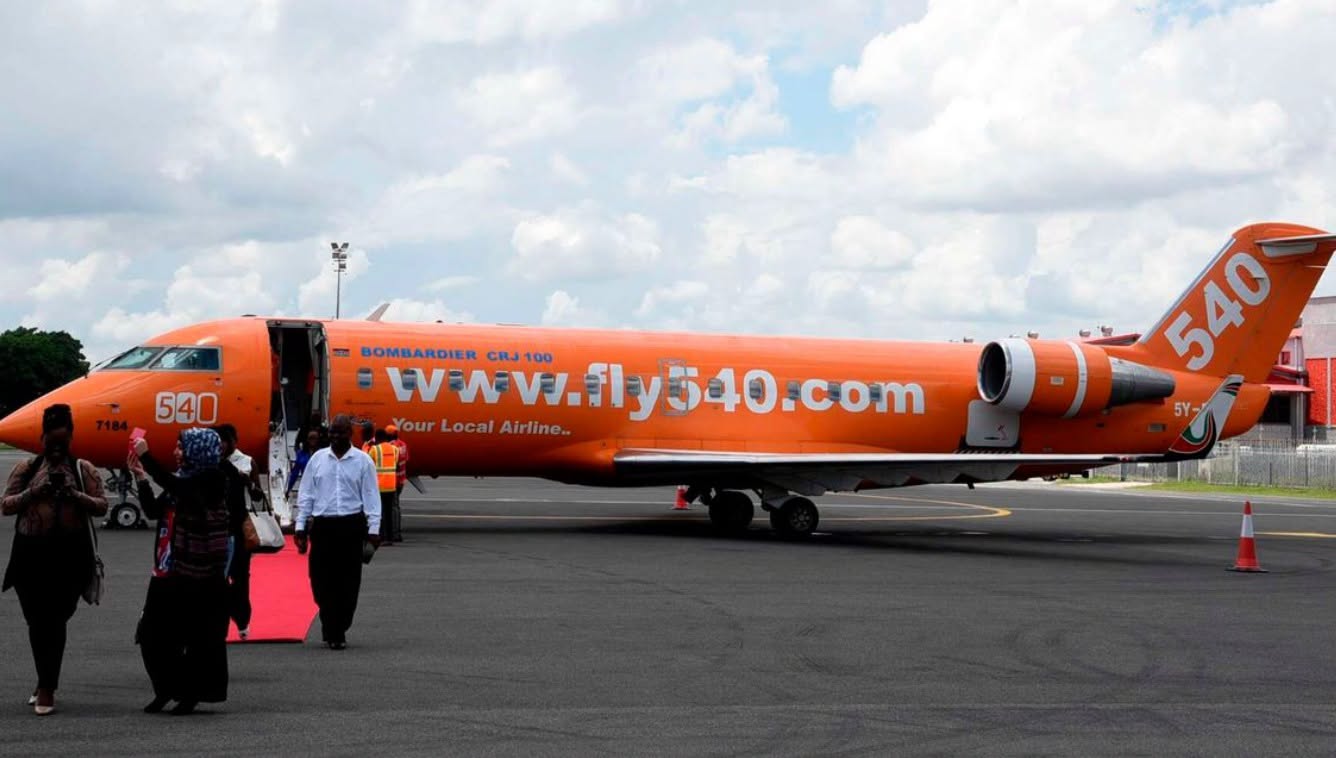
(NAIROBI, KENYA) – Nixon Azariah Ochieng’ Ooko, co-founder of Kenya’s first budget airline Fly540, died on 15 July 2026 in South Africa at the age of 76 following an illness. His death brings renewed focus on the rise and fall of a carrier that pioneered low cost flying in East Africa before collapsing under debt, shareholder conflict and court battles.
Fly540 began operations in 2006 with a launch fare of 5,540 Kenyan shillings, equivalent to approximately 35 US dollars or 28 British pounds, on the Nairobi to Mombosa route. The airline set out to prove that air travel in Kenya need not remain the preserve of executives and wealthy tourists. Ooko, who drew on aviation experience gained at British Airways and Regional Air, founded the carrier together with Don Smith.
Kenya’s economy was expanding at the time. Domestic tourism was growing and regional trade within East Africa was gathering pace. Demand for faster movement between Nairobi, Mombasa, Kisumu, Eldoret and Malindi was rising. Fly540 later extended operations into Uganda and Tanzania before pushing further into Angola and Ghana through affiliated companies. The low cost model drew international investors and was later adopted by competitors.
Beneath the surface, the economics of running a budget airline in Africa proved more difficult than the founders had foreseen. Passenger volumes in East Africa were far below those available to European low cost carriers. Established airlines responded to Fly540’s entry by trimming fares on key domestic routes. New entrants also moved into the market. Regional expansion brought additional regulatory requirements and operational risks. Although growth looked solid on paper, it demanded ever larger financial commitments.
British investment firm Lonrho acquired a significant stake as part of a wider strategy to build transport and infrastructure businesses across Africa. That relationship later paved the way for a transaction with Fastjet, which was backed by prominent investors and promoted as Africa’s answer to successful European budget airlines. Fastjet announced plans for a pan African low cost network and Fly540’s regional footprint made it an attractive platform. The deal later soured when disagreements arose over acquisition terms, management control and financial obligations. As cash flows tightened, disputes that could have been settled commercially moved into the courts.
An early public sign of strain was an employment dispute involving Jacqueline Arkle. She joined Fly540 in 2008 as East Africa marketing manager and was later named country manager for Uganda. Her promotion came at a time of pressure on regional operations. Passenger numbers were under strain and concerns over operational reliability were growing. Following her dismissal in 2011, Arkle challenged the decision. She argued the carrier had held her responsible for declining sales despite problems she described as beyond her control, including poor aircraft maintenance, customer service failures and operational shortcomings. She also stated she had never been given clear performance targets before her contract was ended. The Employment and Labour Relations Court awarded her compensation worth millions of shillings, including damages linked to an advertisement the airline placed after her dismissal. Fly540 obtained temporary relief at the Court of Appeal while contesting the award, but judges required it to deposit half the amount in a joint interest earning account.
Tax authorities also pursued the airline. The Kenya Revenue Authority pressed Fly540 over alleged unpaid taxes exceeding 100 million shillings, roughly 645,000 US dollars or 505,000 British pounds, after a protracted dispute over tax assessments. Such disputes carry consequences beyond financial liability, complicating licensing, straining relations with regulators and eroding confidence among investors and financiers.
Creditors sought judicial intervention to recover dues. Some petitions asked the courts to wind up the airline, arguing it could no longer meet its financial obligations. Fly540 successfully resisted some of those attempts, but the repeated appearance of winding up proceedings exposed the depth of pressure on the business.
The airline also became entangled in disputes over leased aircraft. Canadian lessor Avmax Aircraft Leasing Inc and Wells Fargo Trust Company National Association went to court seeking approximately 775 million shillings, equivalent to 5 million US dollars or 3.9 million British pounds, from Fly540 and its affiliate East African Safari Air Express. The claim concerned alleged breaches of settlement and conditional sale agreements covering two aircraft. The parties had agreed the planes would remain parked while representatives conducted joint inspections before any transfer. Disagreements then emerged over access to maintenance records, engine logs, landing gear documentation, inspection histories and other technical records deemed essential in aviation transactions. The High Court found that company officials had not fully complied with earlier court orders permitting inspection. Rather than commit the officials to civil jail immediately, the court imposed a daily financial penalty to continue accumulating until compliance was achieved.
By the time Fly540 was closing down, the optimism of its early years had long faded. New entrants had taken over the market. Jambojet launched with the backing of Kenya Airways, bringing the financial muscle and operational support of the national carrier. Safarilink strengthened its grip on the safari circuit. Other airlines such as Skyward Express expanded their domestic networks and later moved into regional routes. Demand for affordable domestic air travel kept rising as more Kenyans chose to fly for business, leisure and family reasons. County governments promoted domestic tourism. Businesses expanded beyond Nairobi. Improved airport infrastructure made regional connections more attractive. The idea behind Fly540 had not failed. The business behind it had.
The final chapter arrived with a regulatory order. Fly540 had already scaled back operations after years of shareholder rows, mounting debt, legal fights and a shrinking market share. On 30 September 2022 its Air Operator Certificate expired, halting scheduled flight operations. Without a valid permit from the Kenya Civil Aviation Authority, the airline could no longer legally offer commercial air transport services.
Weeks later the Competition Authority of Kenya intervened after receiving more than 50 consumer complaints. Passengers accused the airline of advertising flights it could not operate, cancelling flights at short notice and delaying refunds for cancelled bookings. Investigators found the airline had continued taking bookings after its operating certificate had lapsed. The authority issued a cease and desist order directing Fly540 to immediately stop advertising flights, selling tickets or presenting itself as able to provide air transport services until investigations were complete. It also ordered the airline to refund passengers whose flights had been cancelled or whose tickets had been sold after 30 September. The shutdown drew a line under one of Kenya’s most ambitious aviation ventures. Legal battles over aircraft leases, creditor claims and other commercial disputes continued after the last scheduled flight, but Fly540’s place in the market had already been claimed by rivals.