





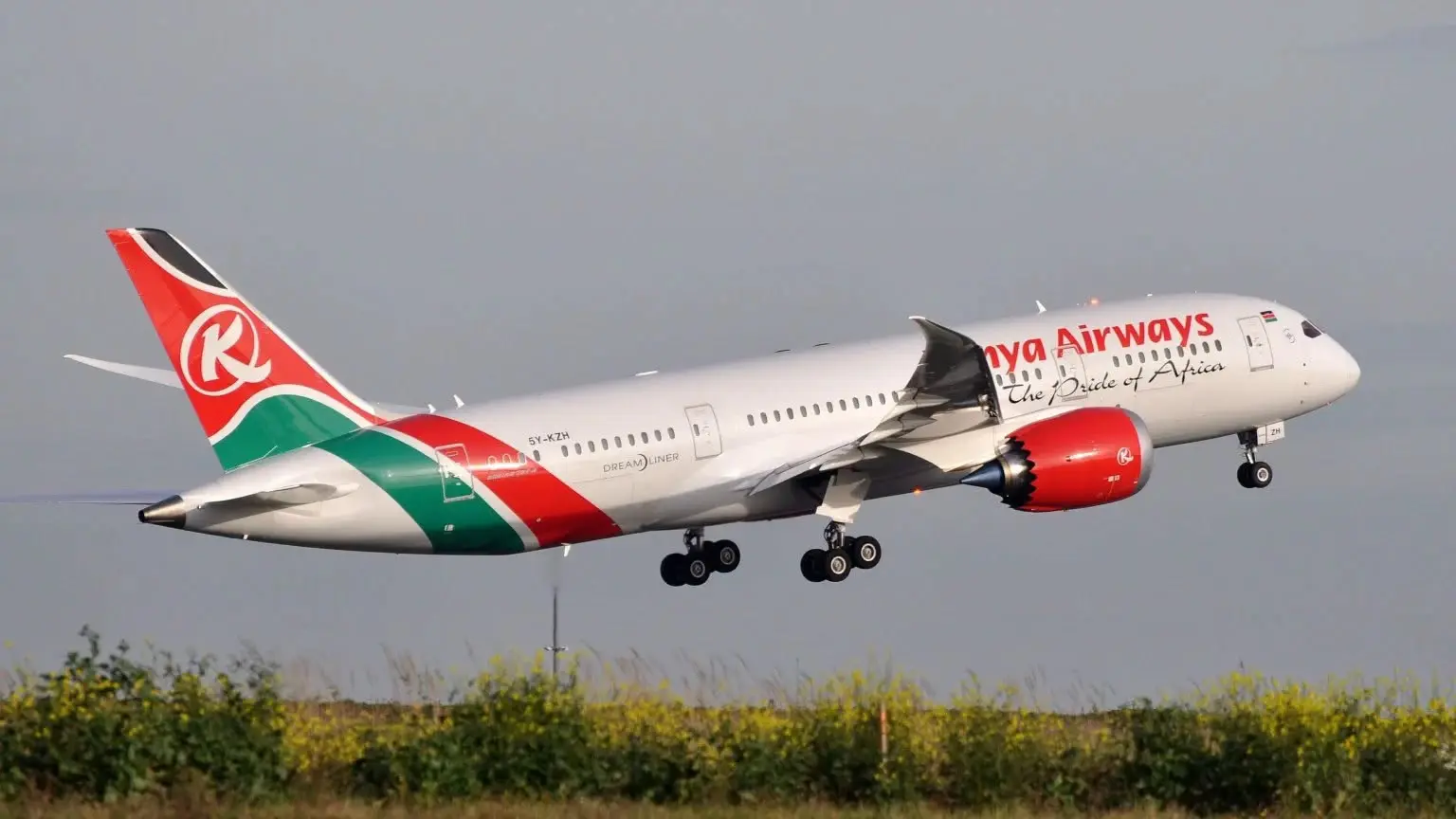
(NAIROBI, KENYA) – Kenya’s aviation industry is counting losses after a two day strike by airport workers grounded flights and disrupted services across the country. Kenya Airways and its subsidiary Jambojet have reported combined losses of close to KES976 million in lost revenue and related costs from the industrial action that hit operations on Saturday, Sunday and Monday.
Kenya Airways, which uses Jomo Kenyatta International Airport (JKIA) as its hub, said it lost up to $7 million (KES906 million) during the two days of the strike. The figure includes lost air fare revenues and other costs such as customer accommodation, meals, transportation, rebooking and compensation. The airline cancelled 63 flights and recorded more than 160 flight delays, with average delays exceeding six hours, according to KQ board chairman Kiprono Kittony.
Jambojet, the leading domestic air operator and a Kenya Airways subsidiary, told Business Daily that it lost roughly KES70 million after cancelling at least 60 flights on Sunday and Monday when the strike was at its peak. Jambojet CEO Karanja Ndegwa said most flights were full with load factors of between 90% and 97% due to high demand in August. The cancellations affected close to 5,000 passengers.
Kenya Airways controls about 48% of international passenger traffic in Kenya while Jambojet controls roughly 60% of the domestic air travel market. The losses at the two carriers represent a significant impact on the broader aviation market.
Other local and international carriers also reported major disruptions as they worked to clear backlogs of delayed and suspended flights across the three days. Renegade Air, which operates flights to Wajir, Kisumu and Homa Bay out of Wilson Airport, said its operations were brought to a standstill by the strike. Patrick Oketch, Renegade Air’s commercial director, said the airline is yet to quantify its revenue loss but noted that connecting customers who rely on the carrier to reach Nairobi for international flights were particularly affected.
The impact extended beyond airlines. Fresh produce exporters said they lost $3 million (KES388.2 million) for each day of the strike as storage service providers charged up to KES25 per kilogramme for cold storage.
Aviation experts have warned that the strike could cause reputational damage to Kenya as a tourist destination and transit hub, and to Kenya Airways as the country’s flag carrier. Sean Mendis, an aviation commentator, said the long term impact would be felt for a long time. He noted that Kenya Airways already has a poor reputation for reliability among African business travellers and the disruption would encourage most to continue booking away from the airline.
The Kenya Aviation Workers Union (Kawu) had cited unresolved labour issues for the two day strike. These included a stalled collective bargaining agreement, disputes over union agency fees, a recognition dispute with Jambojet, and concerns over workers’ welfare and employment conditions.
The strike affected JKIA and Wilson Airport in Nairobi, Moi International Airport in Mombasa, Eldoret International Airport and Kisumu International Airport. The disruption was most severe at JKIA, which serves as Kenya’s main international aviation hub.
Kenya Airways and Jambojet Record KES976 Million Loss in Airport Strike