



(NAIROBI, KENYA) – Kenya’s Employment and Labour Relations Court has upheld the dismissal of a Dormans Coffee employee who allowed her husband to drive a company vehicle when she fell ill on duty, ruling that a health emergency does not excuse a breach of vehicle policy.
Irene Vwamula lost her job after 17 years at Dormans Coffee when the vehicle was involved in an accident along the Sagana-Karatina road in May 2023.
The court accepted that Dormans could dismiss her for handing her employer’s vehicle to her husband.
The ruling shows that sharing work equipment with a colleague, friend or family member can expose employees to disciplinary action.
Ms Vwamula was employed as a distributor, entrusted with a company vehicle while delivering coffee in the Mt Kenya region. She told the court she was travelling from Nanyuki towards Nairobi on 30th May 2023, when she suddenly became unwell. She allowed her husband, identified in the judgment as Franco, to drive.
The vehicle was involved in an accident at about 6pm. The dispute centred on Ms Vwamula’s decision to let him take control of a vehicle assigned to her for work.
The company’s policy barred unauthorised people from driving its vehicles. It did not consider that the driver was her husband and treated him as an unauthorised driver.
Ms Vwamula acknowledged in court that she knew the rule and that her husband was not authorised.
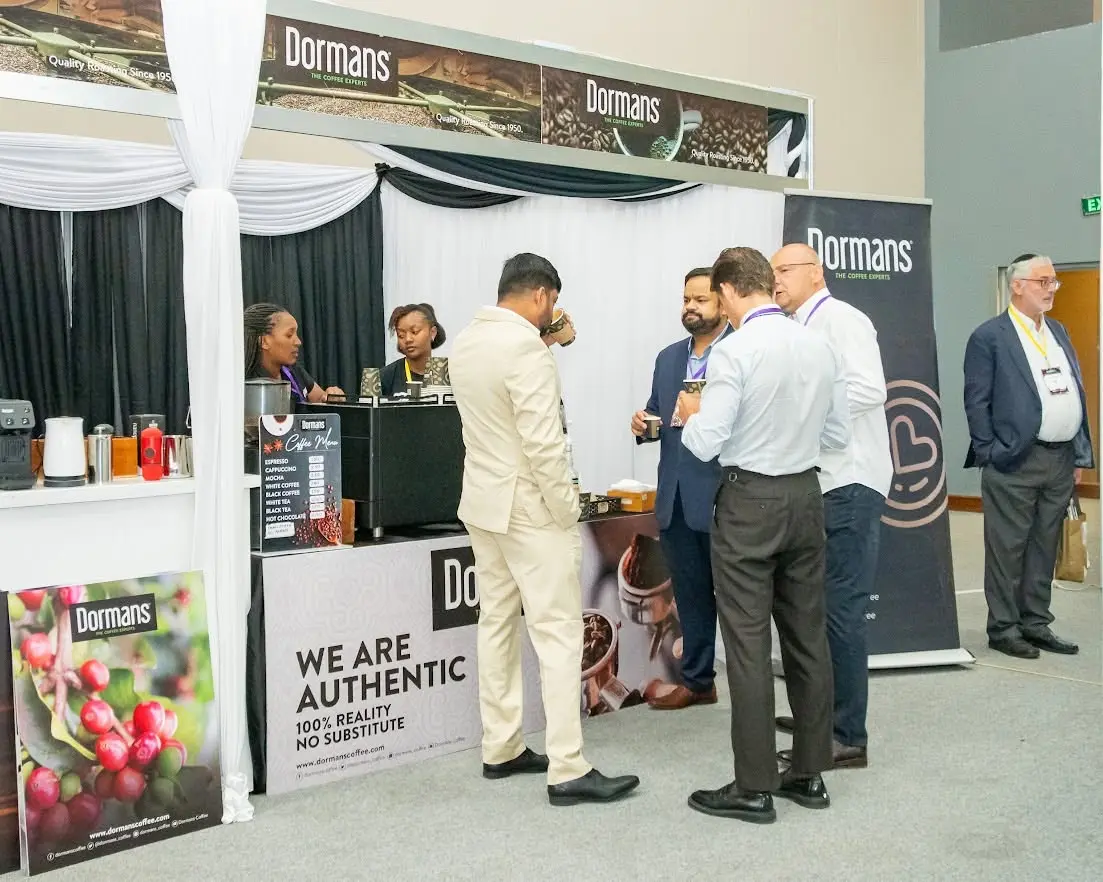
Dormans Coffee, founded in 1950, supplies roasted coffee to hotels, coffee shops, supermarkets and wholesalers across the country. Its policy prohibited unauthorised people from driving company vehicles, including when employees were using them for official duties.
After the accident, Dormans issued Ms Vwamula a notice to show cause dated 16th June 2023. She responded on 20th June and was invited to a disciplinary hearing on 3rd July. The company said she attended with a colleague and had an opportunity to explain what happened.
“By the respondent’s documentary evidence and its witness testimony, it is established that the claimant actually attended the hearing with a colleague and was heard contrary to her assertion that she did not,” said Justice Christine Baari.
Dormans dismissed Ms Vwamula on 19th July 2023 and informed her of a right to appeal. She argued that the company had removed her security pass, making it difficult to access management and challenge the decision.
Rose Magwilu, Dormans Coffee’s Human Resource Manager, denied that the pass had been taken. The judge found Ms Vwamula had not proved that the company prevented her from appealing and noted that she did not use the appeal process.
The court’s central finding was that the misconduct was not simply the accident. It was the transfer of control to a driver who had not been authorised by the employer.
“The misconduct complained of was the unauthorised transfer of control of the company vehicle, rather than merely the occurrence of the accident,” the judge said.
The judge considered Ms Vwamula’s explanation that she had fallen ill. Dormans’ witness confirmed she had said she became unwell and went to hospital after the incident.
But the court said the emergency did not remove the company’s interest in enforcing its vehicle policy.
“The existence of an emergency does not, without more, extinguish the employer’s legitimate interest in enforcing a vehicle use and safety policy,” the court stated.
The court found the company had established a valid and fair reason for dismissal. Her claim that the dismissal was unfair therefore failed, as did her requests for compensation and declarations that her constitutional rights had been violated.
“Further, the claimant’s initial response to the notice to show cause, in which she stated that she herself had been driving, also materially weakens her explanation, not to mention that she subsequently accepted that this was an error of judgment on her part,” said the judge.
The company’s witness maintained that the policy did not permit a driver who was unwell to drive and neither did it permit a spouse or other unauthorised person to drive a company vehicle.
Dormans had filed a counterclaim asking the court to order Ms Vwamula to repay KES 211,330 ($1,636). The company claimed KES 107,444 ($832) for stock lost after the accident, KES 81,556 ($632) in customer collections allegedly used for medical and ambulance expenses, and KES 22,330 ($173) for a salary advance.
Ms Vwamula said members of the public looted goods after the crash. She acknowledged that money was used for emergency medical and ambulance costs, but disputed the amount.
The court rejected the counterclaim because Dormans had not sufficiently proved each amount or Ms Vwamula’s legal responsibility for it. Responsibility for the vehicle did not automatically make her personally liable for every loss arising from the accident.
The court also noted that Ms Magwilu acknowledged documents supporting deductions had not been produced.
“The respondent was required to prove the individual heads of its counterclaim and the claimant’s legal liability for them,” the judge said, dismissing the counterclaim.
Ms Vwamula had also sought KES 263,338 ($2,040) in salary for June and July 2023 and KES 97,000 ($751) in welfare savings. The court found evidence that July salary had been paid and that Ms Vwamula had acknowledged receiving it. But it found no proof that June salary had been remitted. Dormans was ordered to pay her KES 58,000 ($449) for that month.
The court did not award the KES 97,000 ($751) welfare savings. It said Dormans had retained the amount, but the legal basis for keeping it and whether it remained payable had not been sufficiently established.