




(NAIROBI, KENYA) – Kenya’s High Court has ordered the Kenya Airports Authority (KAA) to pay a contractor KES 1.25 billion ($9.62 million) in damages, ending a long-running dispute over a terminated airstrip rehabilitation contract that has now grown to roughly KES 2 billion ($15.4 million) with interest.
The court rejected KAA’s attempt to overturn a 2022 arbitration award, ruling that the state agency missed the statutory deadline to challenge it.
Justice entered judgment in favour of Doch Company Ltd for KES 1.25 billion as awarded by the arbitrator, plus simple interest at 16% per annum from 18th March 2022 until payment. The daily interest accrues at KES 548,531 ($4,224). By 8th October 2026, principal and interest had reached about KES 2 billion ($15.4 million) before costs.
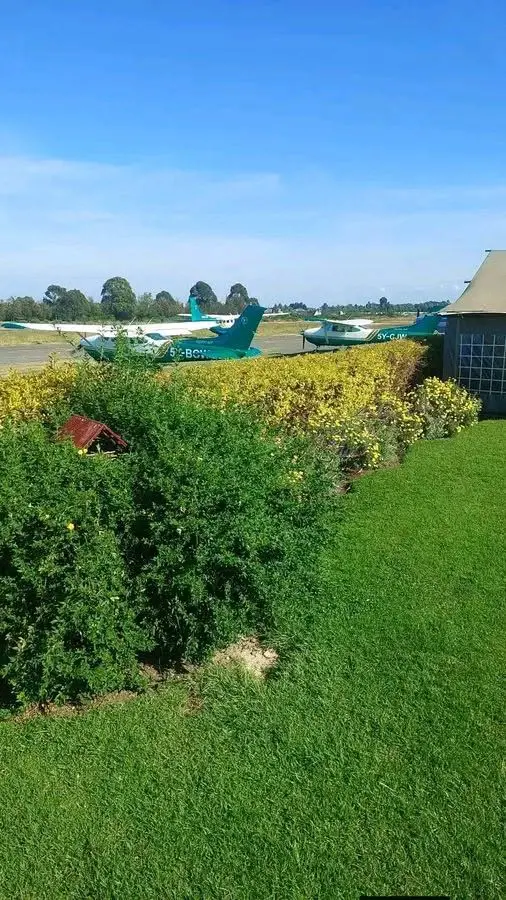
The dispute traces back to a KES 398.9 million ($3.07 million) contract signed on 3rd September 2014 to rehabilitate the runway, apron and car park at Nanyuki Civil Airstrip. KAA terminated the agreement on 22nd August 2016.
Doch challenged the termination and sought damages. KAA argued the award was excessive and should be set aside on grounds of public policy, claiming the payout would impose an unreasonable burden on public funds and breach constitutional public finance principles. The agency also contended the arbitrator exceeded the scope of the dispute.
The contract required unresolved disputes to go to arbitration. In October 2016, the High Court suspended the suit and directed the parties to appoint an arbitrator. The process stalled over the formal appointment, although both sides had agreed on engineer Peter Scott. In February 2020, a court dismissed Doch’s application for further intervention, noting the contract already provided an appointment procedure.
Retired judge Joseph Gregory Nyamu conducted the eventual arbitration and delivered his award on 18th March 2022. The parties were notified that the award was ready for collection upon payment of his fees.
Under the Arbitration Act, parties have three months from notification to challenge an award in court. Doch moved to enforce the award in April 2025. KAA applied to set it aside on 16th June 2025.
Doch managing director Johnson Wachira Waithaka objected, arguing KAA’s application was filed outside the statutory period and that the agency had not met the threshold for setting aside an award on public policy grounds.
The court found that notification that an award is ready for collection starts the deadline, even if the award has not been physically collected.
“There is no dispute that the arbitrator notified the parties that the award was ready for collection on 18th March 2022,” the judge said, ruling KAA’s June 2025 application was time-barred.
The judge rejected KAA’s explanation for the delay. According to the judgment, KAA paid KES 3.5 million ($26,944) into the arbitrator’s personal account on 4th May 2023, but did not notify him or provide proof until April 2025. Doch paid a further KES 2 million ($15,396) on 18th December 2023, clearing the outstanding balance.
“The arbitrator is not to blame for delay in releasing the award to the parties,” the court said, adding that KAA had not given a plausible explanation for the delay.
“It would be against the Constitution to permit one party to cause delays in arbitral process and seek to reap benefit from the delay,” the court stated.
On KAA’s public policy arguments, the judge found the agency had not shown the award was illegal or that the arbitrator went beyond the issues referred for determination.
“KAA has not demonstrated that the award is without legal basis or is illegal so as to constitute unjust enrichment,” the judge ruled.
The court held that the size of an award compared with the original contract sum did not by itself prove unjust enrichment or a breach of public finance principles.
“Merely that the sum of the award is huge compared to the initial contract sum is not ipso facto proof of unjust enrichment or a breach of public finance principles,” the judge said.
Doch had argued that breach of contract was among the issues referred to arbitration and that the value and payment for the temporary runway had already been settled.
“I find that KAA has not demonstrated that the arbitrator went beyond the scope of the reference,” the court said.
The court struck out KAA’s application and allowed Doch’s enforcement application.