








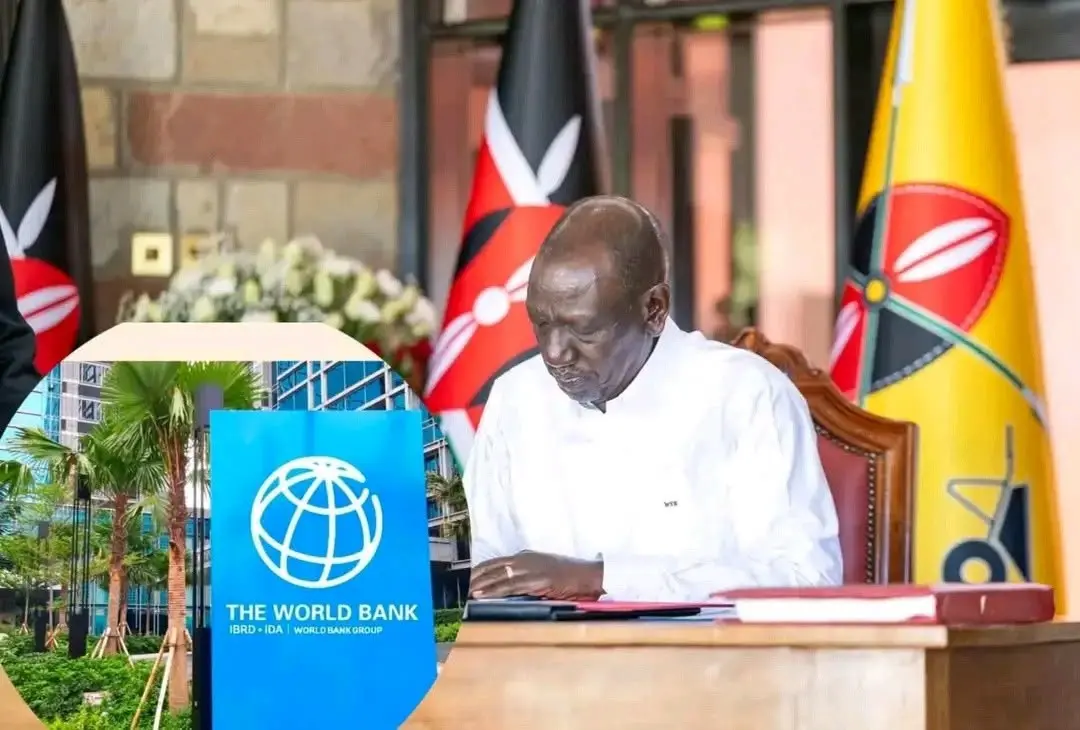
(NAIROBI, KENYA) – Kenya’s outstanding loans from the World Bank have crossed the KES 2 trillion ($15.7 billion) mark for the first time, as the country leans more heavily on concessional loans and Eurobonds to fund its budget and refinance maturing debt.
Treasury data shows Kenya’s outstanding debt to the multilateral lender rose to KES 2.045 trillion ($15.7 billion) at the end of June 2026, an increase of KES 556 billion ($4.3 billion) since President William Ruto took office in September 2022.
The shift reflects Kenya’s move towards concessional loans amid uncertainty over its access to costly global bond markets.
With reduced support from the International Monetary Fund (IMF) and China in recent years, Kenya has deepened its reliance on the World Bank. It plans to borrow KES 170.5 billion ($1.3 billion) from the lender in each of the next four fiscal years.
The concessional loans carry lighter interest rates and longer repayment periods, easing pressure on debt service, whose interest costs absorb nearly half of tax revenue.
The growing World Bank loans also give the multilateral lender leverage over Kenya’s public policy.
Kenya has left IMF funds out of its budget after failing to agree a deal with the fund.
IMF loans shrank by KES 36.19 billion ($278 million) in the year to June to KES 442.5 billion ($3.4 billion), while China’s debt fell to KES 616 billion ($4.7 billion) from KES 653 billion ($5 billion).
The IMF imposed tough conditions when its lending surged after the Covid-19 pandemic, including higher tax revenue, lower budget deficits and restructuring of State-owned enterprises.
World Bank loans, which are usually long term, often carry less stringent conditions than IMF funding, which is short to medium term and addresses immediate economic instability.
Kenya’s debt to the World Bank has risen by KES 555 billion ($4.3 billion) since Dr Ruto took office, while Eurobond borrowings have increased by KES 505 billion ($3.9 billion).
The rise puts the World Bank’s share of Kenya’s outstanding multilateral debt at 66.9%, making it by far the country’s largest multilateral creditor.
Kenya’s external debt remains concentrated among a few lenders and investors. The World Bank, Eurobond holders, China and the African Development Bank accounted for a combined KES 4.59 trillion ($35.3 billion), equal to 79.3% of external debt, according to Treasury data.
Kenya has turned to international bond markets to refinance existing obligations and manage its repayment schedule.
In February 2026, the government raised $2.25 billion through a two tranche Eurobond. The proceeds were meant to refinance public debt, including a tender offer to buy back up to $150 million and $350 million of notes due in February 2028 and May 2032, respectively, plus accrued interest.
The remaining funds were set aside for general budget support.
Kenya’s external debt rose 5.6% to KES 5.79 trillion ($44.5 billion) in June 2026, compared with growth of 6.2% in June 2025.
Its share of the total public debt fell to 44.1% from 46.5% over the same period.
“This reflects the government’s continued implementation of the Medium-Term Debt Management Strategy, which prioritises domestic financing while seeking to maintain a sustainable and prudent public debt portfolio,” the Treasury said.
The shift to domestic borrowing does not, however, remove pressure from debt repayments.
The Treasury expects total debt service costs of KES 2.3 trillion ($17.7 billion) in the current financial year, with external creditors accounting for 35.2% of the bill.
The projected spending equals 79.8% of the ordinary revenue the government expects to collect in the year ending June 2027, leaving limited fiscal room for other priorities.
At the end of June 2026, Kenya’s total external debt stood at KES 5.79 trillion ($44.5 billion), about 44% of total public debt.