



(NAIROBI, KENYA) – Nigerian billionaire Aliko Dangote has acquired a 24.76% stake in Kenya Pipeline Company (KPC) for KES 42.5 billion ($328 million), outmanoeuvring global oil majors that had stalled on the deal.
The acquisition makes Dangote the second-largest shareholder in KPC behind the Kenyan government. It also positions him to earn an estimated KES 1.44 billion ($11.1 million) in dividends from KPC, which has proposed a payout of KES 0.32 per share.
Sources close to the transaction said Dangote moved swiftly to accept the offer from parastatals, while competing investors from the United States and Europe delayed their decisions, focusing on due diligence and legal documentation.
“When presented with the opportunity, he jumped at it, without long stories on due diligence, agreements, etc. A true dollar billionaire mindset,” said an insider who helped put together the deal.
The stake was sold by state-backed agencies, including the National Social Security Fund (NSSF), Public Servants Pension Scheme, County Workers Pension Fund and Unclaimed Financial Assets Authority. These agencies had held a combined 38.35% stake in KPC. Their combined holding has now fallen to less than 15%, less than eight months after KPC listed on the Nairobi Securities Exchange (NSE).
The transaction advisers had been in talks with potential investors for two months over the acquisition of the stake from parastatals that participated in KPC’s initial public offering (IPO). The “big boys” delayed their decision, laying emphasis on due diligence and legal documentation.
The delay gave Dangote an opportunity to snap up the lucrative stake, potentially giving him influence over critical petroleum infrastructure that could be used to transport fuel from his planned Lamu refinery.
Dangote said on 21st October that he planned to invest $1.5 billion (KES 195 billion) to expand KPC’s pipeline network. This comes in the middle of building a second 700,000-barrel-a-day refinery in Lamu worth KES 2.1 trillion ($16.2 billion), whose initial work the tycoon said had already started.
This represents an ambitious attempt to build an integrated African refining, storage and distribution business, with Kenya serving as a regional hub for East Africa and Namibia for southern Africa.
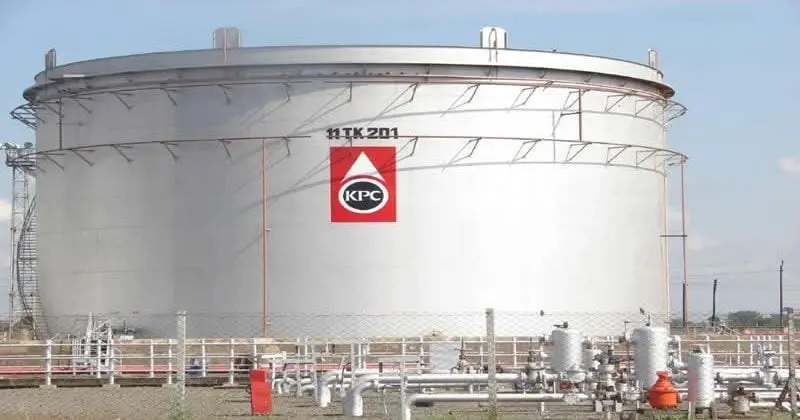
Kenya Pipeline’s 1,300km network transports diesel, petrol and jet fuel from the port of Mombasa across Kenya, supplying both the domestic market and neighbouring countries, including Uganda, the Democratic Republic of Congo, South Sudan and Rwanda.
In Namibia, Dangote plans to build fuel storage tanks that would more than triple the capacity of the country’s existing national storage facility.
“We are going very aggressively with that,” Dangote said in London, in reference to the planned KPC investment that is part of a continent-wide strategy to distribute refined products around Africa.
From the time the government decided to sell its 65% stake in KPC, a portion of the shares had been earmarked for oil marketing companies (OMCs), given that they are the pipeline operator’s main customers.
Although they gave the IPO a wide berth, transaction advisers widened its pool of suitors to include the oil majors post NSE listing, hoping to persuade them to take up the stake that parastatals had been pressured to buy.
But they are said to have taken a long time to accept the offer, allowing Dangote to snap up the stake.
“They were caught off guard by this (the Dangote) deal,” added the source.
The Ugandan government is the third-largest shareholder in KPC with a 20% stake, while all the pension firms combined have under 15%.
The acquisition could also earn Dangote board seats in KPC and the ability to shape strategic investments at the firm.
Uganda, with a smaller stake than Dangote, earned several concessions from Kenya, including two board seats, after the neighbouring country threatened to walk away from buying shares in KPC’s IPO.
It is also a strategic move by Dangote, as he can leverage the existing pipeline to drive the distribution of white fuel across the region.
“It is easy to extend the pipeline (to other routes) from that strong position as well,” said the source.
Before committing to the deal, Dangote had reportedly sought concessions, including a restriction on imports of refined petroleum products, as a condition for proceeding with the proposed refinery.
The Nigerian tycoon argued that the plant would not be commercially viable without such safeguards.
It was not immediately clear whether such concessions had been given.
Dangote seems to have developed a nose for a quick buck, noting that he often makes the decision first before it gets to the board.
When President William Ruto floated the idea of building a 700,000-barrel-a-day refinery in Kenya, it did not take him long to shift focus from Tanzania’s Tanga to Kenya’s Lamu.
The choice for Dangote was initially between Tanga and Mombasa, before his team discovered Lamu.
“I didn’t even know that name (Lamu). By January this year, I had never heard of this name Lamu. I only knew of Lamu when my people came back and said, ‘but there is a place called Lamu,'” he said in an interview with Kenyan media.
He said that as soon as he heard about the deal, he told his team to continue with it while he prepared to convince the board.
Dangote has offered regional governments a combined 30% stake in the Kenyan refinery, which is scheduled to be completed in 2030.
The refinery, whose shares will eventually be listed on the Nairobi bourse, is the largest-ever foreign direct investment for Kenya.
Dangote’s disclosure on KPC comes two days after at least eight parastatals sold their shares, less than eight months after spending billions to buy the stock through the IPO.
The KPC deal comes days after Dangote broke ground on 30th September for the construction of a $16 billion (KES 2.08 trillion) Kenyan oil refinery in Lamu, aimed at lowering East Africa’s fuel costs and saving the region’s hard currency used to import refined products.
The billionaire wants to replicate his group’s 700,000-barrel-per-day Nigerian refinery as countries including Kenya and Uganda look to start producing crude oil.
About 13 parastatals splashed KES 64.23 billion ($496 million) on the Kenya Pipeline IPO, earning a 38.35% stake in the firm.
The NSSF has an estimated 23.3% stake in KPC, Public Servants Pension Scheme (7.94%), County Workers Pension Fund (2.2%) and Unclaimed Financial Assets Authority (1.98%).
The IPO had to raise at least KES 53.1 billion ($410 million) from more than 250 investors for it to proceed, a target that had not been achieved as the offer raced to a close.
This forced the State to urge parastatals, the State-backed pension scheme and the Ugandan government to save the IPO from collapse.
At KES 9.02, the state-owned firms sold the shares at nearly the same price as KPC’s IPO offer price on the Nairobi bourse.