






(NAIROBI, KENYA) – Kenyan banks with core capital below 8.625% of their loan book will be blocked from paying any dividend to shareholders under new regulatory proposals aimed at controlling risk in the banking sector.
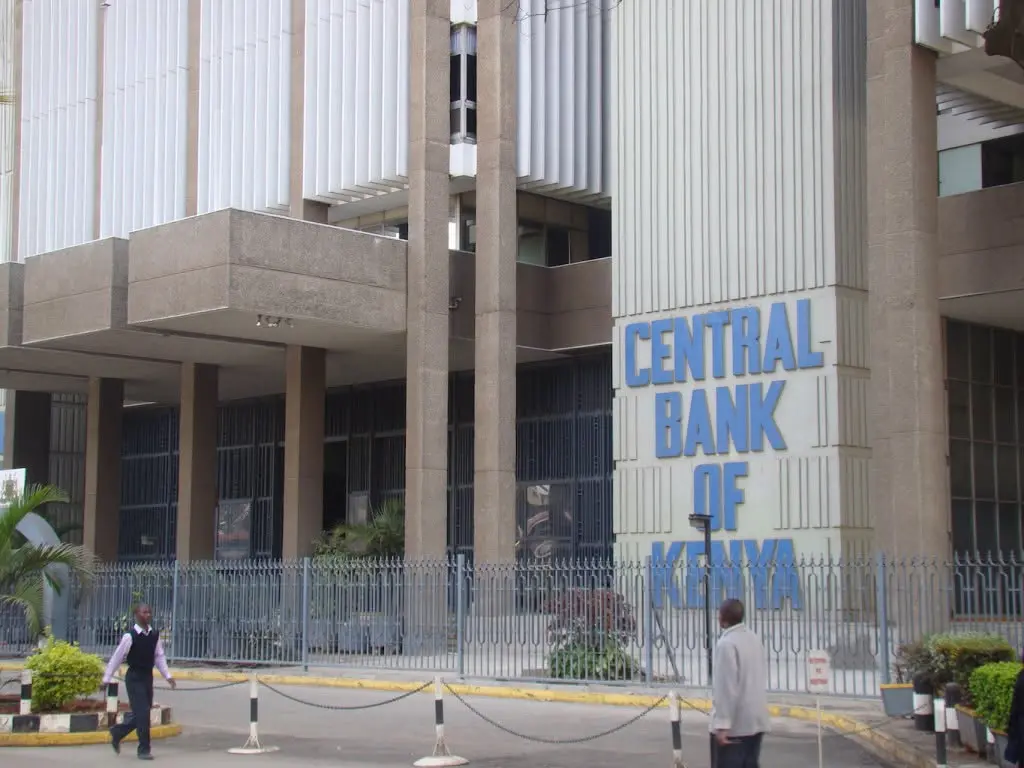
The Central Bank of Kenya (CBK) wants lenders to hold significant levels of common equity tier 1 capital (CET 1), made up mainly of retained earnings, in relation to the risk taken through lending before they can pay dividends.
CET1 is the highest quality capital a bank holds, made up mostly of ordinary shares and retained earnings, and acts as a cushion to support financial stability.
A bank with core capital below 8.625% of its loan book will have to rebuild its buffer by keeping all its earnings. A lender whose CET exceeds 10.5% of its loan portfolio can pay out all its profit as dividends.
The 10.5% level is among the current standard minimum capital requirements, showing that the regulator intends to force non-compliant lenders to catch up through a tiered system that tightens dividend payouts the greater the shortfall.
Banks with a capital ratio above 8.625% and up to 9.25% will have to keep at least 80% of their earnings, while those above 9.25% and up to 9.875% will keep at least 60%.
A lender whose capital ratio is more than 9.875% and up to 10.5% will keep at least 40% of its profit.
“The applicable conservation standards must be recalculated at each distribution date. For example, a bank with a CET1 capital ratio in the range of 8.625% to 9.25% is required to conserve 80% of its earnings in the subsequent payment period (i.e. pay out no more than 20% in terms of dividends, share buybacks and discretionary bonus payments),” the draft guidelines say.
The CBK says banks that want to pay larger dividends than the proposed rules allow can get around the limit by raising extra funds from other parties to boost their cash distributions.
“If the bank wants to make payments in excess of the constraints imposed by this regime, it would have the option of raising capital in the private sector equal to the amount above the constraint which it wishes to distribute,” the regulator said.
The CBK said capital ratios will be set at the consolidated level for banks that operate as a group under a holding company.
The limits on profit distribution form part of new capital requirements the regulator plans to impose on the banking industry.
The rules include the introduction of common equity tier 1 capital, which relates only to shareholders’ capital tied up in the business and leaves out some lines such as share premium, which will now be classed as additional tier 1 capital.
The regulator has also introduced a new capital buffer to be held when banks are seeing rapid credit growth. The buffer of between 0.5% and 2.5% of a bank’s loan book, known as total risk-weighted assets and called the “countercyclical capital buffer,” will be set by the regulator every 12 months.
“Institutions will be required to maintain a countercyclical capital buffer where the Central Bank of Kenya determines that there is a build-up of credit risk which could lead to system-wide stress,” the regulator says.
The introduction of higher capital requirements in the US financial system saw investors avoid banking counters, and analysts expect the same in Kenya in the short term before it reverses.
“Income-focused investors may have reservations in the short term concerning dividend payments due to tighter earnings retention policies (likely to affect lenders without significant excess capital buffers and may need to build them up) and potential payout uncertainty during stress cycles,” said Melodie Ndanu, a research analyst at Standard Investment Bank.
“In the long run, however, investors are likely to view the changes positively, with the introduction of Basel III-aligned features making banks far more resilient against systemic shocks,” she added.
Nairobi Securities Exchange-listed banks have paid large dividends over the years, backed by core capital topping the KES 100 billion ($774 million / £607 million) mark for some institutions.
The 12 listed banks paid total dividends of KES 117.2 billion ($907 million / £711 million) for the year ended December 2025, nearly half of the KES 245.9 billion ($1.9 billion / £1.49 billion) that all publicly traded firms paid in their latest financial years.
For the full year ended December 2025, Co-operative Bank of Kenya raised its dividend per share by 66.6% to KES 2.50 ($0.019 / £0.015) from the prior year’s KES 1.50 ($0.012 / £0.009), while Equity Group lifted its distribution by 35.2% to KES 5.75 ($0.045 / £0.035) from KES 4.25 ($0.033 / £0.026) over the same period.
In the half year ended June 2026, several banks raised their dividends on the back of strong earnings, including KCB Group, which increased its interim dividend by 50% to KES 3.0 ($0.023 / £0.018) per share, and NCBA Group, which also raised its interim dividend by 50% to KES 3.75 ($0.029 / £0.023) per share.
The CBK is also seeking to have big banks hold extra capital in what could weigh on their dividend decisions.
Large banks classed as domestic systemically important banks (D-SIBs), given the disruption their collapse or distress would create in the local economy and regional market, will have to hold an extra buffer of between 0.5% and 2.5% of their loan book.
The regulator will look at the size of a bank, its links with other institutions, complexity and substitutability (difficulty in being replaced in a specific service) to decide if it will be classed as a D-SIB.
“CBK may impose a surcharge on designated D-SIBs, implemented as an extension of the capital conservation buffer (CCB) known as higher loss absorbency (HLA). HLA is implemented as a capital add-on or an extension to the existing CCB,” the draft states.
“This supplementary buffer must be met exclusively using common equity tier 1 capital,” it adds.
This means the core capital to total risk-weighted assets ratio required of a bank could rise to 19.5% from the current 10.5%.