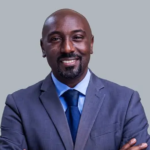

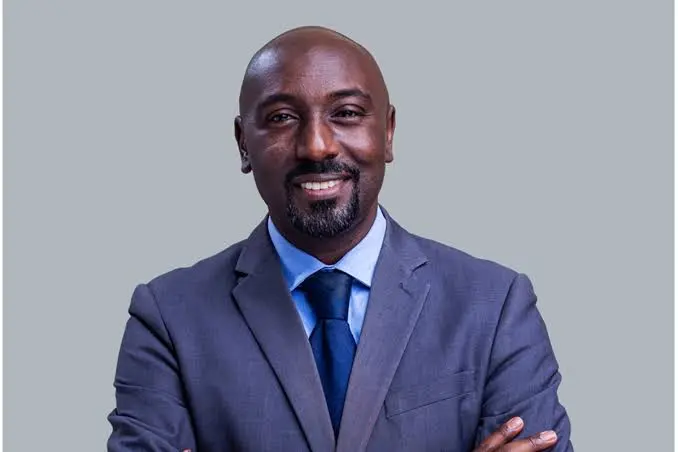
(FORT PORTAL, UGANDA) – There is no published net worth for Edward Rukidi Nyabongo I, the new Omukama of Uganda’s Tooro Kingdom. He spent most of his adult life earning a salary as a television news anchor, not managing a royal treasury. But the throne he is inheriting comes with a financial portfolio that is as contested as it is valuable.
Net Worth Disclaimer
The figures presented in this article are estimates compiled by The Daily Handle from court records, government documents, land transaction reports, published investigative journalism and publicly available financial information. They do not represent an official valuation, audited accounts or any declaration by Edward Rukidi Nyabongo I or the Tooro Kingdom.
Net worth calculations for traditional institutions and individuals whose assets are held privately, disputed in court or tied to cultural roles are inherently imprecise. Readers should treat all figures as indicative rather than definitive.
Based on government filings, kingdom records and published accounts, The Daily Handle estimates the institutional assets under his control at between $2.5 million and $5 million (UGX 9.2 billion to UGX 18.5 billion), though the true figure depends heavily on whether the Ugandan government returns more than 150 disputed properties to the kingdom.
The Salary He Left Behind
Before his selection by the Babiito royal clan in September 2026, Nyabongo earned a living as a senior news anchor and editor at the Uganda Broadcasting Corporation, the state broadcaster. Ugandan media has described him as a long serving journalist who fronted bulletins including UBC News Tonight.
His salary was never publicly disclosed. But state media anchoring in Uganda is a respected professional career that offers a modest middle class income, not a path to great personal wealth. The contrast with his predecessor could not be sharper.
King Oyo ascended the throne at three years old and was subsidised by international heads of state, including Libya’s Muammar Gaddafi, who bankrolled the renovation of Karuziika Palace.
Nyabongo, by contrast, spent decades in the newsroom. His selection was described by CNN in September 2026 as likely aimed at appealing to traditionalists seeking continuity and those opposed to having another child on the throne.
The Coronation Budget: $250,000 for One Day
The first major financial transaction of his reign is the coronation itself. The Tooro Kingdom Central Organising Committee has unveiled a budget of UGX 925 million ($250,000) for the ceremony scheduled for 29th September 2026.
The breakdown, presented by finance committee chair Alex Ruhunda, allocates the funds as follows:
-
Works, decoration and tents: UGX 220 million ($59,500)
-
Welfare: UGX 300 million ($81,000)
-
Publicity: UGX 70 million ($18,900)
-
Palace affairs: UGX 100 million ($27,000)
-
Event coordination: UGX 50 million ($13,500)
-
Rituals: UGX 30 million ($8,100)
-
Entertainment: UGX 30 million ($8,100)
-
Transport and health: UGX 25 million each ($6,750 each)
-
Protocol and security: UGX 10 million each ($2,700 each)
A Centenary Bank account has been opened for contributions, with mobile money channels also available. President Yoweri Museveni is expected to attend as chief guest.
The budget is being raised through public appeals, corporate sponsorships and expected government backing. Unlike the annual Empango celebrations, this is a one time enthronement ceremony, not a coronation anniversary.
The 150 Assets He Is Inheriting
The most significant financial question facing the new king is not his personal wealth but the kingdom’s institutional assets. Tooro is demanding the return of more than 150 properties from the Ugandan government, including land and buildings in Kabarole, Kamwenge, Kyenjojo, Kyegegwa, Kasese and Bundibugyo districts.
These are the ebyaitu, properties taken over by the central government in 1966 when President Milton Obote abolished traditional institutions. When kingdoms were restored in 1993, only a fraction returned. According to the kingdom’s own accounts, only about 5% of its assets had been recovered by 2019.
A Memorandum of Understanding signed between President Museveni and King Oyo in 2019 was meant to accelerate the return. It did not. By September 2025, the kingdom was still demanding 103 land titles. Of an initial 120 missing titles, only 17 had been returned. The government provided UGX 2 billion ($540,000) under the arrangement, which was used to renovate some infrastructure.
The assets include large chunks of land occupied by squatters in Mwenge, Kyaka and Bunyangabu counties. Some buildings are occupied by government institutions such as town councils, schools and health facilities. The kingdom has said it will not evict these institutions but wants compensation.
If all 150 assets were returned and commercially utilised, the kingdom’s financial position would change dramatically. As it stands, Tooro remains one of Uganda’s poorest traditional institutions relative to its historical holdings.
The Real Estate: What the Land Is Actually Worth
The kingdom’s land holdings are its most valuable asset, and they are far from cheap. The Tooro Kingdom lands minister, Polly Kateeba, told Uganda Radio Network in December 2025 that since the restoration of kingdoms in 1993, the kingdom had received only 17 land titles equivalent to 13 square miles. The government is still holding 120 land titles equivalent to over 120 square miles, representing 95% of Tooro’s titled land.
Beyond the titled land, the kingdom claims customary land estimated at more than 32 square miles. Before 1967, the kingdom had established administrative units on this land, and their structures have been occupied by government institutions ever since.
To put a figure on this, consider the market. Prime land in Fort Portal city currently sells for between UGX 37 million and UGX 150 million ($10,000 to $40,500) per acre, depending on location and use. Daily Monitor reported in September 2026 that one listing for 50 acres of farmland in Fort Portal City, about 9 kilometres from the city centre, carried an asking price of UGX 37 million per acre, or UGX 1.85 billion total ($500,000). Commercial land near Lake Kasunganyanja in Bunyangabu district, about 3 kilometres off the Kasese road, was listed at UGX 40 million per acre.
If the kingdom’s 120 square miles of titled land were valued at even a conservative UGX 40 million per acre, the total would exceed UGX 3 trillion ($810 million). That figure is theoretical, because much of the land is occupied, untitled or the subject of legal disputes. But it demonstrates the scale of what is at stake. The kingdom’s own claim to 150 assets is not a modest request. It is a demand for a portfolio that could, if managed properly, transform the monarchy’s finances.
The Kamwenge land reclaim offers a glimpse of what is possible. In March 2026, the kingdom reclaimed 175 acres in Nyancwamba Sub County after the sub-county headquarters was relocated. At current market rates, that single parcel alone could be worth UGX 7 billion ($1.9 million). The kingdom has announced plans to build a market on kingdom land in Kacwamba, state of the art apartments in Maguru, and a shopping mall in Nyakaseke.
The Government Allowance
Under Ugandan law, traditional leaders receive a monthly stipend from the Ministry of Gender, Labour and Social Development. Cabinet directed in 2022 that UGX 60 million ($16,200) be paid monthly to each of the 17 gazetted traditional cultural leaders. This was implemented in 2024/25.
The Ministry of Gender sought UGX 12.24 billion for the 2025/26 financial year to maintain these salaries, though the Medium Term Expenditure Framework reverted to the earlier amount of UGX 5 million per leader, amounting to only UGX 1.02 billion. Parliament had approved UGX 31.33 billion in April 2024 for the monthly salary of UGX 60 million to 17 gazetted traditional leaders.
For Tooro specifically, estimates place annual government support at between UGX 500 million and UGX 800 million ($135,000 to $216,000). This money is meant for running the kingdom, not for the King’s personal use.
The government also provides security, transport and logistical support for royal functions. At King Oyo’s burial in September 2026, the government mobilised tents, chairs, public address systems, security, medical services and even the renovation of Karuziika Palace by the UPDF Engineers Brigade.
The Palace and the Land
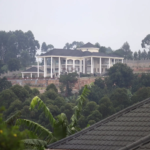
As King, Nyabongo takes possession of Karuziika Palace in Fort Portal, the administrative and ceremonial heart of the kingdom. The palace was comprehensively renovated with Libyan funding during Oyo’s childhood, a project estimated at $10 million at the time.
He also inherits control over Rwengoma Palace, a historic royal site built in the early 20th century by Omukama Daudi Kasagama Kyebambe for his mother, Victoria Kahinju. The palace was completed in 1903 and is associated with the preparation of royal family members before they ascended the throne.
But the palace comes with a history of financial disputes. In 2011, Queen Mother Best Kemigisa sold 9,921 acres of royal land to the Ugandan government for UGX 4.5 billion ($1.2 million at the time). The transaction triggered years of legal battles, tax disputes and accusations that cultural sites had been sold without consultation.
The new king has pledged to open the palace to all Batooro and use it as a hub for tourism and development rather than maintaining it as an isolated royal residence.
The Kijanangoma Family Background
Nyabongo belongs to the Kijanangoma branch of the Babiito royal family. He is the son of the late Prince Christopher Paul Kijanangoma, eldest son of Omukama Sir George David Rukidi III, and a grandson of Rukidi III himself.
The family’s private financial history reflects the disruption caused by the 1967 abolition of kingdoms. His brother, Prince Charles Happy Kijanangoma, was murdered in Fort Portal in 1999. Another brother, Prince David Kijanangoma, triggered a major succession dispute in 2015 when he challenged King Oyo and occupied Rwengoma Palace.
The Kijanangoma family has never been known for significant private wealth. Their status derives from lineage, not liquid assets.
His Wife’s Corporate Career
Nyabongo’s wife, Rebecca Amoding-Rukidi, brings a different kind of financial profile to the royal household. She is a human resources and organisational development professional with a master’s degree in management studies. She has held senior roles at multinational entities operating in East Africa, including Unilever, Vivo Energy and the United Nations World Food Programme.
Her corporate salary is not publicly disclosed. But her professional background suggests the royal household now includes a second income stream independent of the kingdom’s institutional finances.
Amoding is from the Teso sub-region, and her status as a non-Mutooro Queen Consort has sparked debate among royal elders about cultural continuity.
The Tourism Pledge
The new king has spoken repeatedly about commercialising the kingdom’s assets. In public addresses, he has said he wants to open Karuziika Palace to the general public as a cultural tourism hub. He has backed state partnerships to expand the Fort Portal aerodrome and construct a modern sports stadium.
“Tooro is one of the places with the most tourist attractions in that sector of tourism,” he said. “As the Kingdom of Tooro, we have to use it to get many things out of it to develop our kingdom”.
If successful, this strategy could transform the kingdom’s financial base from one dependent on government handouts and disputed land to one generating revenue from tourism and commercial partnerships. If unsuccessful, the kingdom remains in the same position it has occupied for decades: asset rich on paper, cash poor in practice.
What His Net Worth Actually Looks Like
There is no single number that captures Edward Rukidi Nyabongo I’s financial standing. A reasonable breakdown looks something like this:
-
Personal assets: Unknown. His UBC salary and any private savings have never been disclosed. Estimated value: $50,000 to $200,000.
-
Institutional assets under control: Karuziika Palace, Rwengoma Palace, and whatever portion of the 150 disputed properties is eventually returned. The land alone, if valued at market rates, could theoretically run into hundreds of millions of dollars. Estimated realisable value: $2.5 million to $5 million, depending on how many assets are actually returned and whether they can be commercially developed.
-
Government stipend: Annual allocation of UGX 500 million to UGX 800 million ($135,000 to $216,000) for kingdom operations. This is not personal income.
-
Coronation fundraising: UGX 925 million ($250,000) raised for a single event.
-
Wife’s income: Undisclosed corporate salary from senior HR roles.
A conservative estimate places his personal net worth in the $50,000 to $200,000 range. The institutional assets he controls could be worth far more if the government returns the disputed properties and the kingdom successfully commercialises them.
The Man Behind the Figures
Edward Rukidi Kijanangoma was born in 1970, the son of a prince and grandson of a king. He spent his career behind a news desk, first at a television station in Rwanda, then at UBC in Kampala. He is a born again Christian and a member of Watoto Church in Ntinda.
He became King in September 2026 after a 21 member succession committee selected him, with 19 members voting in favour. His selection was immediately disputed by Queen Mother Best Kemigisa and Princess Ruth Komuntale, who said King Oyo had left a will naming a son as his heir.
He has promised to open the palace, continue Oyo’s projects and mobilise the kingdom’s tourism potential. Whether he can turn those promises into money is the question that will define his reign.