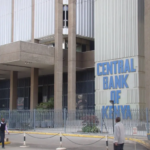






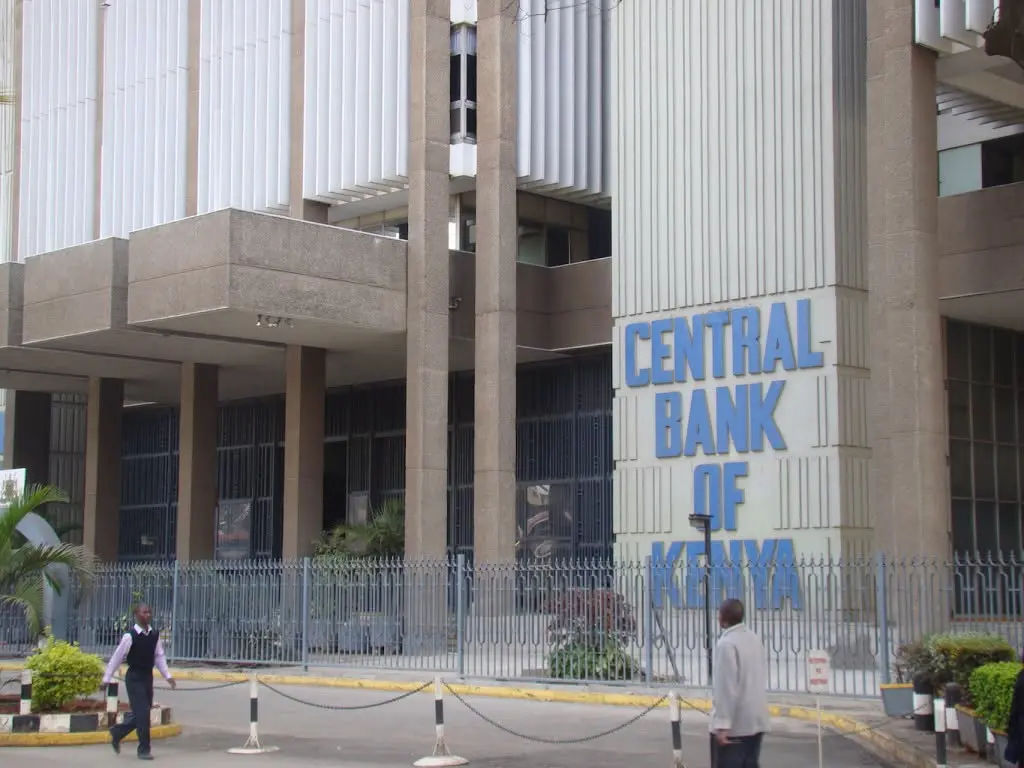
(NAIROBI, KENYA) – Kenya’s banking regulator plans to cap the expansion of the country’s largest banks, in a move aimed at reducing the risk of their collapse and the damage it would cause to the wider economy.
The Central Bank of Kenya (CBK) said in new proposals that it will tighten supervision of financial institutions whose failure or distress could send significant shockwaves through the economy.
“Domestic systemically important financial institutions may be restricted from expanding their operations or introducing new products whose effect may enhance systemic risk of the bank. The supervisory measures to be deployed on a domestic systemically important financial institution depend on the supervisor’s judgment as to the institution’s degree of systemic risk,” the draft framework states.
“Domestic systemically important financial institutions are financial institutions operating in one or more countries and whose disorderly failure would cause significant dislocations in the domestic or regional financial system and adverse economic consequences in the country or region.”
The proposed framework says banks will be classified as domestic systemically important based on size, interconnectedness, substitutability, complexity and importance to the domestic economy.
Substitutability refers to a situation where a domestic financial institution plays an important role in a specific business segment as a provider of market infrastructure such as a payment system, and where replacement by other players may prove difficult.
Under the proposals, the CBK will assess all licensed institutions once every calendar year as at 31st December. Entities designated as domestic systemically important will be notified by 31st March the following year, with the list published by 30th June.
The sequential collapse of three banks in Kenya between 2014 and 2016, namely Dubai Bank, Imperial Bank and Chase Bank, shook the country’s banking sector and hurt the interbank market after large and well capitalised banks feared they had exposure from lending to smaller and less capitalised players.
Banks in Kenya have recorded considerable growth over the past decade, marked by acquisitions and product diversification, including moves into the fast growing wealth management and bancassurance business.
The CBK’s proposed framework comes as Kenyan banks make further inroads into the East and Central Africa region, with at least seven having a regional presence.
Equity Group has operations in Kenya, Uganda, Tanzania, Rwanda, South Sudan and the Democratic Republic of Congo. KCB Group is present in the same markets plus Burundi.
Of KCB Group’s KES 2.3 trillion ($17.80 billion / GBP 14.03 billion) worth of assets, 31.3% is attributable to business units outside Kenya, as is 52.0% of Equity Group’s KES 2.2 trillion ($17.03 billion / GBP 13.42 billion) worth of assets.
NCBA Group has operations in Kenya, Uganda, Tanzania, Rwanda and Côte d’Ivoire. DTB has operations in Kenya, Uganda and Tanzania, while I&M Group has operations in Kenya, Tanzania, Rwanda, Uganda and Mauritius.
The CBK is also proposing that financial institutions deemed domestic systemically important hold stronger capital buffers to ensure they can withstand shocks and limit potential spillovers into the wider economy in the event of distress.
The proposal comes as the banking sector undergoes recapitalisation under a push for KES 10 billion ($77.40 million / GBP 61 million) worth of core capital by 2032. The regulator has also cited the need to ensure that no domestic systemically important financial institution requires a government bailout in the event of distress as a key reason behind the push for higher capital buffers.
“In order to enhance the resilience of domestic systemically important financial institutions, the framework requires these banks to hold higher levels of capital through additional loss absorbency requirements. These requirements aim to reduce the probability of domestic systemically important financial institutions’ failure, provide a buffer to absorb losses during periods of stress and limit the need for public sector support,” the CBK says.
Foreign banks operating in the country, such as Absa, Stanbic and Standard Chartered, will also be on the CBK’s radar for potentially being domestic systemically important financial institutions, upon which the market regulator in their parent jurisdictions will be informed.
“In case a Kenyan subsidiary of a foreign bank is designated as a domestic systemically important financial institution, CBK shall engage the home regulator of the parent bank/bank holding company and the parent bank/bank holding company in assessing the adequacy of the domestic systemically important financial institution’s recovery and resolution plans,” the CBK says.