

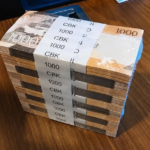





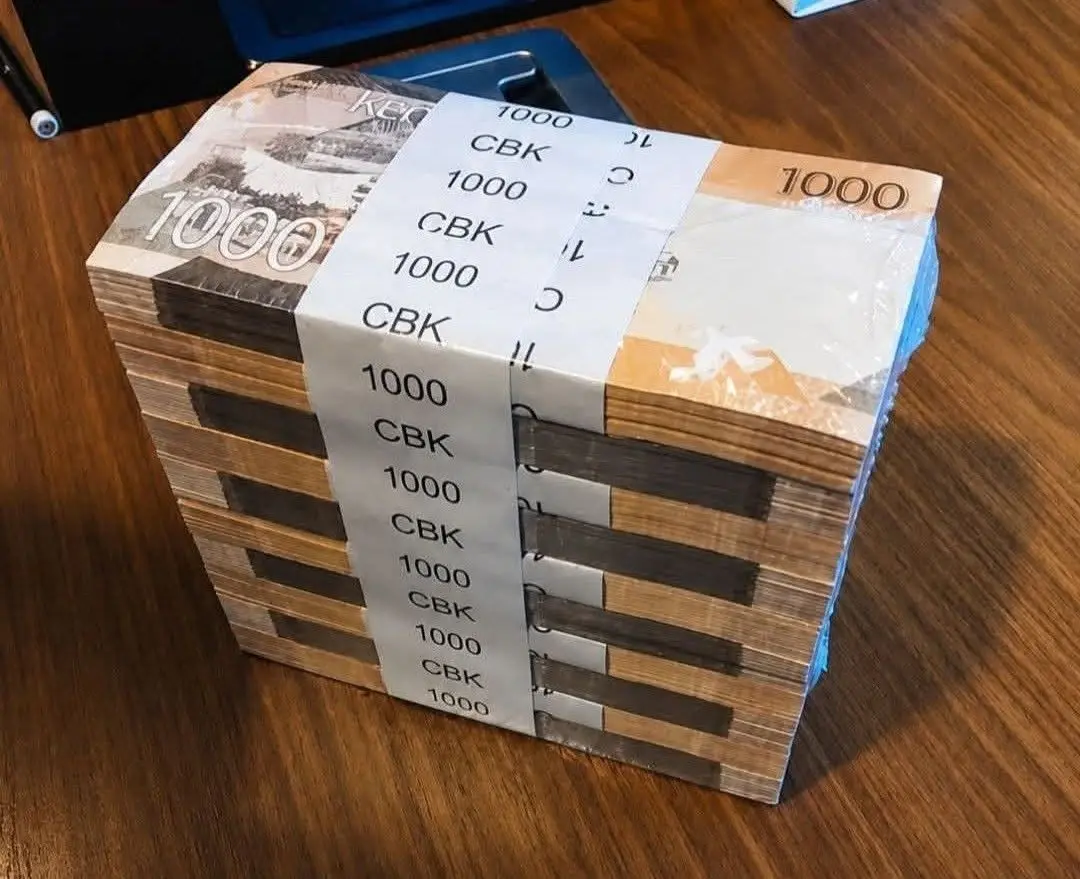
(NAIROBI, KENYA) – Kenya received more diaspora cash from Tanzania than from Saudi Arabia in August for the first time, as new foreign worker rules in the Gulf kingdom cut earnings and transfers from one of Kenya’s biggest remittance markets.
Cash sent home from Tanzania reached a record $11.72 million (KES 1.52 billion / GBP 8.77 million) in August, Central Bank of Kenya (CBK) data shows. This narrowly beat the $11.61 million (KES 1.50 billion / GBP 8.69 million) sent from Saudi Arabia.
The shift marks a sharp reversal for Tanzania, which had been far smaller than Saudi Arabia since the CBK began publishing remittances by source country in 2019.
The data, which tracks transfers through formal channels, shows flows from Kenyans in Saudi Arabia fell 28.7% from $16.30 million (KES 2.11 billion / GBP 12.20 million) a year earlier. Tanzania’s inflows rose 72.3% from $6.80 million (KES 880.60 million / GBP 5.09 million).
The changes follow Saudi Arabia’s new system for foreign workers, which replaced the old single permit arrangement with categories based on skills, qualifications, experience, salaries and age.
The framework groups foreign workers into highly skilled, skilled and basic categories. The changes aim to raise productivity and align labour deployment with the kingdom’s economic transformation plan. Reclassification of existing workers began on 18th June 2025, with enforcement from 5th July. New recruits entered the system from 3rd August.
Many Kenyans in Saudi Arabia work as housekeepers, cleaners, drivers, security guards and casual labourers.
CBK Governor Kamau Thugge said in February that changes in labour policies had slowed inflows, though he expected the disruption to be short lived.
“There were some changes in labour laws and relations in Saudi Arabia. Saudi Arabia has become one of our largest sources of remittances but with those changes in labour policies, there has been slow down in remittances from there,” Dr Thugge said. “We expect that this will not be permanent and, therefore, there would be some recovery later in 2026.”
The latest figures show remittances from that corridor had not recovered by August. Monthly cash sent home from Saudi Arabia was above $28 million (KES 3.63 billion / GBP 20.95 million) between January and July 2025, peaking at $37.23 million (KES 4.82 billion / GBP 27.86 million) in March.
Flows then fell to $16.30 million (KES 2.11 billion / GBP 12.20 million) in August and stayed below $19 million (KES 2.46 billion / GBP 14.22 million) for the rest of last year.
The decline continued into 2026, with monthly flows falling to $11.89 million (KES 1.54 billion / GBP 8.90 million) in June before dropping further in August.
Tanzania recorded a sustained rise, with August inflows more than double the $5.25 million (KES 679.88 million / GBP 3.93 million) recorded in June 2025 and 72.3% above the level a year earlier.
The August shift is significant because Saudi Arabia had long been a much larger source of diaspora cash, beating the UK to become the second biggest corridor after the US in 2023 and 2024.
Between July 2024 and June 2025, Kenyans in Saudi Arabia sent about $390.6 million (KES 50.58 billion / GBP 292.22 million) home, compared with about $68.6 million (KES 8.88 billion / GBP 51.32 million) from Tanzania.
In the 12 months to June 2026, inflows from Saudi Arabia fell to about $198.1 million (KES 25.65 billion / GBP 148.20 million), while Tanzania rose to about $90.3 million (KES 11.69 billion / GBP 67.55 million).
The CBK data shows the average monthly contribution from Saudi Arabia nearly halved over the period, while Tanzania’s continued to rise. The US remained the biggest source despite a 15.4% year on year fall in August to $205.22 million (KES 26.58 billion / GBP 153.53 million).
Other markets recorded strong increases. Australia rose 53% to $30.23 million (KES 3.91 billion / GBP 22.61 million). Canada increased 52% to $20.69 million (KES 2.68 billion / GBP 15.48 million). The United Arab Emirates jumped nearly 70% to $17.44 million (KES 2.26 billion / GBP 13.05 million).