






(NAIROBI, KENYA) – A Kenyan court has dismissed an application by prominent filmmaker David Tosh Gitonga to settle a KES 1.1 million ($8,500 / GBP 6,300) debt in monthly installments of KES 10,000 ($77 / GBP 58), ordering him to pay KES 7,000 ($54 / GBP 40) in costs for wasting the court’s time.
The debt arises from a Netflix-backed film project and has deepened the filmmaker’s legal troubles.
Last month, Tosh, as he is popularly known, was ordered to pay a total of KES 1.1 million ($8,500 / GBP 6,300) to German filmmaker Christian Kramer after losing an appeal at the High Court over a WhatsApp agreement that helped him secure funding from Netflix for his Volume series, which is available on the streaming platform.
Following the failed appeal, Tosh moved to the Small Claims Court, seeking permission to settle the KES 1.1 million ($8,500 / GBP 6,300) debt in monthly installments of KES 10,000 ($77 / GBP 58) instead of one lump sum.
The filmmaker told the court that he was facing severe financial difficulties that had left him unable to settle the debt in a lump sum. He attributed his financial position to diminished business operations and prevailing economic conditions.
But Kramer opposed the application, accusing Tosh of “being economical with the truth.”
The German editor told the Small Claims Court that Tosh had released a new film and a television series that had recently premiered on Citizen TV, contradicting his claims of financial hardship.
In considering the submissions by both parties, Adjudicator Stella Wanjiru faulted Tosh for failing to provide sufficient evidence to support his claim that he was unable to settle the debt in full.
“My view is, an applicant who wishes a court to exercise its discretion and order payment of a decretal sum by way of installments must be very candid with the court. Such an applicant must present to the court sufficient material to show that he/she is a person of no means, that whatever income she/he has is lawfully committed elsewhere,” the adjudicator stated.
“The duty of the applicant (Tosh) therefore was to demonstrate that he was not in a position to settle the decree in a lump sum. The applicant did not demonstrate their monthly income, did not give their assets and liabilities. The applicant asked the court to allow payment in instalments because they were facing financial difficulties or their financial situation; however, nothing was placed on record to support this assertion,” she added.
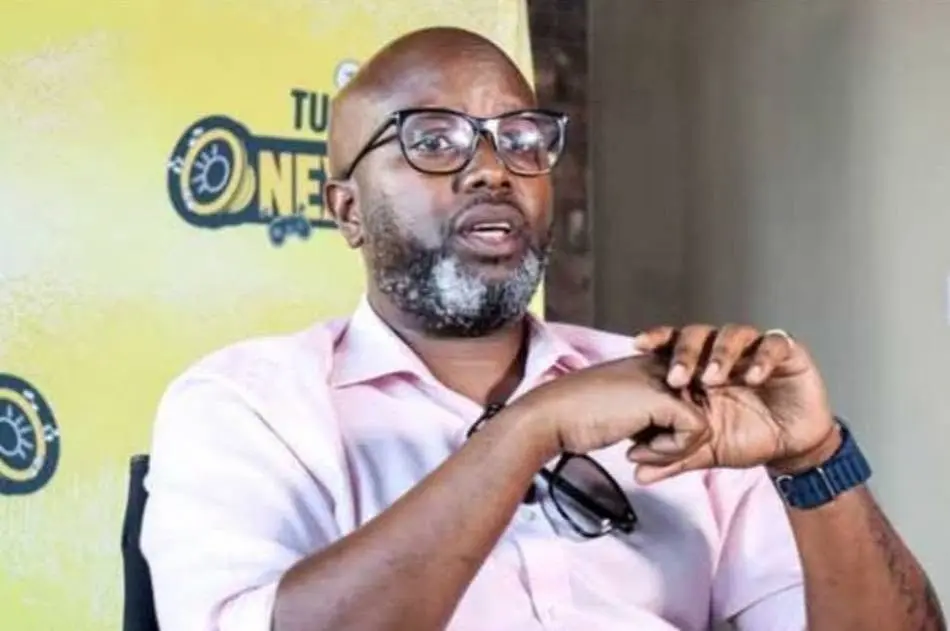
The court subsequently dismissed Tosh’s pleading and ordered him to pay KES 7,000 ($54 / GBP 40) in costs, finding that he had failed to meet the threshold required for the court to exercise its discretion.
“In my considered opinion, the applicant has not met the threshold enough for the court to exercise its discretion, the upshot of which is that the application is dismissed with costs of KES 7,000 ($54 / GBP 40),” the adjudicator stated.
Tosh’s legal troubles trace back to a WhatsApp conversation sometime between 2022 and 2023, when he engaged Kramer to provide services that helped him secure undisclosed Netflix funding for his series Volume. The series would later earn three nominations at the prestigious Zanzibar International Film Festival in 2024.
A payment dispute subsequently arose between the two filmmakers, with Kramer, who worked on the Volume pilot, accusing Tosh of refusing to honour their agreement.
The two had agreed that Kramer would be paid €4,000 (KES 678,403 / $5,200 / GBP 3,900) for his work, prompting him to move to the Small Claims Court in 2023 to recover the money.
At the Small Claims Court, Tosh disputed Kramer’s claim, arguing that there was no formal written contract between them that could be considered legally binding or sufficient to compel him to make the payment.
The court, however, ruled in Kramer’s favour, finding that the WhatsApp exchanges between the two filmmakers amounted to a legally binding agreement.
Unhappy with the decision, Tosh appealed to the High Court, arguing, among other things, that the lower court had erred in treating their WhatsApp exchanges as a contract.
He further argued that the adjudicator had ignored and/or failed to consider his testimony and evidence, instead placing reliance on the evidence and material presented by Kramer, resulting in what he described as a manifestly unfair decision.
The filmmaker maintained that the lower court had erroneously inferred a contractual relationship from assumptions and informal interactions, failing to appreciate that there was no formal agreement, written correspondence or credible testimony evidencing an offer and subsequent acceptance.
According to Tosh, the work submitted by Kramer consisted merely of voluntary samples provided for vetting in what was effectively an interview-like scenario, with no mutual intention to create legal relations.
In his view, the lower court had unjustly converted a prospective employment evaluation into a billable commercial transaction, resulting in a miscarriage of justice.
Kramer opposed the appeal, maintaining that the trial court had correctly found a valid and binding contract between the parties, established through phone calls, WhatsApp chats and the subsequent performance and conduct of the two filmmakers.
The German film editor maintained that after he successfully edited and delivered the Volume trailer, which Tosh subsequently used to secure funding from Netflix, the Kenyan filmmaker acted deceitfully by awarding the promised substantive editing work to other local editors behind his back and failing to pay him at the agreed market rate.
Kramer further argued that a valid contract can be formed electronically without traditional written formalities, and that an exchange of WhatsApp messages can constitute a concluded and binding agreement.
After reviewing the pleadings and evidence, the High Court found that the adjudicator had correctly exercised her discretion and that Tosh had failed to demonstrate how the lower court had erred in its decision. The High Court consequently upheld the Small Claims Court’s judgment, effectively bringing the three-year legal battle to an end and leaving Tosh liable for KES 1.1 million ($8,500 / GBP 6,300).
The amount comprised Kramer’s compensation, calculated with interest at the court’s prescribed rate, as well as KES 200,000 ($1,500 / GBP 1,200) in auctioneers’ fees.
The dispute had already resulted in an auctioneer’s intervention in October 2024, when Interfield Auctioneers stormed Primary Pictures’ offices and proclaimed assets valued at KES 985,884 ($7,600 / GBP 5,700) in an attempt to recover Kramer’s debt.
At the time, the outstanding amount had risen to KES 778,084 ($6,000 / GBP 4,500) following Tosh’s failure to honour the Small Claims Court judgment delivered in June 2024, which ordered him to pay Kramer.
Tosh subsequently moved to the High Court in November 2024, challenging the lower court’s decision. He argued that he had not been properly heard and maintained that there was no legally binding contract between him and Kramer.
As the appeal proceeded, the High Court ordered Tosh to deposit KES 400,000 ($3,100 / GBP 2,300) with the court pending the hearing and determination of the matter. He ultimately lost the appeal last month, with the High Court noting that its judgment was final, leaving Tosh with no further avenue of appeal and an obligation to settle the KES 1.1 million ($8,500 / GBP 6,300) debt.
Tosh, widely regarded as one of Kenya’s prominent filmmakers, shot into the limelight in 2012 for his work on Nairobi Half Life, a film drama that made history as the first Kenyan film to be selected for consideration at the 85th Academy Awards.
Over the years, Gitonga has built an extensive film portfolio, producing and directing several notable productions, including The Wedding Planner and The First Grader, among others.
His disputed Volume series later earned three nominations at the Zanzibar International Film Festival in 2024.