






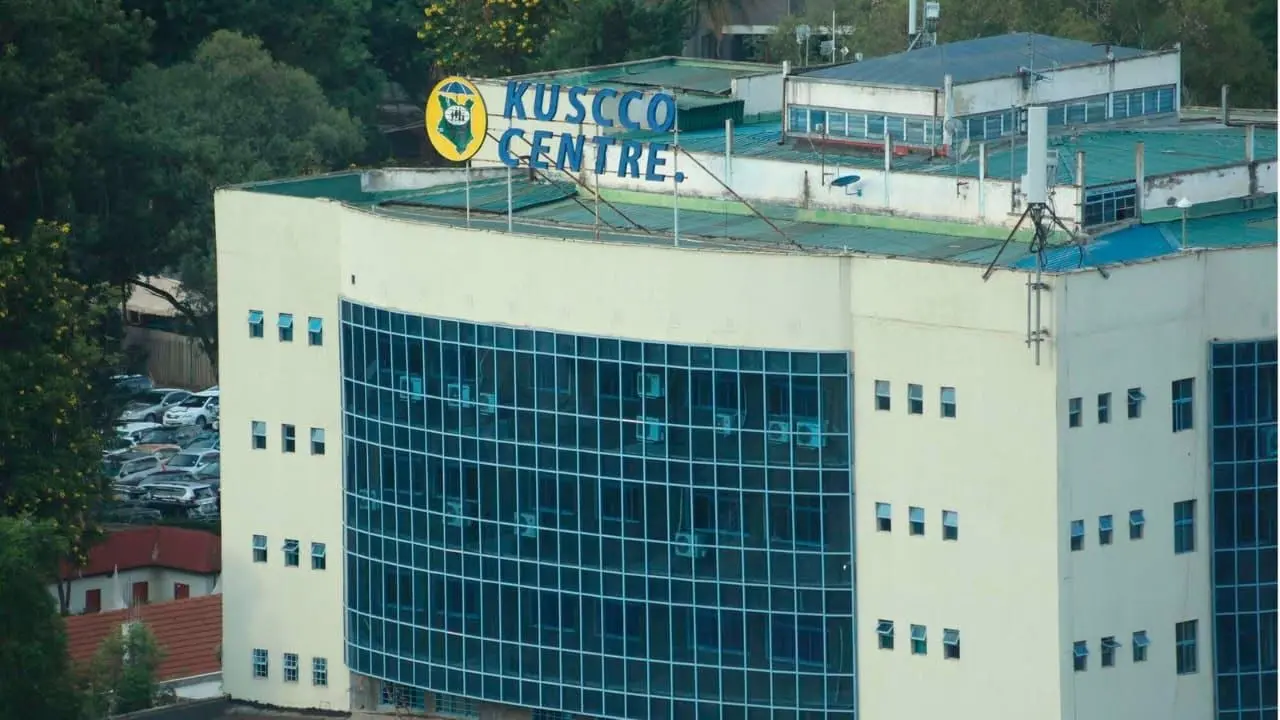
(NAIROBI, KENYA) – Kenya’s High Court has rejected a petition to liquidate the Kenya Union of Savings and Credit Co-operatives (Kuscco) over an unpaid KES 108.8 million ($842,000 / GBP 648,000) debt, ruling that a co-operative society cannot be wound up under the Insolvency Act.
The court found that Kuscco, registered as a co-operative society, falls outside the definition of a company under the Insolvency Act and must instead be wound up under the Co-operative Societies Act.
The dispute arose from fixed deposits that Rupsa Sacco, formerly PCEA Ruiru Sacco, placed with Kuscco from 2018. The deposits matured in January 2024 but were not refunded in full. Kuscco acknowledged the debt during tribunal proceedings but cited severe liquidity challenges uncovered during inspections in late 2023.
Rupsa filed the liquidation petition on 17th March 2026 under the Insolvency Act, saying Kuscco owed it KES 108.8 million under a Co-operative Tribunal decree issued on 29th April 2025.
Rupsa said Kuscco’s assets were proclaimed on 21st January after warrants of attachment were issued. The court granted Kuscco a 30 day stay on 30th January, but Rupsa said no payment was made during that period.
Kuscco responded with a preliminary objection, arguing that the court lacked jurisdiction because the union is a co-operative society, not a company. It relied on Section 95 of the Co-operative Societies Act, which excludes the application of the Companies Act and Insolvency Act to co-operative societies except where expressly provided for under the law.
“The liquidation of a cooperative society is governed exclusively by the Cooperative Societies Act, which provides a complete and self-contained statutory code for the winding up of cooperative societies by the Commissioner for Cooperative Development,” Kuscco’s lawyer said.
He submitted that “the provision is clear and unequivocal in excluding co-operative societies from the application of the Insolvency Act.”
The court found the objection raised a pure question of law. “I am unable to agree with the petitioner’s contention that determination of the objection would necessitate a mini-trial,” the court said.
The court held that Kuscco’s corporate personality did not make it a company for purposes of the Insolvency Act because it was registered under the Co-operative Societies Act rather than the Companies Act.
“The mere fact that a co-operative society is, therefore, a body corporate cannot bring it within the definition of a company in the Insolvency Act,” the court said.
It found that liquidation under the Co-operative Societies Act follows cancellation of registration and is distinct from liquidation under the Insolvency Act.
“Those matters may be relevant to the exercise of powers under the Co-operative Societies Act, but they do not create jurisdiction under the Insolvency Act,” the court said, upholding the preliminary objection.
It concluded: “Consequently, this Court has no jurisdiction to entertain the petition as presently presented or to make a liquidation order against the respondent under the Insolvency Act.”
The decision does not establish that Kuscco is solvent. The judge said the court was not determining whether Kuscco had failed to pay its debts, whether it was balance-sheet insolvent or whether liquidation should ultimately occur.
Rupsa alleged that Kuscco had liabilities of about KES 17.7 billion ($137 million / GBP 105 million) against assets of KES 5.2 billion ($40.2 million / GBP 31 million), leaving a KES 12.5 billion ($96.7 million / GBP 74.4 million) deficit. It also said 177 sacco creditors were owed KES 6.17 billion ($47.7 million / GBP 36.7 million).
The Kenya Financial Stability Report also reported Kuscco liabilities of KES 17.7 billion against assets of KES 5.2 billion and said the financial distress had affected member saccos.
Kuscco’s separate liquidation under the Co-operative Societies Act had already begun. The Commissioner cancelled Kuscco’s registration on 31st August after members resolved on 28th August to dissolve the union, citing liquidity challenges.
On 23rd September, Commissioner David Obonyo appointed Waithaka Ngaruiya of Waithaka and Associates as liquidator for up to one year, replacing three State Department officials previously appointed to handle the process.