




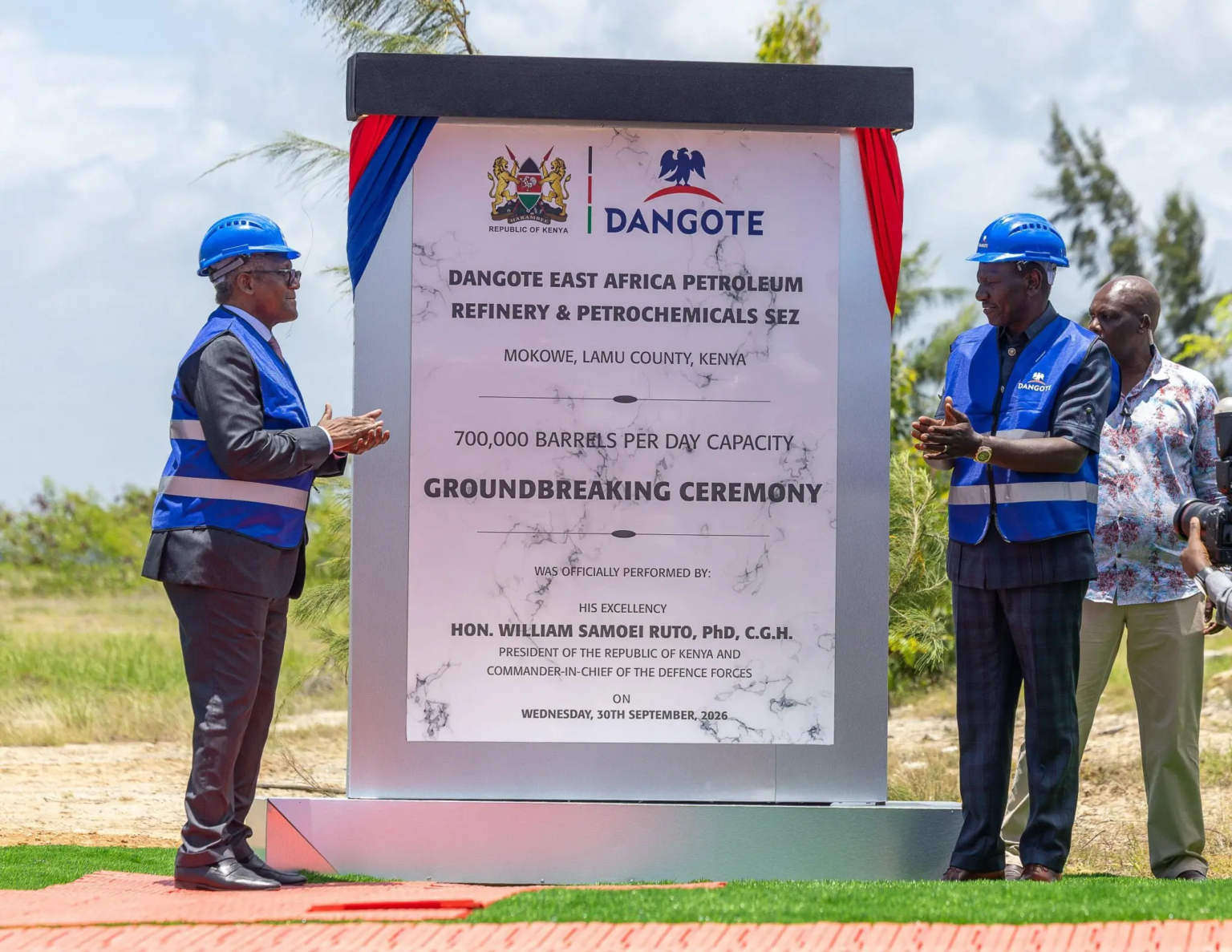
(LAMU, KENYA) – Engineering and technology contracts worth more than $100 million (£78 million) have been awarded for Kenya’s $16 billion (£12 billion) oil refinery project in Lamu, as construction began on what will be East Africa’s largest industrial facility.
India’s state-owned Engineers India Limited secured a contract exceeding $450 million (KES 58.3 billion / £350 million) to serve as project management consultant and oversee engineering, procurement and construction management. Honeywell Technologies was awarded work valued at approximately $300 million (KES 38.9 billion / £233 million) to provide process technologies, licensing, engineering services, proprietary catalysts, equipment and digital solutions.
The 700,000-barrel-per-day refinery is expected to create 60,000 jobs at peak construction. Dangote Industries has offered regional governments a combined 30% equity stake, with Kenya and Rwanda already moving to acquire shares. Governments will be permitted to spread payments over four years.
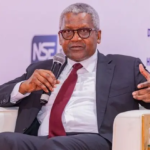
“We are not here merely to build tanks, pipelines, processing units, and jetties. We are here to help build an industrial ecosystem,” said Aliko Dangote, Africa’s richest man, at the groundbreaking ceremony. He said the project would include a training school for 1,000 people from Lamu, with engineering graduates and diploma holders expected to receive opportunities.
Dangote said the refinery would initially source crude from the Middle East and the United States while remaining positioned to process African crude as production increases. He cited Singapore as an example of a refining hub that produces no oil of its own.
The facility is designed to process crude from Kenya’s Lokichar fields in Turkana County alongside supplies from other parts of East and southern Africa. It will include a 1,000-megawatt power plant, with excess electricity to be sold to Kenya’s national grid and other customers. The complex is also expected to produce approximately one million tonnes of polypropylene and base oil, with jet fuel exports targeting European and British markets.
President William Ruto said the project represents Kenya’s largest-ever foreign direct investment and is expected to boost the country’s annual gross domestic product by 12%. “It is an investment in energy security, industrialisation and regional integration,” he said.
Uganda’s President Yoweri Museveni welcomed the refinery but said Uganda would proceed with its own smaller facility at Hoima, with a planned capacity of 60,000 barrels per day. “We can’t change that,” he said, arguing that East Africa requires multiple refineries to serve regional demand.
Ethiopian Prime Minister Abiy Ahmed said additional refining capacity would bring production closer to African consumers and create more resilient regional supply systems. “For Ethiopia, an additional regional source will broaden our supply options and create new opportunities for trade and investment,” he said.
Dangote pledged to complete the refinery within 40 months, targeting commissioning around 2030. The project is planned along the Lamu Port-South Sudan-Ethiopia Transport corridor and is expected to serve markets stretching from Kenya and Uganda to Rwanda, Tanzania, Ethiopia, South Sudan, the Democratic Republic of Congo, Mozambique and Zambia.