Zimbabwe Tycoon Wicknell Chivayo Dies in Helicopter Crash at 43, Leaving Behind a $100 Million Fortune and a Trail of Unfinished Business
(MARONDERA, ZIMBABWE) – Wicknell Munodaani Chivayo, the Zimbabwean businessman whose name became shorthand for government tenders, flashy gifts and a fortune estimated at more than $100 million, died on 30th September 2026 in a helicopter crash in Marondera, east of Harare. He was 43.
His wife, Lucy “Lulu” Muteke, whom he married in March 2025, was also killed. Six people were on board the aircraft, four passengers and two pilots, and there were no survivors. Zimbabwe’s permanent secretary in the Ministry of Information, Publicity and Broadcasting Services, Nick Mangwana, confirmed the deaths in a statement, saying “current information indicates that there were no survivors in this crash” . Police said the helicopter went down at around 5pm local time, and the cause of the crash was not immediately known. Police spokesperson Commissioner Paul Nyathi said the bodies were badly burned and formal identification was required.
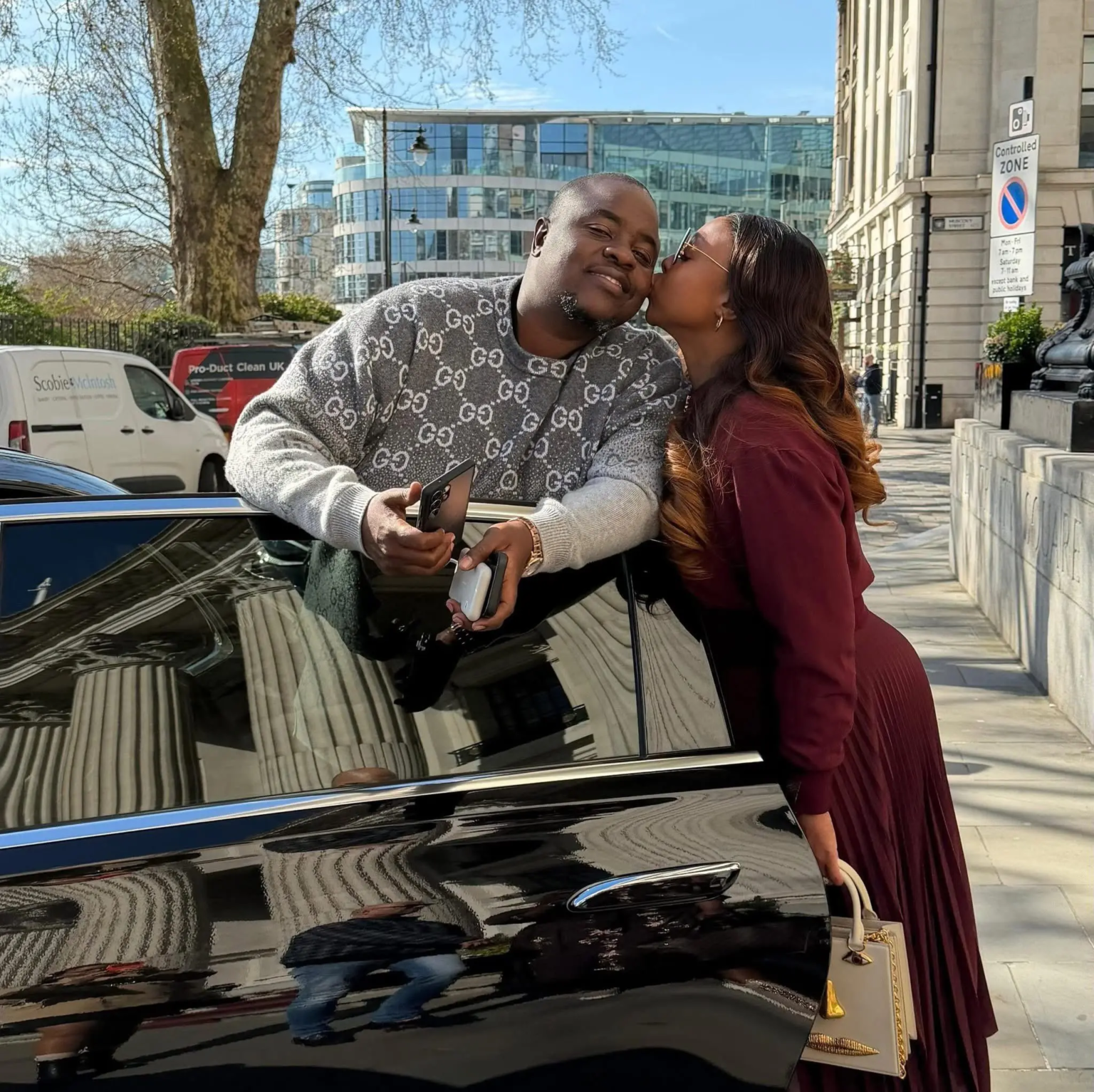
The crash ended the life of a man who was, by turns, celebrated and condemned in Zimbabwe. Chivayo was a self-styled “Sir Wicknell,” a businessman who built his public profile through an extraordinary display of wealth, including a $79 million Gulfstream G700 private jet, a $3.5 million mansion in Harare and a fleet of more than 50 luxury vehicles . His business record remained shadowed by legal proceedings, unfulfilled contracts and corruption allegations that he consistently denied.
Like a magician who dazzles the crowd with one hand while the other stays hidden, Chivayo mastered the art of spectacle. The cars, the cash, the helicopters, they were the smoke. The question that lingered until his death was whether there was ever a fire beneath it.
From Wages Clerk to Government Tenderer
Chivayo was born on 22nd November 1982 in the Gandami area of Chivhu, Mashonaland East. His father, Isaac Mathias Chivayo, died in a car accident when Chivayo was about ten years old, and he was raised by his mother. He attended Dudley Hall Primary School and Churchill Boys High School before leaving school in 1996. He worked briefly as a wages clerk at a local bus company before becoming involved in illegal foreign currency exchange at the Union Avenue Flea Market in Harare.
That early chapter in the informal currency trade foreshadowed a career that would repeatedly bring him into conflict with the law. In 2004, he was convicted of fraud and money laundering involving millions of rands. TRT Afrika reported that Chivayo had deceived a South African national into believing he would deposit over $100,000 in the South African’s account in exchange for $46,000, though in South African rand currency . He was sentenced to three years at Chikurubi Maximum Security Prison, where he served two years before release .
Yet by the 2010s, Chivayo had reinvented himself as a businessman. He founded Intratrek Zimbabwe (Private) Limited in 2008, a company that secured government contracts in energy and infrastructure . His most prominent project was the Gwanda Solar Project, a 100-megawatt plant in Matabeleland South awarded in 2015 at an initial contract value of approximately $172 million .
The Gwanda Solar Project: A Contract That Never Built a Single Panel
The Gwanda project became the defining controversy of Chivayo’s career. Intratrek received a $5 million advance payment from the Zimbabwe Power Company but carried out no substantive construction work. Parliamentary committee reviews found that advance payment certificates had been issued without corresponding progress and that the payment was made without a required Advance Payment Guarantee.
Nearly a decade after the contract was awarded, the site remained a fenced bush. Business Daily reported in October 2025 that the 262-hectare site had degenerated into a neglected expanse where children played football and residents dumped waste. The fence surrounding the site was partly vandalised, with sections cut open to allow villagers to pass through .
Ward 10 councillor Siyanda Siziba said residents felt betrayed.
“The people are in pain about this issue because it’s a project they looked forward to and wanted to see succeed,” Siziba said. “Gwanda doesn’t have enough land, and yet that area is just fenced bush, pegged and left like that. We don’t have accommodation, but that land is wasted. All this is not assisting us as Gwanda” .
Think of a farmer who is given seed, fertiliser and a tractor, then returns a decade later with nothing but a fence around a field of weeds. That, in essence, was Gwanda.
ZPC cancelled the contract in 2018, citing non-performance. Intratrek challenged the termination. The High Court ruled in January 2023 that the contract remained valid, and the Supreme Court dismissed ZPC’s appeal in December of the same year . The court effectively cleared the way for the project to proceed or for ZPC to face damages of up to $22 million .
In September 2026, just weeks before his death, ZPC issued a formal Notice to Proceed directing Intratrek to return to the Gwanda site and complete the project within 24 months. Nehanda Radio reported that the revised contract cost was put at approximately $132 million, reduced from the original $172 million in line with falling global solar construction costs . A fresh advance mobilisation payment was agreed, although the amount and terms were not publicly disclosed.
Intratrek executive chairman Wilson Manase said the company was preparing to mobilise.
“Our mobilisation will encompass site establishment of temporary site facilities and other preparatory activities necessary to position the project for full-scale execution of the subsequent EPC works,” Manase said.
He added that the requisite advance payment guarantee had been submitted through Intratrek’s technical partner, CHiNT Electric .
The Herald reported in August 2026 that Chivayo had pledged to personally finance the project if necessary.
“I am willing to put my own money in, even if the Government doesn’t pay me,” he said on the Denny J Show podcast. “I am willing to build that solar farm with my own money and even walk away unpaid. I will do anything” . He described the project’s failure to take off as “the worst thing that has happened in my life” .
Legal Proceedings: Acquittals, Appeals and Unresolved Questions
Chivayo’s legal history was as extensive as his business portfolio.
In March 2011, Zimbabwe’s state-controlled newspaper The Chronicle reported that Chivayo had allegedly created fictitious websites, which unsuspecting clients believed could help them procure goods. According to The Chronicle, the websites would disappear upon receiving payments . He was arrested on eight counts of fraud and money laundering, and five of his vehicles were confiscated. He was acquitted of all counts following trial.
In August 2018, he was arrested and charged with fraud, money laundering and contravening the Exchange Control Act in connection with the Gwanda advance payment. The case stretched on for years before a magistrate court ruled in 2024 that the state had not established a prima facie case . A separate bribery allegation, which claimed he paid $10,000 to a former Zimbabwe Power Company board chairman to influence the solar tender, was similarly dismissed.
In 2018, Chivayo was arrested in connection with an alleged R1.58 million mining equipment fraud involving Genius Kadungure. He was separately acquitted of fraud charges relating to approximately R1.5 million allegedly defrauded from Kadoma miners and ZANU-PF MP Dexter Nduna.
The ZEC Election Materials Contract: A $100 Million Question
In 2024, leaked audio recordings linked Chivayo, along with associates Mike Chimombe and Moses Mpofu, to a $100 million contract awarded to supply election materials to the Zimbabwe Electoral Commission ahead of the 2023 general elections. Nehanda Radio reported that in the audio, Chivayo gloated that he had a tight grip on the system and was getting all important contracts, and that the President considered him a son .
The Zimbabwe Anti-Corruption Commission investigated. In December 2025, ZACC chairperson Michael Reza announced that investigators had found no documentary evidence linking Chivayo to the alleged scheme. “We went to ZEC and asked them to give us the contracts,” Reza said. “The answer they gave to our investigators was that they did not know these people. They had not done any business with them” .
Chivayo said he felt vindicated. “ZACC has confirmed beyond any doubt that I was never involved in any procurement of election materials for ZEC,” he said. “I have never had any contractual or business relationship with ZEC, nor have I ever worked with or partnered with Chimombe or Mpofu in any business whatsoever” .
However, the decision was criticised. Former Mt Pleasant MP Fadzayi Mahere argued that ZACC’s investigation focused too narrowly on the absence of a direct contract while ignoring critical financial leads from South Africa. She questioned why ZACC did not pursue alleged suspicious transactions flagged by South Africa’s Financial Intelligence Centre or investigate why Ren-Form CC, the official contractor, reportedly paid millions into Chivayo’s accounts .
A report by South Africa’s Financial Intelligence Centre had flagged potential criminal conduct. Legalbrief reported in September 2026 that according to the FIC, Chivayo received $40 million from a total of $66 million paid to Ren-Form CC, a South African company contracted to supply voting materials for Zimbabwe’s August 2023 general elections.
The report revealed that Chivayo used multiple personal and company accounts to move the funds around rapidly through transfers and cash withdrawals. The money moved through major South African banks, including FNB, Standard Bank and Absa. Some of the funds were reportedly spent on luxury items, including designer clothes, high-end vehicles, electronics, real estate and international travel .
South Africa’s Directorate for Priority Crime Investigation, known as the Hawks, subsequently confirmed that Chivayo was not under investigation in South Africa. “The DPCI has no such case in our system,” Hawks spokesperson Colonel Katlego Mogale said . South Africa’s Financial Intelligence Centre said it does not conduct criminal investigations but provides financial intelligence to law enforcement agencies . South African publication News24 later retracted its report and apologised after Chivayo’s legal team, led by Advocate Dali Mpofu, challenged the publication over what they described as false claims linking their client to election procurement fraud .
In September 2026, activist Emmanuel Moyo submitted a formal petition to Parliament calling for an investigation into alleged money laundering involving Chivayo in the ZEC tender, citing the FIC report. The petition was pending at the time of his death .
Political Alliances and Regional Expansion
Chivayo was a publicly declared supporter of ZANU-PF and President Emmerson Mnangagwa. The Africa Report noted in July 2026 that Chivayo had steadily expanded his network across the continent, cultivating relationships with political elites and securing business opportunities . He had visited presidents Samia Suluhu Hassan of Tanzania, Daniel Chapo of Mozambique, William Ruto of Kenya, Bola Tinubu of Nigeria, Hakainde Hichilema of Zambia, Peter Mutharika of Malawi and Cyril Ramaphosa of South Africa .
In January 2025, Chivayo publicly criticised Acting President Constantino Chiwenga, describing him as a “failed politician” following Chiwenga’s remarks on corruption within ZANU-PF.
In February 2025, Chivayo was reported to have developed close ties with Kenyan President William Ruto. Citizen Digital reported that Chivayo had become “President Ruto’s new Zimbabwean BFF,” describing him as a frequent presence within the president’s circle.
The Star reported in August 2026 that Chivayo had captured a moment on video during a visit to the Ruto family’s Intonna Heritage Farm in Kilgoris, Narok County, where President Ruto personally drove him to a helipad.
“I am being driven by the President of Kenya,” Chivayo said in the video. “Being driven by the President of the Republic. Ah, no, no. God is the greatest” .
In June 2026, Chivayo’s company IMC Construction Kenya secured a stake in the proposed $2.9 billion expansion of Jomo Kenyatta International Airport after being included as a joint-venture partner by a Chinese consortium led by China Communications Construction Company . Kenya’s Transport Cabinet Secretary Davis Chirchir subsequently disputed the reported arrangement, saying tenders were still being evaluated .
Beyond Kenya, Chivayo’s business interests extended across the continent. The Africa Report noted that in Eswatini, his company Intratrek Holdings was reported to be investing R3 billion ($183 million) in a 300MW solar project as an independent power producer. King Mswati III made 120 hectares of land available for the project . The government of Eswatini confirmed it had granted Chivayo a diplomatic passport as part of recognising his “philanthropic work in Zimbabwe and across the African continent” .
The Kenya Times reported in June 2026 that Intratrek Zimbabwe had signed a $2.5 billion agreement with China’s Chint Group for energy transmission projects in Kenya and Tanzania, described as one of the largest private energy investment deals announced in the region .
The Giver: Philanthropy or Influence?
Chivayo was publicly known for high-value gifts to musicians, journalists, sports organisations and security forces. An investigation by Zimbabwean media reported that he spent over $9.3 million on luxury cars and gifts within a twelve-month period .
Africa Press reported in November 2025 that an analysis of his social media posts showed that in the previous 24 months, Chivayo had spent more than $70 million on cars, houses and cash gifts for celebrities, members of his Johanne Masowe Church, ZANU PF politicians, social media personalities and randomly selected people in need .
Reported gifts included:
-
A 2025 Toyota Land Cruiser VXR and $100,000 in cash to broadcaster Reuben Barwe in May 2025.
-
A 2025 Range Rover Autobiography and $150,000 in cash to musician Jah Prayzah in May 2025.
-
Vehicles totalling R7.2 million ($420,000) to Zimbabwe Football Association president Nqobile Magwizi across two occasions in 2025 and 2026.
-
R10.4 million ($600,000) and a bus to Highlanders F.C. ahead of the 2026 season.
-
20 luxury vehicles and $2 million to the Zimbabwe Defence Forces, Zimbabwe Republic Police and Zimbabwe Prisons Service in December 2025.
In late 2025, Chivayo marked his 45th birthday with a $5.3 million giveaway while holidaying in Seychelles. He pledged six top of the range Toyota Land Cruisers to leaders of ZANU PF’s women’s league, $500,000 to be shared equally across the league’s 10 provincial structures, 10 Toyota Hilux GD6s for provincial women’s league leaders, and a further six Hiluxes plus $100,000 for the ZANU PF affiliate Young Women 4 ED. He also donated ten 75-seater buses, each costing $210,000, to Johanne Masowe Church “women” .
President Mnangagwa publicly praised Chivayo’s philanthropy. AllAfrica reported in August 2026 that Mnangagwa said at an apostolic sect national event in Harare: “I appreciate the work being done by Chivayo in our community. He is a giver and continues to gift members of our community. Stay in that lane and know that the more you give is the more you receive. Give and it shall be given to you” .
In January 2025, Chivayo was accused of attempting to influence ZIFA elections by promising vehicles and financial incentives to voters. He denied the allegations.
Giving, for Chivayo, was not charity in the traditional sense. It was architecture. Each vehicle and each envelope of cash was a brick in a wall of influence that stretched from football pitches to police barracks. Whether that wall protected him or imprisoned him is a question only history will answer.
The $79 Million Jet and the Wealth Question
In July 2025, Chivayo unveiled a $79 million Gulfstream G700 private jet, one of the world’s most expensive aircraft. The Zimbabwe News Live reported that Chivayo made the announcement via a video on his social media platforms, stroking a miniature model of the jet and declaring that he was “not a runner,” dismissing long-standing rumours that he was a front for President Mnangagwa .
According to Simple Flying, a respected aviation site, the Gulfstream G700 has a base price of $79 million, which can rise to $95 million with customisations. Industry experts estimated the annual operating cost of the jet exceeds $5 million, including pilot salaries, fuel, hangar storage and maintenance .
News of the purchase prompted fierce backlash from Zimbabweans. “This is the clearest sign yet of how impunity has become a badge of honour in Zimbabwe,” a Harare-based economist said. “While civil servants beg for salaries and hospitals go without paracetamol, some are flying private” .
Chivayo told the Denny J Show podcast that he had contracts worth $9 billion from across Africa and other deals with western conglomerates, which he used to finance his flamboyant lifestyle . His primary business, Intratrek Zimbabwe, specialised in engineering, procurement and construction projects, particularly in the renewable energy sector. He also owned TRX, a transport and logistics business operating a fleet of about 50 fuel tankers, and was linked to a fuel company in South Africa that exports fuel to Lesotho .
Personal Life and Final Days
Chivayo paid lobola for Sonja Madzikanda in July 2017 and held a formal wedding ceremony in December 2017, with the bride price reported at $50,000. The couple divorced in 2024. Chivayo stated that the primary reason was irreconcilable tensions between Madzikanda and his family, and that he continued to financially support his former wife and their two children.
In March 2025, he married Lucy Muteke in traditional and religious ceremonies, including a celebration within the Johane Masowe eChishanu congregation. She died alongside him in the crash.
The helicopter went down in the Marondera Rural area at approximately 17:09 CAT. ZimLive was first to break the news of Chivayo’s death, with NewZimbabwe.com and prominent Zimbabwean journalist Hopewell Chin’ono also confirming that the businessman and his wife had been killed . The government extended its condolences to the victims’ families.
At the time of his death, Chivayo’s Gwanda Solar Project had just been given a fresh 24-month deadline. The project that had defined his business career, and its controversies, remained unbuilt. It was, in the end, a fitting metaphor: a man who promised light to a nation but left behind only a fence and a field of weeds.
Net Worth Disclaimer
This article contains estimates of Wicknell Chivayo’s net worth derived from media reports, public filings and published profiles. No independently audited public record establishes his precise personal net worth.
Figures cited should be treated as journalistic estimates rather than verified financial statements. Contract values and company revenues are not equivalent to personal wealth. Currency conversions are approximate and based on exchange rates prevailing at the time of reporting.