

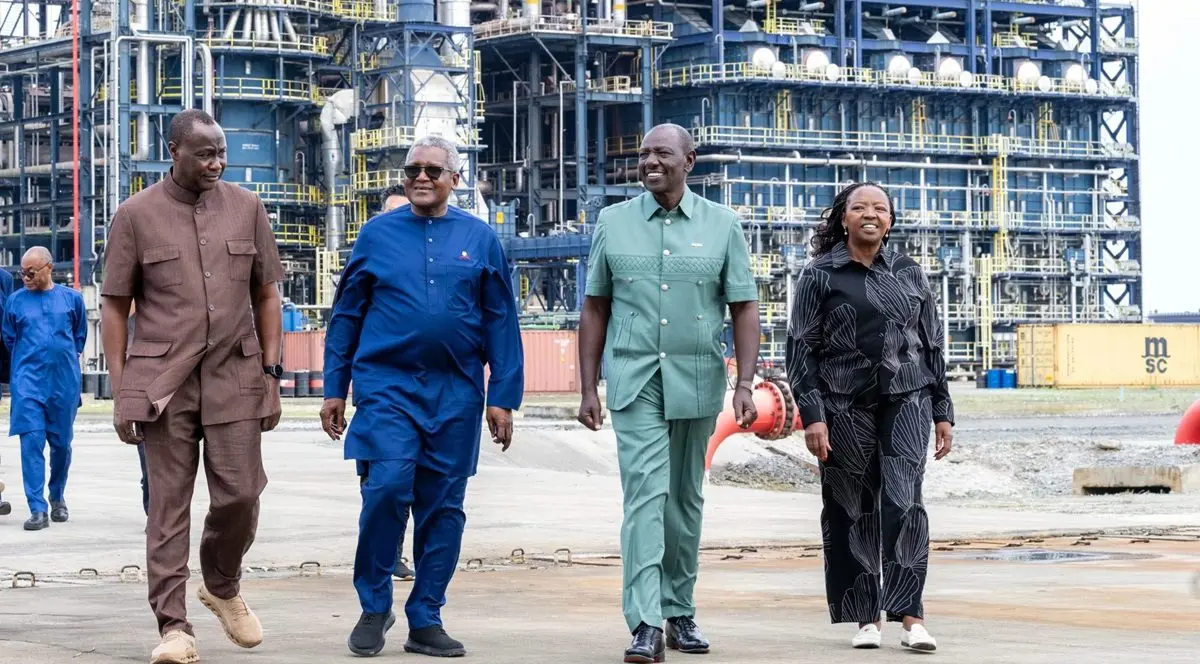
(NAIROBI, KENYA) – Kenya will increase its stake in the proposed KES 2 trillion ($15.4 billion / GBP 11.9 billion) Dangote refinery in Lamu beyond the 10% it has been allocated if other East African countries decline to take up their share, National Treasury Cabinet Secretary John Mbadi has said.
The regional governments have been offered up to 30% of the refinery, with Kenya’s allocation set at 10% while Ethiopia and Rwanda have expressed interest in acquiring a stake. Construction of the facility, which is designed to process 700,000 barrels of crude per day, begins on Wednesday.
“If other governments are not going to take up, we can increase that and have more for Kenya and even have individual investors,” Mr Mbadi said on Tuesday.
Kenya’s 10% stake is equivalent to an investment of around KES 200 billion ($1.54 billion / GBP 1.19 billion). Mr Mbadi did not disclose when Kenya would buy the shares or the source of funds for the proposed shareholding. He added that the ownership structure has not been finalised, with the government first focused on getting the Nigerian investor to begin construction.
“What is important is we are putting up a refinery for East Africa. The investor identified and has the confidence to invest in the economy,” the minister said.
Kenya recently established the National Infrastructure Fund, a corporate investment vehicle designed to finance large-scale public projects through a market-driven model rather than relying on national budget allocations and sovereign debt.
The Lamu project is being developed by Nigerian billionaire Aliko Dangote with backing from the Africa Finance Corporation. The groundbreaking follows months of negotiations over ownership, financing and regional participation.
The refinery is planned for land within the Lamu Port-South Sudan-Ethiopia Transport corridor and will form part of a wider petrochemical complex incorporating related industries and infrastructure. It is expected to process crude from Kenya’s South Lokichar fields alongside supplies from other parts of East Africa, southern Africa and international markets, with the port of Lamu providing a maritime link.
The refinery is expected to serve a regional market that remains heavily dependent on imported petroleum products, with the project intended to increase local refining capacity and strengthen fuel supply chains.
Kenya’s participation comes as the country prepares to begin commercial crude production in Turkana, with first oil targeted for December and initial exports expected in early 2027. Kenya’s initial crude output will be far below the refinery’s planned capacity, meaning the plant will require additional crude from other producers and international markets to operate at scale.
Mr Dangote said governments investing in the project, including Kenya and Rwanda, would be allowed to spread payments for their equity stakes over four years. “We have made it very simple and easy for them to fund their own equity. They are not putting their equity in one day,” he said, adding Rwanda had sought a 10% stake, a request that is being discussed. Other countries besides Kenya and Rwanda have also expressed interest in investing in the refinery, Mr Dangote said, without naming them.
The Lamu refinery will source crude from regional producers, including Kenya, which is racing to begin oil production from its own deposits, as well as from overseas suppliers in the Middle East and the United States, Mr Dangote said. “You don’t go and build a refinery for only one source of crude. You take different types: Middle Eastern crude, American, WTI, so you mix them up,” he said, adding he expects annual revenues of $30 billion (KES 3.87 trillion / GBP 23.2 billion) from the Lamu refinery.
The groundbreaking marks the formal start of a project that Mr Dangote says will take about three years to construct, putting potential commissioning at around 2030. The shareholding offer opens the door for individual investors to participate, potentially broadening ownership of one of the continent’s biggest planned energy investments.
Kenya currently has no operating refinery of comparable scale, while the former refinery in Mombasa has remained mothballed after shifting to an import-storage and distribution model. The government estimates the project could create about 60,000 jobs, though the final number will depend on the scale of construction and associated industries that emerge around the refinery.
The investment is also expected to increase activity at Lamu port, which will handle construction cargo, crude imports and petroleum products while strengthening the commercial case for the wider LAPSSET corridor. The port has three operational berths, while subsequent development is expected to include liquid-bulk facilities that could support petroleum handling and other industrial activity around the refinery.
The investment comes as Dangote expands his African refining business, with his 650,000-barrel-a-day Lekki refinery in Nigeria already operating and serving as the model for the Kenyan facility.