




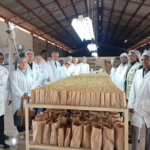





(KISII, KENYA) – Kenya’s government has committed to reviving the ageing Nyamache and Itumbe tea factories in Kisii County through replanting of old tea bushes, modernisation of processing equipment and a crackdown on illegal green leaf trading.
Principal Secretary for Agriculture Paul Kipronoh Ronoh said the government would back a funding request of KES250 million, about $1.9 million or £1.5 million, to upgrade machinery at the two factories. The money would pay for two automatic withering machines, a CTC dryer, orthodox tea processing equipment and new buildings.
Ronoh has also directed the Tea Board of Kenya to enforce the Tea Act 2020, which bars factories from buying green leaf from farmers registered with other factories. The move targets a practice known locally as mang’ereto, where traders pay farmers cash immediately for green leaf, undercutting factories that pay through established cycles.
The boards of Nyamache Tea Factory and its satellite Itumbe Tea Factory met ministry officials in Nairobi to present a memorandum on challenges facing the two plants. Factory officials said hawking has cut green leaf deliveries and left operations running below capacity despite adequate farmer numbers and production potential in surrounding areas.
Ronoh said the government is considering an online payment system that could start within two weeks to speed up farmer payments and reduce the appeal of cash offers from hawkers.
The government has also pledged 100,000 tea seedlings for Nyamache smallholder farmers to replace ageing tea bushes. A further 10,000 seedlings will go to each of the 14 tea factories in Kisii and Nyamira counties as part of a wider productivity drive.
Most tea bushes supplying Nyamache and Itumbe were planted when the factories were established and have been producing for nearly five decades. Factories currently receive about 0.5 kilogrammes of green leaf per bush each year, below the government target of 2.5 kilogrammes through phased replanting with climate resilient varieties.
Nyamache Tea Factory was commissioned in 1978 by the late President Jomo Kenyatta. It was built to process about 15 million kilogrammes of green leaf annually, but farmers can deliver up to seven million kilogrammes beyond that capacity during peak seasons. At times the factory receives as much as 60 tonnes of green leaf daily, putting strain on machinery that has not seen major upgrades since the plant opened.
Itumbe was set up as a satellite to absorb extra production but faces similar problems of old equipment and limited investment.
Ronoh said the factories should match government support by cutting the cost per unit of made tea and exploring alternative marketing arrangements to improve farmer returns. He also supported plans for a western region tea auction to reduce transport costs for tea now sent to the Mombasa auction. Lower logistics costs could improve competitiveness of tea from the region, he said.
For farmers, replanting offers a chance to restore productivity on farms that have supported generations of families. But replacing old bushes takes time because farmers must manage a transition period before new tea reaches full production.
The Nyamache case shows wider challenges facing some of Kenya’s older tea factories, including ageing infrastructure, falling productivity, competition for green leaf, informal markets and the need for fresh investment.
A joint technical team from the Ministry of Agriculture, Kenya Tea Development Agency, research institutions and financial stakeholders is expected to work on the proposed interventions.
Principal Secretary for Broadcasting and Telecommunication Stephen Motari Isaboke led the delegation of tea farmers from Kisii and Nyamira counties and welcomed the government commitments.
“For the farmers of Bobasi, the hope is that the commitments made in Nairobi will translate into seedlings in their fields, faster payments, modern machinery at the factory, and a stronger market for their tea,” Isaboke said.
Tea remains one of Kenya’s major agricultural export commodities and a key source of foreign exchange, supporting millions of livelihoods directly and indirectly.
The proposed measures are expected to give Nyamache and Itumbe factories a new lease of life while improving productivity, farmer incomes and the sustainability of tea farming in Kisii and Nyamira counties.