




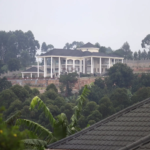





(NAIROBI, KENYA) – A bitter family dispute has ended with two children of a former Kenyan Cabinet minister being declared bankrupt over KES 4.83 million ($37,400 / GBP 27,700) in unpaid legal fees tied to their father’s KES 250 million ($1.9 million / GBP 1.4 million) estate.
The High Court declared Marianne Nyokabi Kamotho and David Waweru Kamotho bankrupt after they failed to settle fees owed to lawyer Paul Maingi Musyimi, who represented them in a long-running fight with their mother and sibling over the inheritance of the late politician John Joseph (JJ) Kamotho.
Ms Nyokabi owes the larger share of the legal fees at KES 3,738,997 ($28,900 / GBP 21,400), while Mr Waweru has an outstanding balance of KES 1,094,763 ($8,500 / GBP 6,300).
Ms Nyokabi’s bankruptcy order was issued on 30th January 2026, with the court appointing the Official Receiver as trustee of her estate. The petition against her was based on the KES 3.74 million ($28,900 / GBP 21,400) debt and a statutory demand she failed to satisfy.
The siblings had counted on proceeds from their father’s estate, including the sale of a KES 82 million ($634,000 / GBP 469,000) Nairobi house, to help settle their debts. That money has not been released, as a long-running feud between two factions of the Kamotho family continues to delay distribution of the estate.
The feud began after the death of the former Mathioya MP in a South African hospital on 6th December 2014. Mr Kamotho, one of former President Daniel arap Moi’s longest serving ministers, died without a will.
Since then, his widow, Eunice Wambui Kamotho, and his four children have been unable to agree on how to distribute his multimillion shilling wealth, prompting prolonged court proceedings.
Besides Mr Waweru and Ms Nyokabi, the other children are Charles Githii Kamotho and James Mwai Kamotho.
Factions soon formed within the family as the heirs jostled over the estate, which included five parcels of land in Gacharage, Murang’a; land in Kakuzi; a house at Jadenville Country Homes; and the matrimonial home in Kitisuru, Nairobi.
The late politician also held shares in Safaricom, KenGen, Britam, Barclays and Sameer Africa, as well as a bank account at Standard Bank.
Mr Waweru and Ms Nyokabi were often on one side of the dispute, while their mother and Mr Githii were on the other.
The bitterest fight was between the daughter and her mother, with the two at one point seeking competing court orders over the Kitisuru home.
On 20th March 2025, Ms Wambui sought the eviction of her daughter from the property, arguing it was her matrimonial home and that she had a life interest in it. She also accused Ms Nyokabi of insulting her and starting repairs on the property without her consent.
Ms Nyokabi opposed the application, describing the property as a family home in which she was entitled to live as the late Kamotho’s daughter and co-administrator of the estate. She also told the court she lacked an alternative home and the financial means to secure decent accommodation, saying her resources had been depleted and she had suffered financial hardship.
The court found that Ms Wambui had a right to evict her daughter but dismissed the application because she had not complied with the statutory requirement to issue a three month eviction notice.
The legal battles have made it difficult for the family to distribute the estate, leaving some beneficiaries, including Ms Nyokabi and Mr Waweru, short of liquid assets. The siblings nevertheless cited their claims to their father’s estate during the bankruptcy proceedings as evidence they could meet their debts.
One of the properties at the centre of the succession dispute was the KES 82 million ($634,000 / GBP 469,000) Jadenville Country Homes house, whose sale was approved by the court in 2022.
The court allowed Ms Wambui to sell the property to raise money for her upkeep and medical expenses. Half of the proceeds was to be shared equally among the four children, while the other half was to go to their mother.
Mr Waweru and Ms Nyokabi opposed the sale, arguing their mother did not need to dispose of the property because she received substantial rental income and a government pension following their father’s service as a minister. They also objected to what they considered piecemeal distribution of the estate, arguing the family should wait for confirmation of the grant before dividing the wealth.
The court nevertheless allowed the sale and directed how the proceeds would be divided. The transaction, however, has not resolved the wider succession dispute, leaving the estate and the money the siblings hoped would help them settle their debts tied up in years of litigation.