









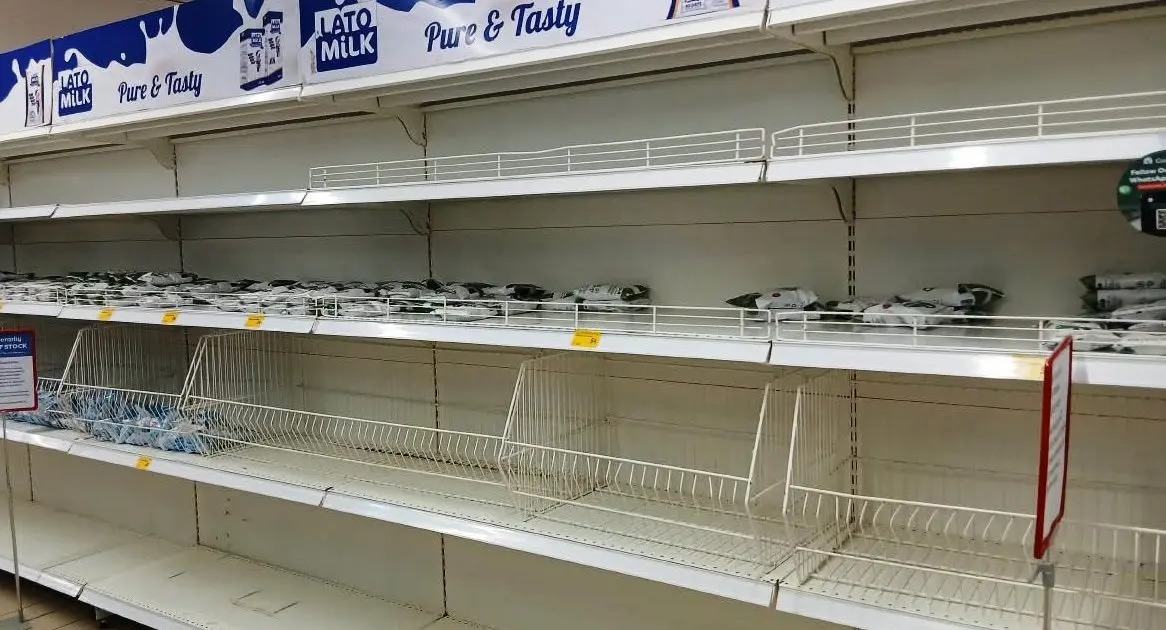
(KISUMU, KENYA) – An acute milk shortage has hit Kisumu city, forcing retailers to ration supplies and raise prices for a product that is a staple food for many Kenyan households. Supermarkets and shops across the city are reporting empty shelves, while outlets with stock have increased prices sharply.
A spot check by the Kenya News Agency found that most sellers have raised the price of a half litre packet of popular milk brands to between KES 50 and KES 60 ($0.39 and $0.47 / £0.30 and £0.36). The previous retail price was about KES 50. Consumers have expressed concern over the scarcity and the price increases in supermarkets and milk dispensing machines across the city.
The shortage has been linked to prolonged drought and harsh weather conditions that have reduced pasture and fodder for dairy cattle. The reduced milk supply has prompted some sellers to ration the product so that more customers can access it instead of a few buyers purchasing in bulk.
Bradle Odhiambo, the official in charge of orders at the Naivas supermarket branch in the city centre, said customers are now limited to three packets per person. He said the store has stopped selling milk in cartons because supply is not as plentiful as before. Odhiambo said prices have risen as the store tries to manage the situation.
Erick Odera, assistant manager at Naivas, said sales have decreased while prices have increased, a situation he said has never happened before. Nicholas Ochieng, a local consumer, said he cannot find the milk brand he usually buys since the crisis began. He said higher prices mean he cannot buy as many packets as before, forcing his family to limit milk consumption or go without it.
A restaurant owner in the city centre who identified herself as Mama Beryl said she has been forced to increase the price of tea sold to customers because milk is supplied to her at a high price. She said a cup of tea that used to cost KES 25 ($0.19 / £0.15) now costs KES 40 ($0.31 / £0.24), an increase of KES 15 ($0.12 / £0.09). She said if the situation does not improve, she may stop selling milk tea, which is her main source of income.
The Kenya Dairy Board expects domestic supply to stabilise and recover with the arrival of the October to December short rains, which will replenish pastureland. According to the Food and Agriculture Organisation, Kenya faces an annual milk production deficit of about 4.42 billion litres, driven largely by poor animal nutrition and feed constraints.