





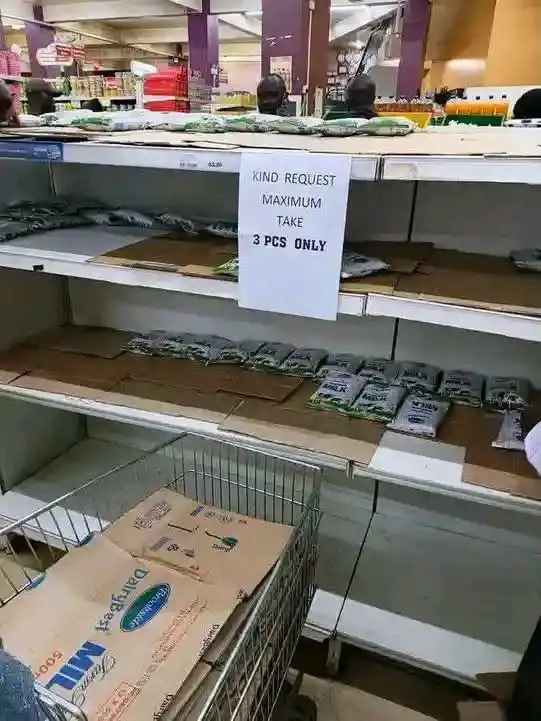
(NAIROBI, KENYA) – Kenya’s formal milk deliveries to processors fell 3.7% to 81.3 million litres in July from 84.4 million litres in June. The decline has caused intermittent shortages of some milk brands and pack sizes in retail outlets. The government and dairy industry stakeholders have started measures to restore supplies and cushion farmers and consumers from further disruption.
Principal Secretary for Livestock Development Jonathan Mueke said the drop is mainly due to prolonged dry conditions that have reduced pasture and increased pressure on animal feeds. He said the dry conditions have affected Kenya and neighbouring countries. Reduced feed availability has lowered milk production and limited supplies to processors.
To address the situation, the government will work with the Association of Kenya Feed Manufacturers and other feed millers to identify areas with surplus feed stocks. The feed will be distributed to dairy farmers through cooperatives and processors. Mueke said supporting farmers is central to restoring the supply chain because poor feeding directly affects milk yields.
The government has approved duty free importation of 500,000 tonnes of yellow maize for use in animal feed manufacturing. The measure is expected to ease pressure on feed manufacturers and contain production costs. Mueke said the necessary gazette notice is expected next week to allow feed millers to import the maize.
The Kenya Dairy Board will increase monitoring of milk production and the movement of milk from farms to processors. This is meant to ensure farmers receive fair prices and enough quantities reach the formal market. The move follows concerns that some farmers are diverting milk to informal buyers where they get better prices. This deprives processors of raw milk.
Mueke also raised concerns over governance in some dairy cooperatives. He said some cooperatives buy milk from farmers at more than KES60 per litre, or about $0.39 / £0.31, but keep large margins instead of passing enough returns to producers. The State Department for Cooperatives and the Commissioner for Cooperatives have been engaged on the matter. A circular is expected to remind cooperatives to operate within regulations and limit their margins to about KES2 to KES3 per litre, or about $0.013 to $0.019 / £0.010 to £0.015, for value addition.
The government is considering a milk stabilisation fund. Excess milk produced during high production periods would be processed into powder and stored for use during shortages. Mueke said this would smooth out seasonal changes in milk prices and availability. It would also allow farmers to benefit from higher production periods. Processors would buy back stored milk products when production falls, reducing the severity of future shortages.
Kenya Dairy Processors Association Interim Chairman Kenneth Gitonga said consumers should not panic buy milk. He described the supply disruption as temporary and said the decline is about 3%. He added that processors are working to ensure every available litre reaches consumers while keeping prices stable. Gitonga is also the Chief Executive Officer of Meru Central Dairy Cooperative Union.
Gitonga cautioned consumers against buying unprocessed milk from informal traders. He warned that some operators add water and other substances to milk before selling it. Traders involved in such practices risk legal action. The dairy regulator urged consumers to buy milk from licensed processors and authorised outlets.
On concerns that foot and mouth disease could be contributing to the decline, Mueke said Kenya has no active outbreak capable of explaining the national supply reduction. He pointed to the digital disease surveillance system and vaccination programme which allow veterinary authorities to identify and contain outbreaks. He said isolated cases are treated and contained when detected.
The government expects rains to improve pasture availability and milk production. Mueke said the Meteorological Department has forecast significant rains within the next three weeks. He said the government would continue tracking production and supply figures daily and issue regular updates.
Mueke ruled out immediate milk imports. He said the government would first exhaust measures aimed at strengthening domestic production. If the shortage persists, the government may consider opening an import window for milk powder or other dairy products to protect consumers from excessive price increases. He said the measures being implemented should prevent significant price increases although normal supply and demand pressures could result in adjustments within the recommended retail price range.