






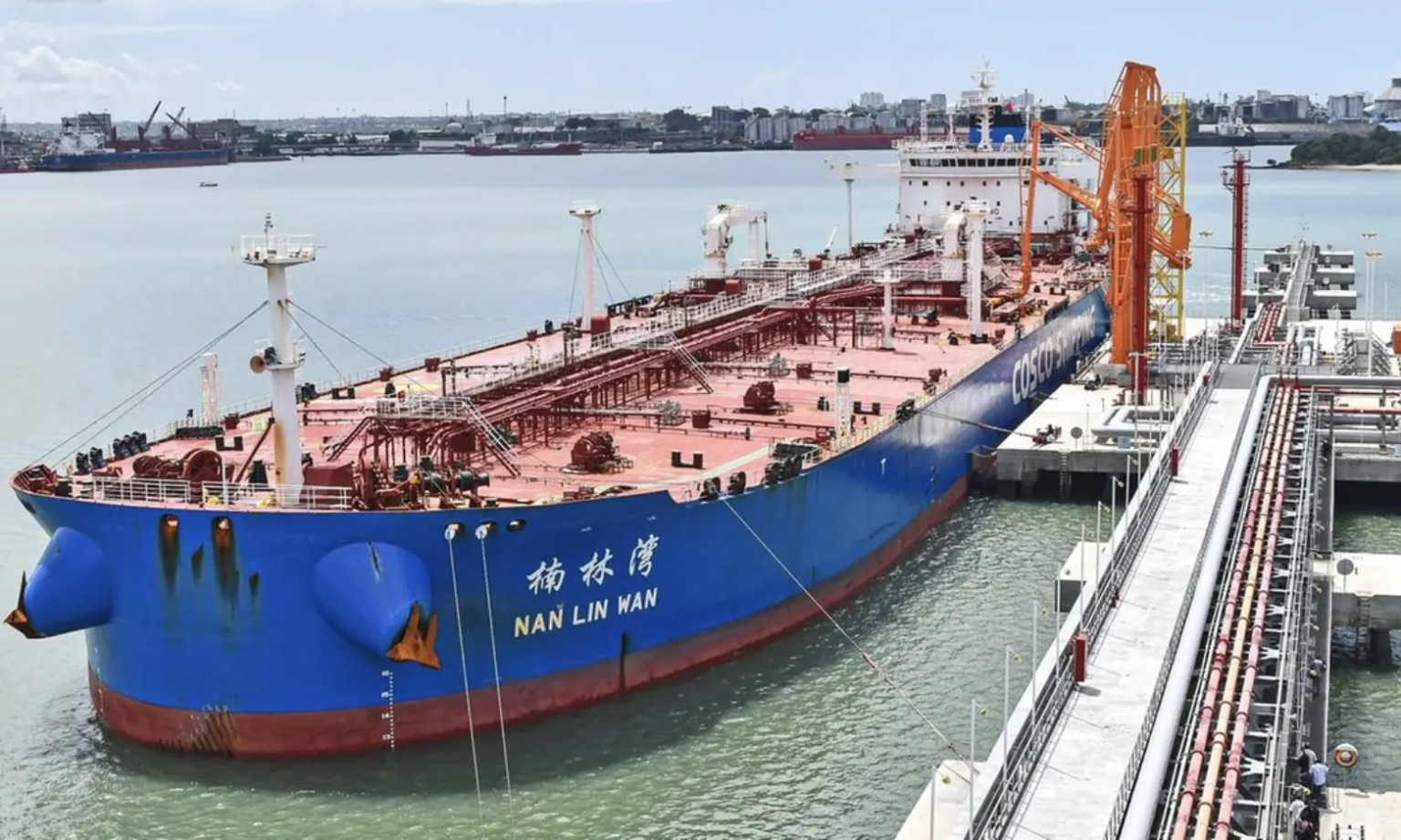
(NAIROBI, KENYA) – Record high crude oil tanker freight rates are building fresh pressure on fuel prices at the pump and household energy bills in Kenya as the fallout from the Middle East crisis widens.
The cost of hiring oil tankers, known as maritime freight and charter rates, is a critical driver of Kenya’s pump prices because the country relies entirely on seaborne imports for its petroleum products. Any increase in tanker freight rates is passed on to households and factories.
Oil tanker freight rates for mid sized vessel categories such as Aframax or Suezmax have risen to historic highs in September 2026 due to lower fleet efficiency from longer voyages and severe disruption of seaborne trade from the US Israel war against Iran. Ship to ship transfers also keep vessels occupied for longer.
The Aframax or Suezmax tankers carry 60,000 tonnes of product. The vessels that deliver products at the Mombasa port are smaller Aframax and Suezmax category tankers. The Aframax vessels dominate petroleum deliveries at the Mombasa port at 90% while Suezmax accounts for the rest.
Market data by Clarkson Research, which tracks global merchant shipping trends, shows that in the period market, the one year freight rates for Suezmaxes have risen above $100,000 (KES 12.94 million / GBP 74,600) per day compared with an average of around $38,000 (KES 4.91 million / GBP 28,300) in 2025, while Aframax rates have reached around $70,000 (KES 9.06 million / GBP 52,200) per day.
The market data further show that the surge has seen the average earnings for Suezmaxes and Aframaxes rising to more than $300,000 (KES 38.83 million / GBP 223,900) and $150,000 (KES 19.41 million / GBP 111,900) per day, respectively.
“This would definitely impact product pricing locally. Freight and marine insurance charges form part of the landed cost, which forms a significant part of the final price calculations,” an executive of an oil marketing firm told Business Daily.
The petroleum pricing formula by the Energy and Petroleum Authority (Epra) shows that the total landed cost of imported petroleum products, which includes insurance, freight, and free on board (FOB), accounts for 48% of the final fuel prices.
Other components of pump prices are value added tax (VAT), which accounts for 12%, taxes and levies including excise duty, road maintenance levy, petroleum development levy, railway development levy, anti adulteration levy (22%), and oil marketer’s wholesale profit margin (5%).
The price of a litre of fuel set by Epra is further made up of primary and secondary storage at depots (4%), inventory financing and working capital (2%), pipeline and road transport from port to depot to retail station (5%), and port handling and discharge costs at Mombasa (2%).
In the latest monthly pricing cycle to 14th October 2026, Epra set the retail price of a litre of diesel and petrol in Nairobi at KES 217.86 ($1,681 / GBP 1,265) and KES 214.03 ($1,651 / GBP 1,243), respectively, while a cross subsidy of KES 13.14 ($101 / GBP 76) per litre of kerosene kept the price unchanged at KES 191.38 ($1,477 / GBP 1,112).
Cross subsidy refers to the use of one group of customers, in this case diesel and petrol users, to help lower the prices for another segment. Cross subsidy denies one segment price cuts in a bid to keep prices for the other group unchanged or from rising by a higher margin.
Without the cross subsidy, a litre of kerosene would have increased by KES 13.14 ($101 / GBP 76) per litre to KES 204.52 ($1,578 / GBP 1,188) and significantly hurt its users who are the most vulnerable to price shocks.
Indicatively, the pressure from soaring international crude prices and Middle East supply disruptions have already impacted the landed cost of fuel in Kenya this year.
For instance, diesel posted the biggest rise in landed costs at 11% to $957.05 (KES 123,89 / GBP 714) per cubic metre last month from $855.59 (KES 110,756.12 / GBP 638) in July while kerosene rose 9.71% to $1,003.87 (KES 129,950.97 / GBP 749) per cubic metre from $915.01 (KES 118,448.04 / GBP 682) in the period.
The landed costs of petrol dropped 7.87% last month to $874.26 (KES 113,172.95 / GBP 652) per cubic metre from $948.92 (KES 122,837.69 / GBP 708) in July.