



(NAIROBI, KENYA) – Indian electric mobility firm SUN Mobility plans to double its Kenyan battery swapping network to about 70 stations and support more than 1,000 vehicles by the end of 2026, as it positions Kenya as its launchpad for expansion across East Africa.
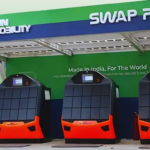
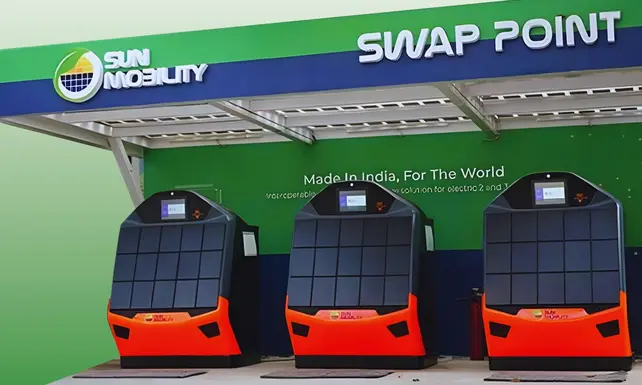
The company has established 35 battery swapping stations across Nairobi and Mombasa, serving more than 150 riders, as it builds the infrastructure needed to speed the shift from petrol powered motorcycles to electric alternatives.
Rather than manufacture motorcycles and compete for a slice of the market, SUN Mobility chose to build a shared battery swapping network that lets riders exchange depleted batteries for fully charged ones in minutes, without the cost of owning a battery.
Kenya emerged as the company’s gateway to Africa, offering a large commercial motorcycle and three wheeler market, supportive electric mobility policies and an established ecosystem of vehicle financiers, distributors and infrastructure partners.
“When Ajay Goel and his co-founders set their sights on Kenya, their dream was big: to transform how millions of commercial riders move, work and earn by making electric mobility more affordable and accessible,” the company said.
“Kenya stands out as an attractive entry point due to a combination of market scale, policy support and ecosystem readiness,” said Ajay Goel, co-founder and chief executive for international business at SUN Mobility.
“It has one of East Africa’s largest two and three wheeler markets, with electric mobility growing strongly, particularly in commercial applications where vehicle utilisation is high,” he said.
For SUN Mobility, the opportunity lies in the economics of commercial transport.
Boda boda riders and delivery operators spend much of their working day on the road, making energy costs, vehicle downtime and maintenance key determinants of their earnings.
The company believes battery swapping can reduce operating costs while allowing riders to avoid the upfront expense and long term risks associated with battery ownership.
SUN Mobility’s business model separates the vehicle from the battery.
Instead of purchasing a battery alongside an electric motorcycle, riders subscribe to an energy service that gives them access to the company’s batteries and swapping network.
Its most popular daily plan for boda boda riders costs KES 400 ($3.10) and includes four kilowatt hours of energy, which the company says is sufficient for approximately 100 kilometres of riding. Any additional consumption is charged at KES 50 ($0.39) per kilowatt hour.
Mr Goel said riders covering about 100 kilometres daily could save approximately 20% on energy costs compared with petrol. Those travelling 150 kilometres a day could increase their savings to 35%.
“Our philosophy is swap more, save more, the more a boda rider drives, the better the economics become,” he said.
The model could appeal to commercial riders seeking to protect their daily margins against fuel costs.
However, the savings will depend on mileage, financing costs, maintenance, electricity pricing and the availability of swapping stations along riders’ regular routes.
Battery ownership also presents a financial challenge for electric motorcycle buyers. Batteries deteriorate with use and eventually require replacement, creating an additional cost that can discourage adoption.
Under SUN Mobility’s approach, the company manages battery ageing, replacement and obsolescence, reducing the risk that individual riders must bear those expenses themselves.
Unlike electric mobility businesses that sell their own motorcycles and deploy proprietary battery systems, SUN Mobility describes its model as an open architecture platform designed to support vehicles from multiple manufacturers.
The company does not manufacture or sell vehicles. Instead, it partners with manufacturers to supply motorcycles, scooters, passenger three wheelers and cargo vehicles compatible with its battery swapping technology.
Mr Goel said more than 10 vehicle manufacturers in Kenya were already launching vehicles on the SUN Mobility platform, with plans to expand the partnerships further across Africa.
Globally, the company says its platform works with more than 30 vehicle manufacturers and over 50 vehicle models.
In India, its network supports more than 125,000 vehicles through over 2,000 swapping stations and has completed more than 70 million battery swaps.
The shared infrastructure is intended to consolidate demand from different vehicle brands, helping stations serve more customers as the number of electric vehicles increases.
Mr Goel said this approach could improve infrastructure utilisation and help the company build a sustainable business as adoption grows.
However, the model depends on a steady supply of compatible vehicles, reliable station operations and sufficient customer numbers to justify investment in the network.
The company is entering a market where electric motorcycles are gaining ground but still account for a minority of new two wheeler registrations.
Mr Goel said Kenya registered approximately 165,000 new two wheelers last year, of which about 25,000 were electric, representing roughly 15%.
He said the government’s ambition to have all new motorcycles sold in Kenya powered by electricity by 2035 pointed to a substantial long term opportunity.
Electric three wheelers also offer potential in passenger transport and cargo delivery, where vehicles typically cover long distances and lower energy costs can make a material difference to operating expenses.
SUN Mobility believes Kenya’s established ride hailing ecosystem, expanding delivery and logistics businesses, supportive policies and vehicle financing networks provide a strong foundation for growth.
“Importantly, we see Kenya not only as a large market in its own right, but also as a strong base from which to expand across East Africa,” Mr Goel said.
Beyond riders, the expansion could create opportunities for Kenyan small and medium sized enterprises involved in vehicle distribution, repairs, technical support, spare parts and infrastructure maintenance.
SUN Mobility says it already has a 25 member local team, alongside station operators supporting the network.
As the business grows, it plans to work with Kenyan technicians and service providers to install, commission, diagnose, maintain and repair its infrastructure and vehicles.
Mr Goel said the company wanted to build local capabilities rather than rely heavily on technical support from outside the country.
“Our goal is to create jobs and build capability locally, from boda riders and station operators to trained technicians for equipment installation and maintenance,” he said.
He added that opportunities could extend across vehicle importation, assembly, distribution, sales, after sales services and spare parts.
The company’s ambitions extend beyond doubling its Kenyan network. Across Africa, SUN Mobility is targeting more than 160,000 vehicles and approximately 2,500 battery swapping stations within five years.
The company’s expansion, however, will depend on more than infrastructure investment.
Affordable vehicle financing, dependable supplies of electric motorcycles, readily available spare parts, trained technicians and reliable access to charged batteries will be crucial to building rider confidence.
Mr Goel said a predictable policy environment covering electric vehicles, batteries, electricity tariffs and infrastructure investment would help sustain growth and attract further investment.