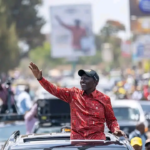




(NAIROBI, KENYA) – Kenya’s President William Ruto has launched a campaign to strengthen his support in the Rift Valley, aiming to raise the number of registered voters from 5.4 million in 2022 to more than seven million before the 2027 general election.
The move comes amid complaints among residents of the region that the President has ignored them for four years and is now returning to seek support for a second term.
His allies fear that voter dissatisfaction could cause many to stay away from the polls, a situation that could affect his re-election efforts.
The President is also facing reduced support in the Mount Kenya region, which contributed greatly to his 2022 victory. At the same time, he is seeking to strengthen ties with areas that were strongholds of former Prime Minister Raila Odinga, including Nyanza, Western, Coast and Nairobi.
Members of Parliament say more than 1.8 million Rift Valley residents have not registered to vote, with many lacking national identity cards.
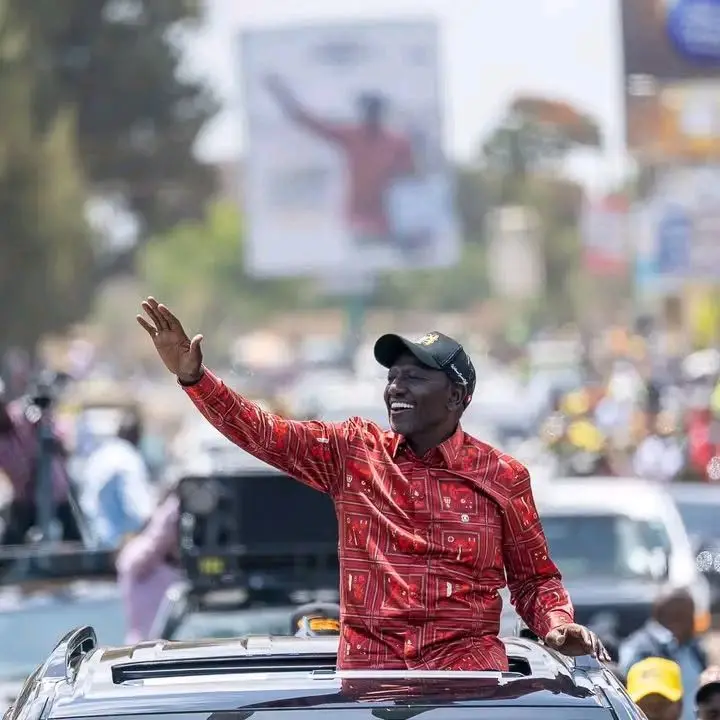
“Presidential elections are won by votes. We have the capacity to register more than seven million voters. Please get identity cards and register to vote,” the President said in Moiben, Uasin Gishu County.
This is the second time within a year that the President has asked Rift Valley residents to obtain identity cards and register. He previously made the request in Bomet and Narok counties.
Head of Public Service Felix Koskei says the 2027 election will be highly competitive, asking the President’s supporters to ensure they prepare early.
Senate Majority Leader Aaron Cheruiyot says the United Democratic Alliance (UDA) party is encouraging all eligible residents to register so they can take part in the election.
In the 2022 election, the Rift Valley had 5.34 million registered voters. Ruto got 2.6 million votes, while Raila received about 1.1 million, mainly from Narok, Kajiado and Turkana.
Data from the Independent Electoral and Boundaries Commission (IEBC) shows that 671,958 new voters were registered in the region during this year’s exercise. The Rift Valley led in registration numbers, followed by Mount Kenya with 399,220 new voters.
During his 10 day tour of the North Rift, the President has been launching and announcing road, health, electricity, market and affordable housing projects, while asking residents to support him for a second term.
However, the Democracy for the Citizens Party (DCP) of former Deputy President Rigathi Gachagua is strengthening its activities in some areas, including Nakuru and Narok. Kajiado Senator Samuel Seki and Kajiado North MP Onesmus Ngogoyo are among leaders who have joined Gachagua.
Vincent Rotich, a DCP official in Emurua Dikirr, says the party’s victory in the Narok Town ward representative seat and gaining more than 10,000 votes in the Emurua Dikirr by-election has raised concern in government.
Political analyst Professor Tom Nyamache of Turkana University says the President’s call for residents to obtain identity cards and register to vote is part of early election preparations.
He says the competition starts from political statements to registration and voter mobilisation strategies.
Ruto is also targeting areas that speak the Maa and Turkana languages, which supported Raila in past elections. He has taken steps such as handing over management of Amboseli Wildlife Park to Kajiado County and the title deed for South West Mau Forest to Narok County.
However, he faces opposition from some local leaders, including Senator Seki and MP Ngogoyo, who are linked to Gachagua.
In Baringo County, tension between the President and Kanu chairman Gideon Moi also adds political challenges for UDA.
Thus, Ruto’s return to the Rift Valley is about more than announcing development projects. It is an effort to strengthen his political stronghold, increase the number of registered voters and counter opposition trying to penetrate an area that has long been his stronghold.