








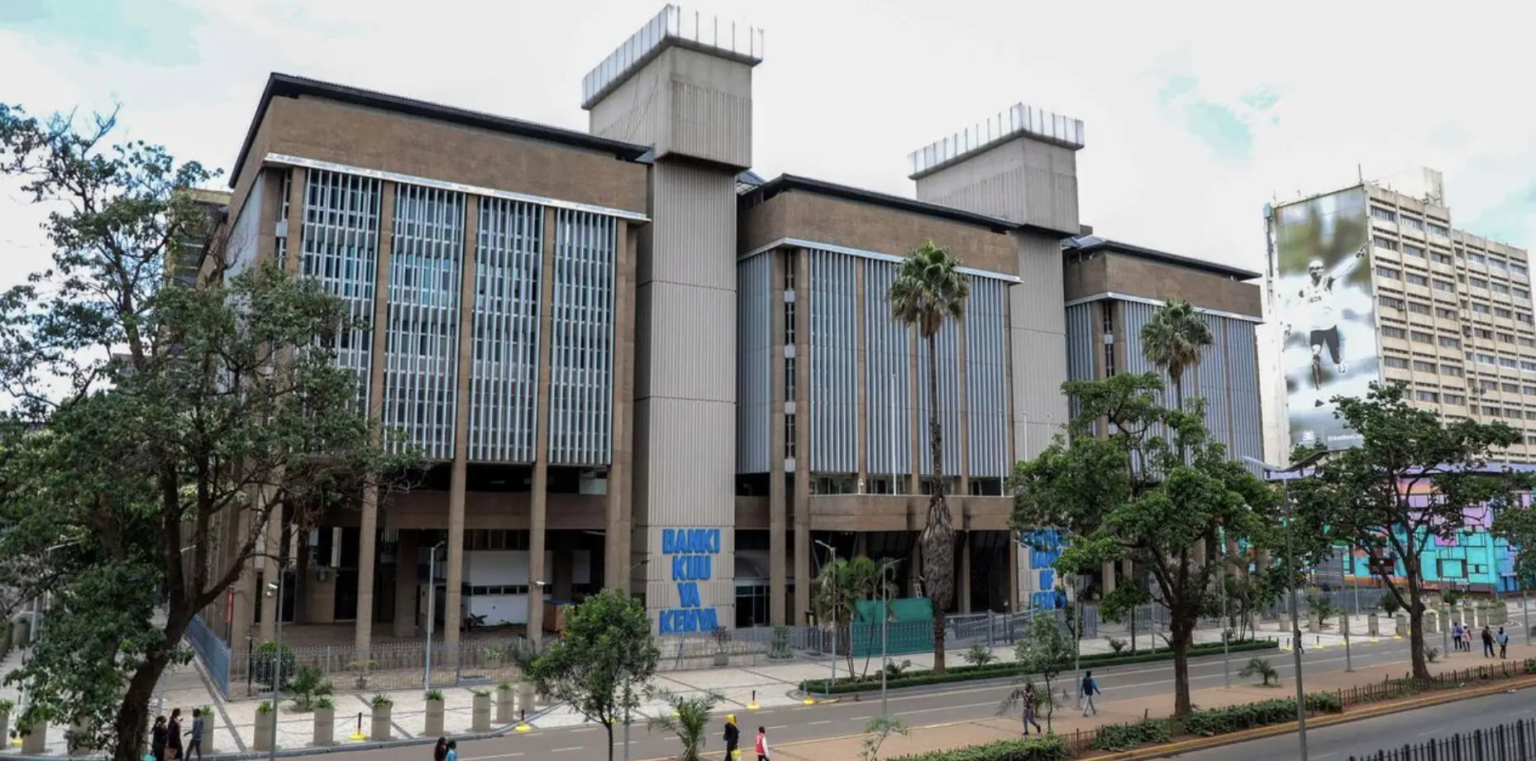
(NAIROBI, KENYA) – The Central Bank of Kenya fined 33 commercial banks for failing to pass on lower loan rates to borrowers, in a record enforcement action covering most of the industry.
The penalties followed on-site inspections of all 38 commercial banks, after which the regulator moved to force lenders to align lending rates with the reduced Central Bank Rate (CBR).
The CBK did not name the banks penalised or disclose the amount of each fine. The 33 lenders represent 86.8% of the industry.
Two other banks faced unspecified administrative action, while only three were found fully compliant with the risk-based credit pricing model (RBCPM).
Between August 2024 and August 2025, the CBK cut the benchmark rate seven times by 3.5 percentage points to 9.5% from a 22-year high of 13%, which had held for about seven months.
Only six lenders, Citibank N.A Kenya, Absa Bank Kenya, Credit Bank, Standard Chartered Bank Kenya, Stanbic Bank Kenya and Victoria Commercial Bank, reduced their overall lending rates to match or exceed the benchmark.
“CBK conducted target inspections in 2025 on the implementation of the RBCPM rolled out in 2019 by all commercial banks. Following the inspections, penalties were levied on 33 banks, and administrative actions were taken on two banks,” the CBK said in its latest annual banking supervision report. “Three banks were fully compliant with the RBCPM”.
The penalties raised the number of commercial banks in violation of the Banking Act and CBK Prudential Guidelines in the year ended 31st December 2025 to 35, up from 11 previously.
CBK Governor Kamau Thugge accused banks of failing to cut loan rates even after the CBR was trimmed from 13% in August 2024 to 10.75% in February 2026. The regulator conducted on-site inspections of banks up to June 2025 to review the movement of lending rates.
Banks faced fines of KES 20 million ($154,530 / £116,490) or three times the monetary gain from overcharging borrowers, with the regulator relying on the punitive penalty. Lenders also risked additional daily penalties of up to KES 100,000 ($772 / £582) for every case or implication for each loan account, with executives liable for KES 1 million ($7,726 / £5,824).
The banking sector regulator anchored its actions on Section 55 of the CBK Act.
“The (Monetary Policy) Committee observed that the CBR had been lowered substantially since August 2024, yet lending rates have only declined marginally,” Dr Thugge said in February last year.
“Under the amendments to the Banking Act, any bank that has not passed on the benefits of reduced cost funds to reduce lending rates will be penalised in accordance with the law.”
Bank profits surged as lenders passed higher interest rates on to borrowers far more quickly than to savers.
Another 24 banks cut interest rates in the year to August last year but did not match the benchmark rate after trimming borrowing costs by between 0.09 percentage points and 2.82 percentage points, CBK data shows.
Some banks said they had locked in deposits used for loans at higher rates, arguing that costly savings had slowed efforts to lower borrowing costs.
The high cost of borrowing at the time was seen as discouraging borrowers from taking out loans in a setting where demand for products had become sluggish, prompting firms to freeze hiring and expansion plans.
Banks initially challenged the risk-based pricing model, arguing that it had left the industry unable to match the CBK’s rate without a standard benchmark from which to price loans.
The back-and-forth between banks and the CBK culminated in the overhaul of the RBCPM, introducing a single industry benchmark underpinned by either the CBR or the overnight interbank rate, renamed the Kenya shilling overnight interbank average (Kesonia).
Commercial banks began implementing the revised framework on new loans from December 2025, while existing loans were fully transitioned to the revamped model at the end of February 2026.
Improvements in the monetary policy framework have seen the reunification of both the CBR and Kesonia at 8.75%, resulting in a single rate from which banks price their loans.
Banks add a risk premium, fees and charges to the benchmark.
The average lending rate by commercial banks has fallen at a relatively faster pace since the overhaul of the RBCPM to 14.3% in July 2026 from 14.4% in June and 17.2% in November 2025, even after the CBK paused rate cuts in February this year.
Private sector credit growth has also recovered to reach double digits in June and July this year for the first time since February 2024.
The CBK, however, says it has been unable to fully implement the new risk-based credit pricing framework following the fallout from the Middle East conflict, which has forced pauses to additional CBR cuts.
The revised model came to full effect in March this year, matching the CBK’s wait-and-see policy stance, which has left the CBR unchanged at 8.75%.
“Unfortunately, we did not get to use this framework when we were easing because the crisis in the Middle East intervened. We are now in a wait-and-see situation,” Dr Thugge said last week.
Beyond loan pricing violations, 10 commercial banks were found in breach of the law that bars lending to a single borrower above 25% of core capital.
Two banks violated the single insider borrower limit of 20% of core capital, while one bank breached the total insider borrower limit of 100% of core capital.
Violations highlighted by the CBK include breaches of property investments, capital adequacy requirements, foreign exchange exposure, liquidity management and corporate governance.