








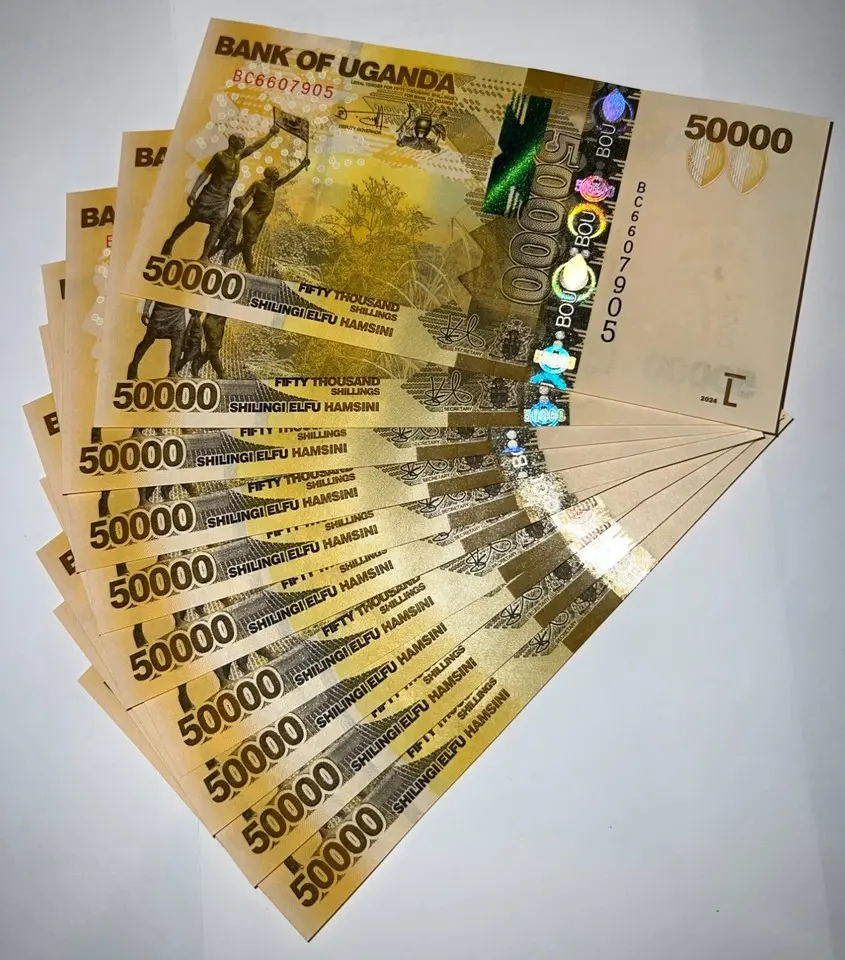
(NAIROBI, KENYA) – A sharp fall in the Ugandan shilling against the US dollar is raising concern in Kenya over costlier goods and shrinking exports to its neighbour, with the slide threatening trade worth KES162.4 billion ($1.2 billion) a year.
The Ugandan shilling has lost more than 14% against the dollar since June, making imports from countries such as Kenya more expensive as trade is priced in the US currency.
The weaker shilling has made Ugandan goods appear cheaper in Kenya, giving its traders an edge in border towns such as Busia.
Uganda is Kenya’s largest export market, buying medicines, cement, metal products, soap and palm oil valued at KES162.4 billion ($1.2 billion) in 2025, up from 28.8% in 2024.
Uganda sold milk, maize and tea worth KES46.9 billion ($362 million) to Kenya, leaving Nairobi with a trade surplus of more than KES100 billion ($772 million) a year.
The Ugandan shilling is expected to take further losses on strong foreign currency demand from merchandise importers, energy companies and the telecoms sector.
It now takes UGX31.91 to buy one Kenyan shilling, compared with UGX26.80 at the start of the year.
Analysts expect demand for Kenyan goods in Uganda to fall.
“For a lot of our manufactured goods, you would definitely expect to see a decline in export values because the resulting price increase would reduce demand,” said Abhishek Sharma, senior director of transport and logistics at TradeMark Africa, a non-profit group that works to grow intra-African trade.
The Ugandan shilling hit a new low of UGX4,240 against the dollar last week before recovering some losses after intervention by the Bank of Uganda, marking a 14.2% fall from UGX3,710 at the end of June.
Trade between Kenya and Uganda is conducted in dollars, but the Kenyan shilling has gained nearly 20% against its Ugandan counterpart over the period, reflecting a faster fall for the Ugandan currency against the dollar.
The slide from the June rate means Ugandans need 530 more Ugandan shillings to buy one dollar worth of Kenyan exports.
A stronger dollar against the Kenyan shilling usually makes goods sold in Uganda costlier while making Ugandan products cheaper in Kenya.
“Even before the currency depreciation, there was a reduction in imports from Uganda to Kenya on trade issues, including the imposition of the sugar levy,” Mr Sharma said.
“While Ugandan goods can become more competitive, there wouldn’t be a dramatic increase in imports. However, one can expect an increase in goods inflows into Kenya’s border towns like Busia and Malaba where one might see protests from local traders.”
Imports from Uganda have suffered previous shocks that showed the impact of on-and-off trade disputes between Nairobi and Kampala over farm goods such as eggs and milk.
Uganda has remained Kenya’s leading export destination despite frequent disputes over protectionist policies.
Foreign portfolio outflows from Uganda’s government securities market have added pressure to the shilling as the US, Israel and Iran crisis weighs on the economy, feeding inflationary pressures.
Offshore investors have sold Ugandan treasuries, seeking higher returns at home as interest rates rise in developed markets on tighter central bank policy.
The Ugandan shilling is seen as vulnerable because of smaller official reserves, now equal to 3.7 months of import cover, below the East African Community convergence target of 4.5 months.
Kenya’s official reserves stood at 5.9 months of import cover last week, supporting the Kenyan shilling through the Middle East crisis so far.
The local unit has traded in a narrow range of 129 to 130 against the dollar even as pressure builds from rising import costs, especially fuel, which has widened the current account deficit.
Last week, the Bank of Uganda held an emergency monetary policy meeting and raised its benchmark interest rate by 2.25 percentage points to 12% to curb further portfolio outflows.
The move is expected to lift Uganda’s real interest rates to match or exceed returns offered to foreign investors in domestic government securities compared with overseas returns.
The action mirrors Kenya’s emergency meeting in June 2023, when the Central Bank of Kenya raised its policy rate by 100 basis points to 10.5% to fight similar outflows.
Earlier in September, the Bank of Uganda raised cash reserve requirements for commercial banks from 11% to 13.5% to absorb excess liquidity from the market.
Uganda’s President Yoweri Museveni has said he rejected a request from the central bank to sell dollars from reserves to defend the currency, calling the move wasteful.
Currency troubles have shifted the Kenya-Uganda trade balance before, including in 2023 when imports from Uganda slowed as the Kenyan shilling weakened.
“We saw the reverse happening during Kenya’s last currency depreciation cycle when Ugandan imports into the country marked a slowdown,” Mr Sharma said.
Traders expect the Ugandan shilling to stay under pressure from weaker export earnings and higher energy prices, partly offset by central bank intervention.
The Ugandan currency recovered some losses after the unscheduled policy meeting.
“I would think the shilling will continue weakening, driven by the same fundamentals, but possibly the depreciation will be at a much slower pace,” a trader told Reuters last week.