







(NAIROBI, KENYA) – Kenya’s trade deficit in goods climbed towards a record KES1 trillion ($6.92 billion / £5.45 billion / €6.45 billion) mark in the first six months of 2026, after an increase in the cost of fuel imports widened the gap between export earnings and the import bill.
The gap between exports and imports widened by 27.3% to KES998.2 billion ($6.91 billion / £5.44 billion / €6.44 billion) in the six months to June 2026, from KES783.9 billion ($5.43 billion / £4.27 billion / €5.06 billion) in the corresponding period last year, the Kenya National Bureau of Statistics says.
This was the fastest annual widening of Kenya’s first half merchandise trade deficit in four years, since the 30.7% recorded in 2022. The trade deficit had remained relatively stable at KES755 billion ($5.23 billion / £4.12 billion / €4.87 billion) to KES784 billion ($5.43 billion / £4.27 billion / €5.06 billion) in the first half of every year between 2023 and 2025, the data shows.
The KES214.3 billion ($1.48 billion / £1.17 billion / €1.38 billion) rise puts the merchandise trade gap within touching distance of KES1 trillion, highlighting the rising cost of Kenya’s dependence on imported energy and capital goods.
This was despite exports growing at 14.1% to reach a record KES632.3 billion ($4.38 billion / £3.45 billion / €4.08 billion) during the period, from KES554.1 billion ($3.84 billion / £3.02 billion / €3.58 billion) a year earlier.
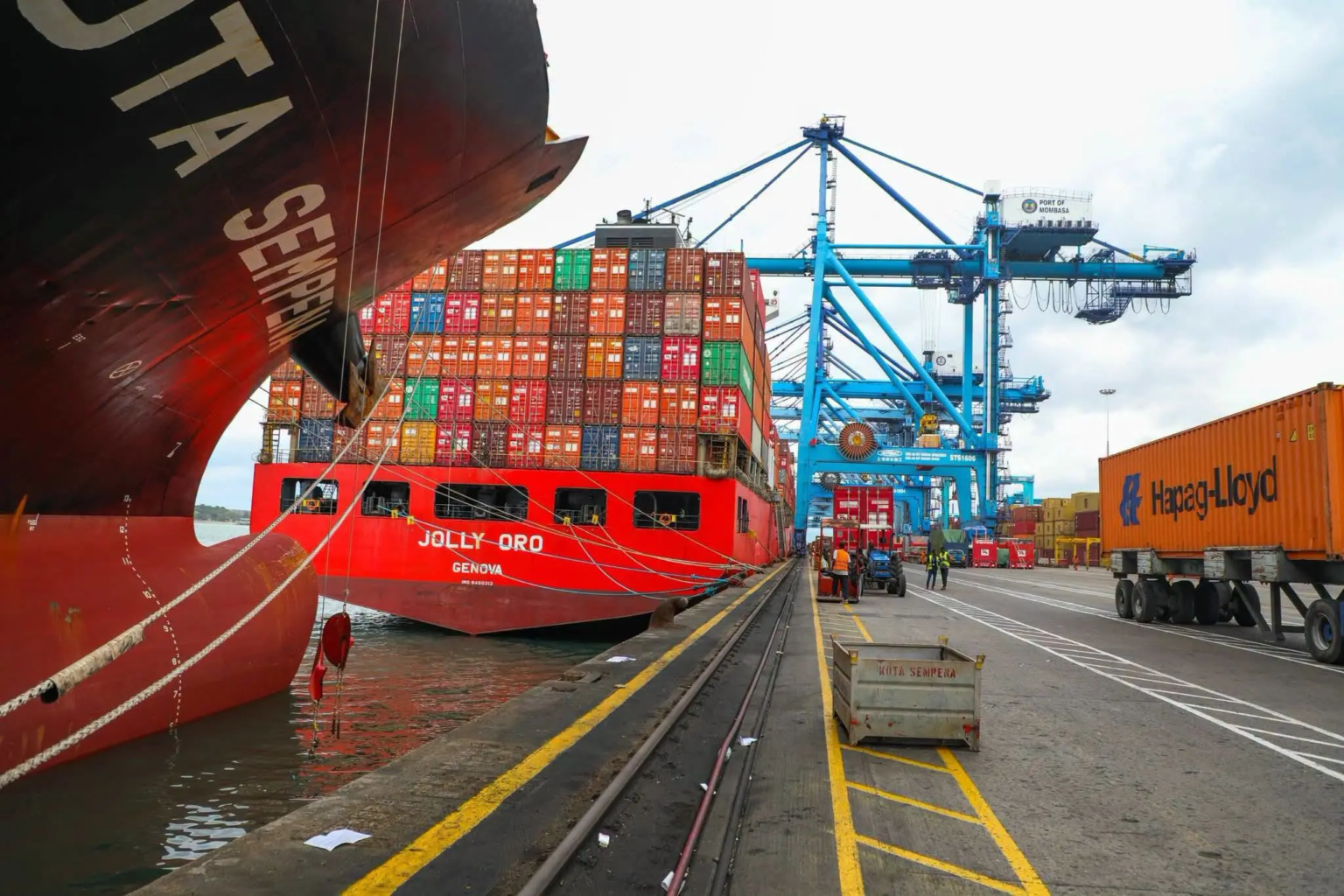
Imports, however, rose to KES1.63 trillion ($11.29 billion / £8.89 billion / €10.52 billion) from KES1.34 trillion ($9.28 billion / £7.31 billion / €8.65 billion), creating a KES292.5 billion ($2.03 billion / £1.60 billion / €1.89 billion) jump.
Fuel and lubricants accounted for nearly half of that increase, with their import value rising by 50.2% to KES412.6 billion ($2.86 billion / £2.25 billion / €2.66 billion) from KES274.7 billion ($1.90 billion / £1.50 billion / €1.77 billion). The KES138 billion ($956 million / £753 million / €891 million) rise in fuel imports was the single biggest contributor to the growth, reflecting the impact of higher energy prices and heightened concerns over supply disruptions as a result of the US Israel war on Iran.
Central Bank of Kenya Governor Kamau Thugge said the rise in imports partly reflected businesses bringing forward purchases because of the crisis in the Middle East. He said on 12th August that growth in imports was strong, and this reflected front loading of imports in the first half of this year.
He said the front loading is expected to ease imports in the second half of the year, potentially reducing pressure on the trade balance. He added that the import increase was broad based, with food, mineral fuels, intermediate goods and capital goods contributing to the stronger demand.
KNBS data shows imports of machines and other capital equipment rose by 19.5% to KES216.2 billion ($1.50 billion / £1.18 billion / €1.40 billion), pointing to continued demand for investment related goods.
Imports of transport equipment rose by 19.6% to KES151 billion ($1.05 billion / £824 million / €975 million), while food and beverages went up by 20.6% to KES169 billion ($1.17 billion / £922 million / €1.09 billion).
Industrial supplies, the largest import category, increased by 12.7% to KES565.9 billion ($3.92 billion / £3.09 billion / €3.65 billion), demonstrating that the jump in imports extended beyond petroleum products.
The increase in fuel imports is particularly significant because Kenya remains heavily dependent on petroleum products to meet its energy and transport needs. The Iran war added another layer of pressure by threatening global energy supply chains and pushing up costs for economies that rely heavily on imported fuel.
The import surge came as the country’s export sector recorded stronger earnings, though performance was uneven across major commodities.
Coffee exports rose by 8.1% to KES38.2 billion ($265 million / £208 million / €247 million), while cut flower earnings increased by 5.5% to KES49.7 billion ($344 million / £271 million / €321 million) in the half. Tea, Kenya’s biggest export earner, posted much weaker growth, with earnings rising by 1.6% to KES91.5 billion ($634 million / £499 million / €591 million) from KES90.1 billion ($624 million / £491 million / €582 million).
Mr Thugge said horticulture, machinery and transport equipment would support export growth, while tea would continue contributing despite slower growth in earnings. He said exports are expected to grow by 8.1% in 2026 and 7.1% in 2027.
The performance of fresh produce was less encouraging, with fruit export earnings plunging by 26.2% to KES21.6 billion ($150 million / £118 million / €139 million) from KES29.3 billion ($203 million / £160 million / €189 million).
Vegetable earnings also declined by 8.7% to KES10 billion ($69.2 million / £54.5 million / €64.5 million), underscoring the uneven performance of horticultural exports despite expectations of stronger overall export growth.
The widening trade deficit could put renewed focus on Kenya’s need to expand higher value exports and reduce exposure to international energy and commodity price shocks