





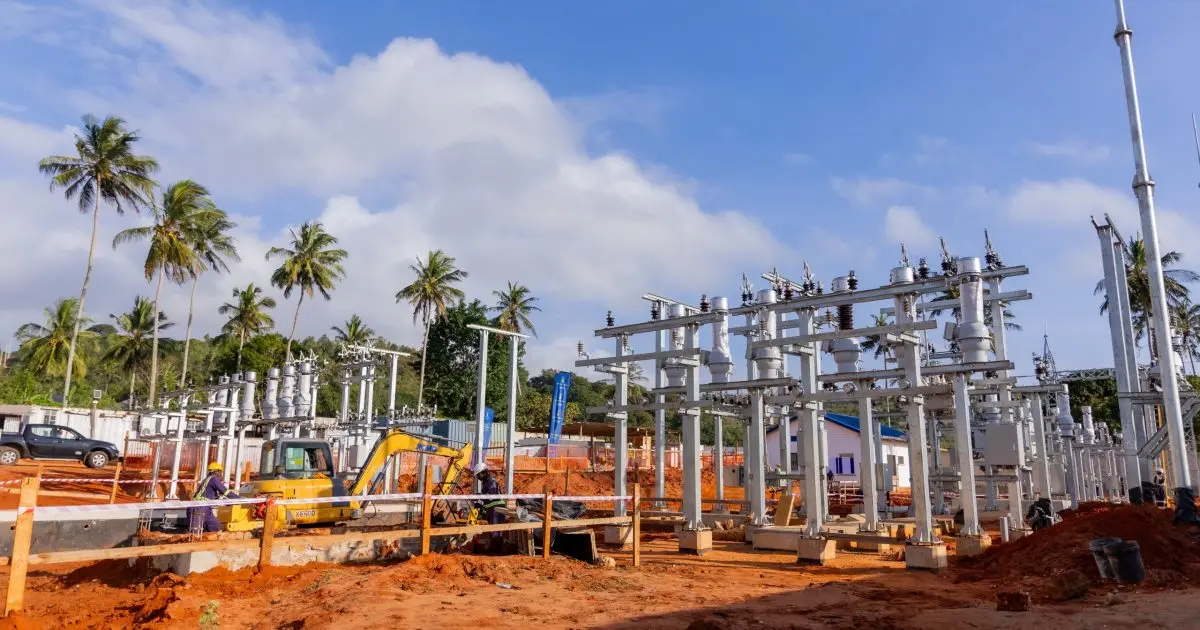
(KILIFI, KENYA) – Kenya Power is spending KES765 million ($5.9 million / £4.7 million) on two new substations in Kwale and Kilifi counties as it moves to improve electricity supply along the Coast region.
The utility company is close to finishing the Bomani 132/33kV substation in Kilifi County at a cost of KES455 million ($3.5 million / £2.8 million). The facility will serve rising demand from customers in Kikambala, Vipingo, Kanamai and Mtwapa areas.
These areas have seen increased industrial and commercial activity as large firms and Small and Medium Enterprises expand their operations from Mombasa. At present, customers in these locations are served by the Kilifi and Bamburi 132/33kV substations whose capacity is shrinking as demand grows.
Kenya Power is also set to complete a 33/11kV substation at Kwale at a cost of KES310 million ($2.4 million / £1.9 million). The substation has four feeders to serve Kwale County headquarters and nearby customers in Kinango, Tiwi and Kombani areas.
The new Kwale substation will ease pressure on the Diani substation which currently serves these areas. It will also provide alternative supply points to customers, improving the reliability of electricity supply.
Kenya Power Managing Director and CEO Joseph Siror said network reliability and customer service remain key focus areas for the company as it delivers electricity for economic growth.
Siror said the company is committed to completing the projects within set timelines and budget to provide value to customers.
He added that beyond the Coast region, the company is undertaking similar projects in other parts of the country. These include network reinforcement projects to improve grid resilience and provide quality service to all electricity users.
Siror said the company is also adopting technology to build a smart grid and improve customer experience.
During the financial year ended June 2026, Kenya Power connected 411,710 new customers to the grid, bringing the total customer base to 10.4 million. The addition of new customers partly contributed to a 161.7 GWh increase in electricity sales during the year.