





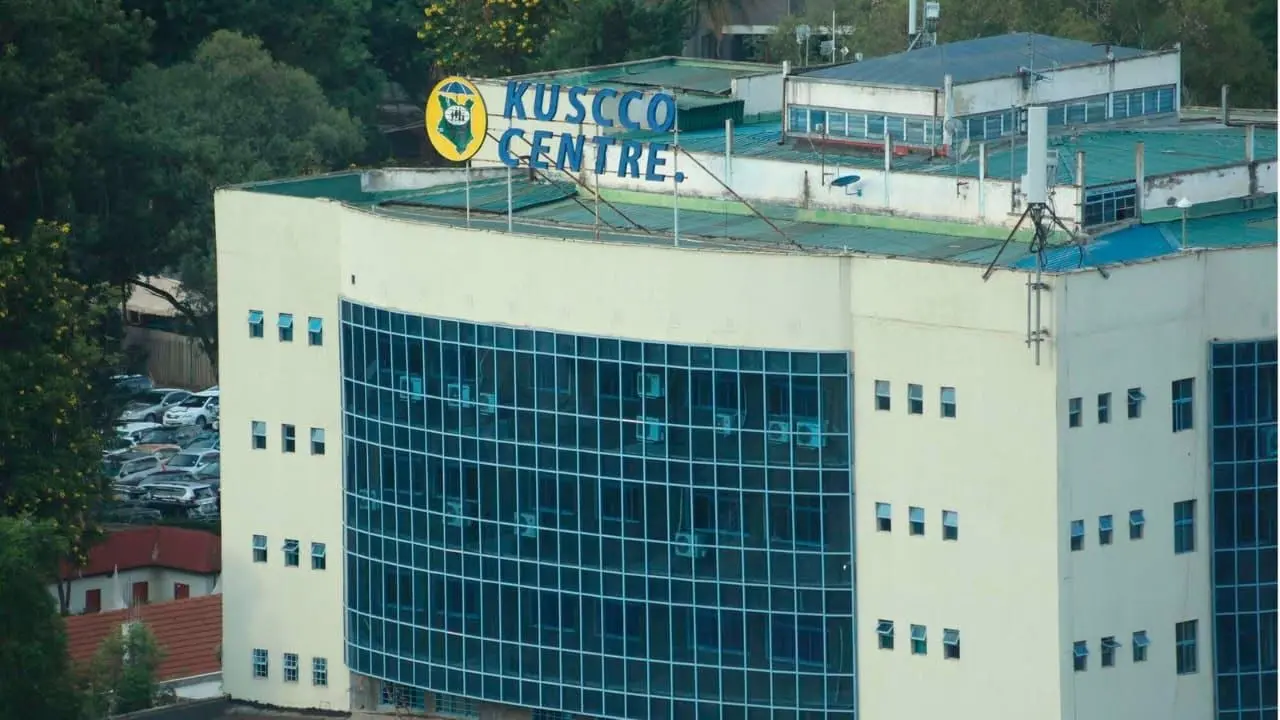
(NAIROBI, KENYA) – The Kenya Union of Savings and Credit Co-operatives (Kuscco) has entered formal liquidation after members voted to wind up the umbrella body, a move that will see its estimated KES 5.4 billion (about $41 million / £32 million / €38 million) in assets distributed among creditors owed about KES 17 billion (about $130 million / £102 million / €119 million).
The decision follows a KES 13.3 billion (about $101 million / £80 million / €93 million) fraud scandal that pushed the institution into insolvency. Auditors told members that Kuscco could not be revived without fresh capital, and members rejected any proposal to inject more money. The Commissioner for Co-operative Development David Obonyo gazetted the decision on Monday.
Liquidation is the formal process of winding up an organisation by selling or realising its assets, settling its debts and distributing any remaining value to those entitled to it. For Kuscco, the process marks the end of the organisation as it currently exists. The formal cancellation of Kuscco’s registration and the issuance of a liquidation order means the institution will no longer operate as a going concern.
Kuscco’s remaining assets will be preserved and realised by the liquidators to maximise recovery for creditors and members. Mr Obonyo has appointed a team of three liquidators to oversee the process. They are Deputy Commissioner for Co-operative Development Peter Wanjohi Kiama, Principal Co-operative Officer Habil Olembo Jesse, and Deputy Chief State Counsel Mariam Adam Abubakar.
The liquidators have been gazetted and authorised to take control of Kuscco’s affairs from its previous management and directors. Their tasks will include identifying and securing assets, collecting debts owed to Kuscco, selling assets where appropriate, settling legitimate claims and distributing the proceeds according to the order of priority. The process will stop the current scramble among individual creditors to seize Kuscco property through separate court actions.
Kuscco’s estimated assets of KES 5.4 billion are substantially below its obligations of about KES 17 billion. This means there will not be enough money to repay everyone in full. The liquidators will establish valid claims against Kuscco and determine how available funds should be distributed to ensure equity. Claims will be dealt with through the formal liquidation process, taking into account the legal priority of different classes of creditors.
Saccos should not expect to recover the full value of their investments. Kuscco’s liabilities exceed its estimated assets by KES 11.6 billion (about $88 million / £70 million / €81 million), even before additional liquidation costs are considered. The final recovery rate will depend on how much the liquidators ultimately realise from Kuscco’s assets and how much is consumed by liquidation expenses.
Legal fees, professional fees, staff and administrative costs, taxes and the cost of preserving or selling assets could reduce the amount available for distribution. Recovery could improve if the liquidators collect more from loans owed to Kuscco, successfully sell assets at better values or recover funds from transactions linked to the fraud.
The 292 court cases seeking to attach Kuscco assets for KES 6.48 billion (about $49 million / £39 million / €45 million) are expected to be dealt with within the liquidation framework. Their combined claims are already higher than the estimated KES 5.4 billion in assets available for distribution.
Liquidation is intended to halt the race among creditors to obtain court orders and attach Kuscco property. Instead, claims will be assessed by the liquidator and dealt with within the liquidation framework. Existing court orders will not necessarily disappear automatically. The liquidators may have to seek directions from the courts where necessary. Recovery will move from individual enforcement actions towards a collective process.
The cancellation of Kuscco’s registration ends its status as a going concern, although the society is deemed to continue in existence solely for the purpose of winding up its affairs, according to Cecil Miller, managing partner at Miller & Company Advocates, who cited Section 63 of the Co-operative Societies Act.
Mr Miller said there is legal precedent showing that once a co-operative society is in liquidation, it lacks the capacity to sue or be sued directly. Only the liquidators can act for it, subject to the Commissioner’s oversight.
Mr Miller explained that Section 66(1)(b) empowers the appointed liquidators to institute and defend suits and other legal proceedings on behalf of Kuscco. This means the liquidators will take over the suits that Kuscco had filed against its former managers and directors.
“In practice, this means all pending court cases against Kuscco will continue, but the liquidators will now institute and defend suits on the society’s behalf, and any resulting judgment or settlement becomes a claim against the assets in liquidation rather than one Kuscco can settle directly outside that process,” he said.
The liquidators have been given up to one year to complete the process, but this period could be extended depending on the complexity of the liquidation. No fixed timetable guarantees that Kuscco will be wound up within a particular period. The duration will depend on the complexity of its assets, debts, litigation and claims.
The process could take considerable time because the liquidators must identify and value assets, recover outstanding loans, dispose of property, resolve disputes and verify claims before making distributions. Court cases, if any, could also delay the realisation of assets. Members are likely to receive recoveries in stages.
The liquidation does not leave saccos without an umbrella body for advocacy. Members authorised the establishment of a new body called the Kenya Federation of Savings and Credit Co-operatives (Kefesco) to take over functions such as advocacy, training and research. Kefesco will be separate from Kuscco and will not inherit its debts or liabilities. This means the new organisation can represent the interests of saccos without becoming responsible for the financial problems that brought down Kuscco.