



(NAIROBI, KENYA) – A fraudulent investment scheme that froze millions of shillings of Kenyan investors’ cash in 2025 was run by the same person behind the recently collapsed Quant Vest Stock Exchange (QVSE), the Business Daily has established.
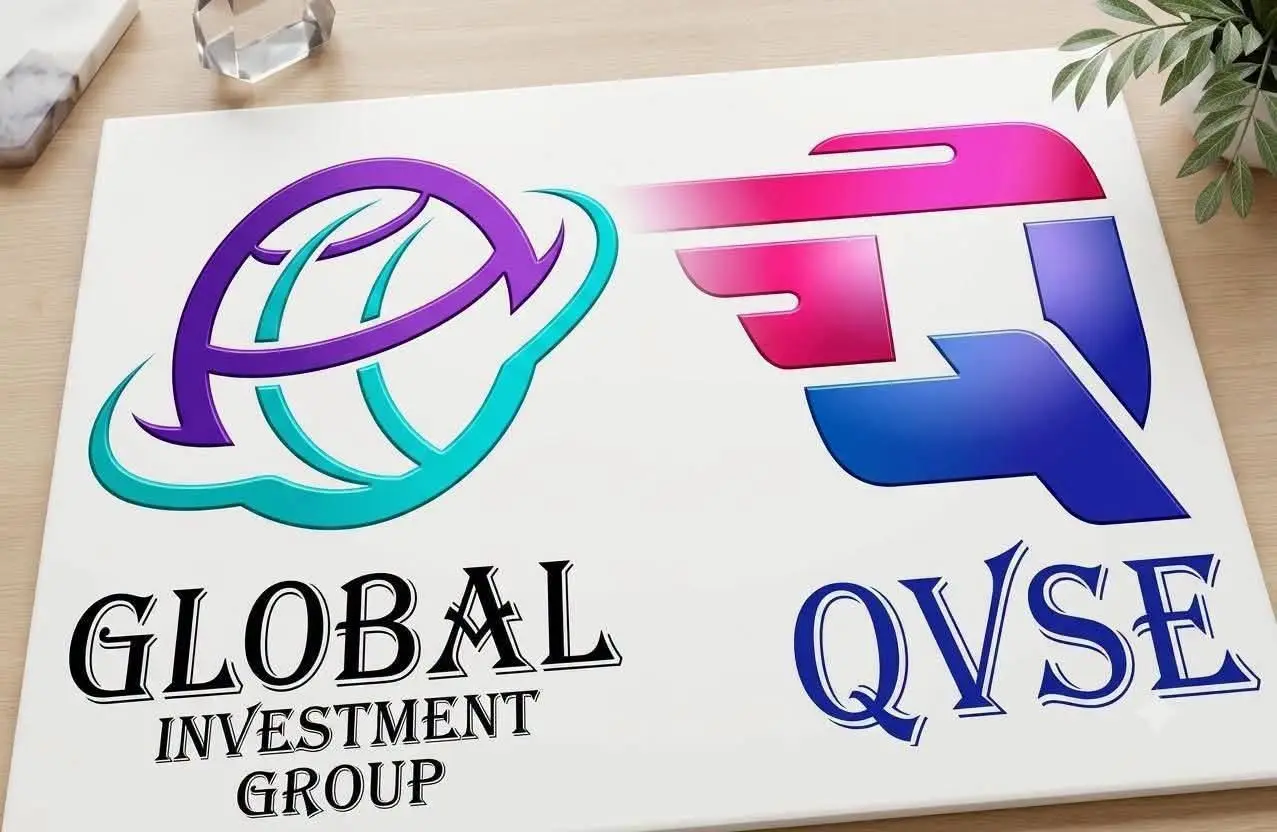
The earlier scheme, known as PCEX, operated under the banner of Global Investment Group (GIG) and collapsed in April 2025, leaving investors unable to withdraw their funds. It was run by a person using the name ‘Carl Grindan’, who also referred to himself as ‘Prof Carl’.
Victims of PCEX said they were recruited in early 2025 through friends, colleagues, and family members. Like QVSE, PCEX relied on copy trading, a method where an investor automatically mirrors the trades of another, usually more experienced, trader. This approach allows beginners to take part in financial markets without deep knowledge of chart reading or extensive research.
Investors were instructed to deposit $500 (KES 65,000 / £395) into their PCEX accounts. Grindan then shared trading signals on a GIG Telegram group. Investors had a five-minute window to act on each signal before it expired, a system similar to the signals later sent through QVSE’s BonChat platform.
For PCEX, Grindan sent four signals a day. As with QVSE, investors cashed out their profits through the cryptocurrency exchange platform Binance. Grindan communicated with PCEX investors through Telegram rather than BonChat and used the same name and photograph he still uses now. The image shows a white, middle-aged Caucasian man in a dark grey plaid blazer and white Oxford shirt.
A reverse search of the photograph by the Business Daily showed it was first uploaded to the internet in September 2021 on a Norway-based photographer’s portfolio alongside five other shots of the model. A similar picture, which appears to be from the same shoot, is currently the LinkedIn profile picture of a business executive working for a major Norwegian automotive group headquartered in Oslo. Searches for the name ‘Carl Grindan’ on engines such as Google only bring up recent QVSE-related discussions online.
PCEX also operated a recruitment model. In an April 2025 Telegram message to a Kenyan investor who had joined on a friend’s introduction, Grindan said the introducer had also reaped very rich profits in the team and expressed hope that the new investor could learn from him how to build a team to increase his own profits.
He added that when the investor agreed to their investment project, he hoped the investor would create his own team as soon as possible so that he could win at the starting line and let his friends feel the money-making opportunities provided by the team.
According to a Telegram message shared with a new Kenyan investor and obtained by the Business Daily, if a new member’s investment principal exceeded 30% of the referrer’s funds, they enjoyed bonus signal transactions, boosting their account holdings. PCEX was also present in South Sudan, Nigeria, and Bahrain in the UAE, according to victim accounts from these countries shared on social media.
A user on the social media site Reddit said the website was super vague about any real company info and that he noticed it was basically just a template with flashy promises. He added that another thing he found was that they operated under multiple domains, which was sketchy, noting that he had previously looked into pcextrade.pro and that it had all the classic red flags, including no transparency, unrealistic returns, and the whole thing looking like it was just copy-pasted from other scam sites. He said using multiple domains was a common trick to dodge detection once one got blacklisted.
But the promise of quick profits continued to attract investors. Some were able to cash out their principal after profits grew. Another Reddit user wrote that he followed signals four times a day and that the money doubled in a month, which was why he was able to withdraw his initial capital before anything happened. He said what was left in there was all just profit and that he was planning to let the money grow for a bit until he could afford a car in cash, but was worried that the operators might suddenly disappear and he would not be able to withdraw more.
PCEX initially announced a temporary closure on 16th April 2025, citing internal issues and pending regulatory processes. Grindan told investors they could not withdraw their cash until January 2026, when a review of all funds would be completed.
Grindan said in a Telegram message that there was no need to treat the issue with a speculative mentality and negativity, adding that they would screen those who really believed in them to join the new projects and would only lead those who trusted them to make money.
On that day, the Capital Markets Authority (CMA) issued a warning on X, saying PCEX was operating in Kenya illegally. The regulator said in response to a social media query that it had not approved or licensed CBEX/PCEX. The CMA was referencing CBEX, another cryptocurrency and forex trading platform that, in April 2025, saw users lose their fortunes after their accounts were emptied. The platform had attracted Kenyans, Nigerians, and Egyptians with promises of AI-powered profits, referral bonuses, and easy withdrawals, including returns of up to 30% in 30 days.
The following day, Grindan texted investors on Telegram to say PCEX’s services, including withdrawals and fund transfers to Binance, would resume on 1st January 2026. In the meantime, he directed investors to another site called EXZZ and told people to continue depositing $500 as they awaited withdrawals on the PCEX platform. He described this as his way of making up to his investors for the revenue cuts.
At the time, he told investors in the Telegram group that there were seven months to 1st January 2026, and during this waiting period, they should continue investing in order to avoid anyone’s income reduction in the PCEX review period.
A Kenyan user later texted Grindan, referring to him as ‘Fake Professor’, to express frustration over the money freeze. The investor said he was at home trying to come to terms with the loss he had been made to incur. In response, Grindan sent a direct message saying he understood the investor’s feelings very well, but that it did not matter and the investor could choose not to believe them. He advised the investor to wait patiently for PCEX’s fund review, adding that once PCEX completed the fund review, the investor could withdraw all funds and that Global Group would provide financial security for everyone.
In January this year, the company did not reopen, and people lost their money. One victim wrote on Facebook on 4th January 2026 that the platform had not reopened and that no official communication had been issued to clarify the delay or provide a new timeline.
One GIG Telegram group seen by the Business Daily shows it has more than 62,900 members. It is not clear if they are all Kenyans. Grindan has since blocked members from sending messages to the group. His profiles show he has not logged into the Telegram accounts for months.
Despite the collapse of PCEX, GIG held a conference at what appears to be a large hall to celebrate its ‘first anniversary’ in Kenya in May this year, according to videos shared on TikTok. It was around this period that the operation returned with QVSE. Grindan again used local agents to recruit teachers, small-scale traders, mid-level professionals, and boda-boda operators into the scheme.
Investors deposited money into their QVSE accounts and waited for trading signals from ‘Prof Carl’, who messaged them on BonChat. Those with a $500 principal earned $6 (KES 777 / £4.70) per trade, while investors who deposited $1,000 (KES 130,000 / £790) earned $12 (KES 1,553 / £9.40). This meant one could make at least KES 1,553 a day from the two trading sessions. Investors were told they were trading stocks from American tech giants such as Tesla and Apple.
But unlike PCEX, Grindan sent two signals a day and used BonChat, which was more restricted compared to WhatsApp and Telegram. Investors could not take screenshots of group or one-on-one conversations on the platform, for instance. Grindan did not interact with investors over calls. They only messaged him directly in case of issues with their QVSE accounts. Multiple investors the Business Daily spoke to said that any comments by investors had to be approved by Grindan before they appeared on the main group.
Months later, the collapse of QVSE would follow a pattern similar to PCEX. On 5th September, Grindan froze all accounts, accusing investors of creating multiple accounts to increase their trading limits. He told members they needed to deposit another KES 65,000 or KES 129,000 to verify their accounts.
The CMA would, on 12th September, issue another warning that QVSE was not licensed to operate in Kenya, but Grindan rejected the regulator’s statement and told investors to continue putting in money to unfreeze their accounts. While he had initially promised investors that they would begin withdrawing their balances from 12th September if they deposited more cash, he pushed the deadline by a week to give investors more time to put in money.
In a 13th September message on BonChat, Grindan said he was always with them, had never left, and would never disappear. He said he would fully assist everyone through the withdrawal queue and continue leading everyone to create greater glory in the US stock market.