




(NAIROBI, Kenya) – Kenya used KES 207.7 billion of borrowed money to pay salaries, settle debts and meet other routine government costs in the financial year ended June 2026, breaching public finance rules for another year. The sum equals roughly $1.62 billion or £1.27 billion. More than one in every five shillings of new loans financed ordinary government consumption rather than roads, dams, schools or hospitals.
The draft 2026 Budget Review and Outlook Paper shows the administration borrowed KES 983.7 billion ($7.66 billion, £6.02 billion) in the 2025/26 financial year. The Treasury said KES 776 billion ($6.05 billion, £4.75 billion) funded development projects, leaving KES 207.7 billion to cover a recurrent expenditure gap.
The split meant 78.9 percent of borrowing went to development and 21.1 percent to recurrent needs. The figures expose a persistent gap between Kenya’s legal borrowing rules and actual budget practice. Section 15(2)(c) of the Public Finance Management Act, 2012 requires national government borrowing to finance only development expenditure over the medium term, not recurrent costs.
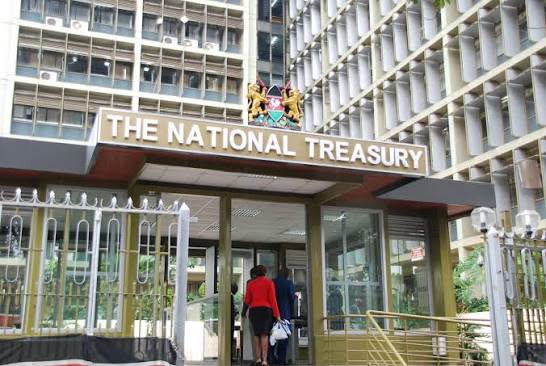
The Treasury acknowledged the breach and pledged full compliance in future budgets. “Over the medium term, the government will ensure adherence to the fiscal responsibility principles,” officials wrote in the review paper.
The continued use of debt to keep government running runs counter to an earlier pledge. Shortly after taking office in September 2022, President William Ruto said borrowing would no longer finance obligations that recur each year. “The government should never borrow to finance recurrent expenditure. It is not right, it is not prudent, and it is not sustainable. It is simply wrong. We must bring ourselves and our country to sanity,” the President said at the time. He added that his administration would restore fiscal discipline over time. “Over the next three years, we must reverse this and go back to a situation where the government contributes to the national savings effort by keeping recurrent expenditure below revenue levels.”
The latest figures signal progress toward that goal but confirm the government still cannot fully cover its recurrent budget from tax revenue and other ordinary income. Treasury data shows a gradual reduction in the share of borrowing used for recurrent spending. In the 2023/24 financial year, the government borrowed KES 766.4 billion ($5.97 billion, £4.69 billion). More than half, or KES 415.7 billion ($3.24 billion, £2.55 billion), paid for recurrent expenditure, marking one of the clearest cases of debt funding government consumption. In the 2024/25 financial year, borrowing rose to KES 854.5 billion ($6.66 billion, £5.23 billion). Of that, KES 604.1 billion ($4.71 billion, £3.70 billion) went to development and KES 250.4 billion ($1.95 billion, £1.53 billion) to recurrent spending, lifting the development share to 70.7 percent.
The most recent financial year improved further, but the KES 207.7 billion still represents a heavy reliance on debt to finance consumption rather than investment, a practice economists have long argued weakens future economic growth. Borrowing for development creates assets such as roads that can raise future productivity and tax revenues. Borrowing for recurrent expenditure leaves taxpayers servicing debt long after the money has been spent.
Kenya’s recurrent expenditure reached nearly KES 3.29 trillion ($25.64 billion, £20.15 billion) in the year to June, up from KES 2.95 trillion ($22.99 billion, £18.07 billion) a year earlier. That spending includes wages for public servants, pensions, debt interest payments, transfers to State agencies and county governments, and operations and maintenance costs across ministries and departments. Debt servicing has become the single largest pressure on the recurrent budget, forcing the government to devote an increasing share of revenue to interest and principal repayments.
The Treasury has repeatedly defended the borrowing programme by arguing debt is increasingly directed toward infrastructure and productive investment rather than recurrent expenditure. Treasury Cabinet Secretary John Mbadi has previously said the government sought to restore fiscal discipline and improve compliance with the Public Finance Management Act after years of heavy borrowing and rising debt servicing costs.
Development spending has risen steadily, the BROP report shows, strengthening the Treasury’s argument that more public spending is directed toward investment. Development expenditure increased from KES 493.66 billion ($3.85 billion, £3.02 billion) in the 2022/23 financial year to KES 546.39 billion ($4.26 billion, £3.35 billion) in 2023/24, before rising to KES 582.94 billion ($4.54 billion, £3.57 billion) in 2024/25. The Treasury estimates development expenditure reached a provisional KES 731.54 billion ($5.70 billion, £4.48 billion) in 2025/26, the highest level in the four years of the current administration.
However, the government still missed its own development spending target. “Development expenditure amounted to KES 731.5 billion against a target of KES 771.0 billion, translating to an under spending of KES 39.5 billion. This variance was largely driven by lower than projected absorption in development projects, which underperformed by KES 41.5 billion,” Treasury officials wrote. The missed target means the government borrowed nearly KES 984 billion while failing to spend all the development funds it had planned, raising fresh questions about project implementation and budget execution.
The Treasury has pursued a fiscal consolidation programme aimed at reducing the budget deficit and slowing the pace of debt accumulation through higher revenue collection and tighter expenditure control. Yet ordinary revenues, including taxes, dividends from government owned entities and charges on government services, were still not enough to cover all recurrent obligations. The government had to use borrowed funds to bridge the financing gap.