









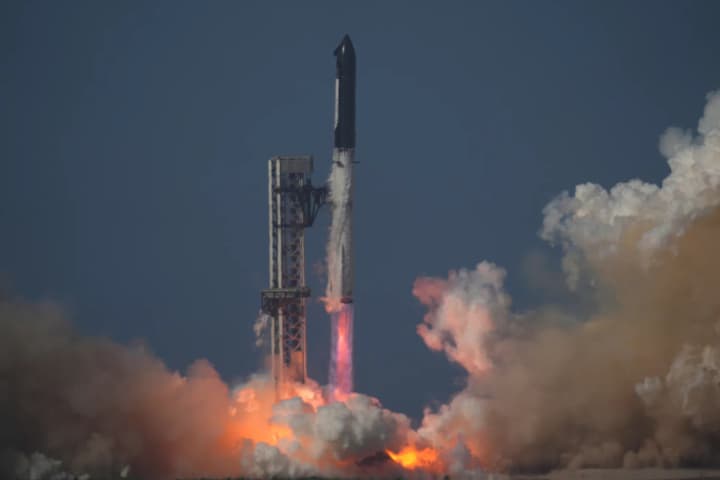
(STARBASE, USA) – SpaceX has completed the thirteenth test flight of its Starship rocket, successfully placing twenty next generation Starlink satellites into orbit for the first time. The launch took place from the company’s facility in southern Texas and lasted approximately one hour.
The upper stage spacecraft carried twenty Starlink satellites to an altitude of about 200 kilometres, releasing them in sequence before re-entering the atmosphere and making a controlled splashdown in the Indian Ocean. The vehicle remained afloat after landing. The mission marked the first time a Starship flight has delivered operational payloads to orbit, a significant step for the programme.
The Super Heavy booster stage experienced a less successful outcome. SpaceX replaced six of the thirty three first stage engines before the flight, following a previous launch attempt that was cancelled due to a technical fault. All engines fired successfully during the latest mission, but the booster was unable to execute a controlled return and fell into the Gulf of Mexico. The upper stage continued its flight as planned.
The new Starlink satellites established laser communication links with existing spacecraft already operating on orbit, confirming their functionality shortly after deployment. SpaceX also tested an improved heat shield on the Starship vehicle, fitted with sensors to collect data during the high speed atmospheric entry sequence.
The flight carries importance for the National Aeronautics and Space Administration’s Artemis programme, which intends to use a version of Starship as a lunar landing vehicle for future Moon missions. NASA Administrator Jared Isaacman said he looked forward to what the agency would learn from the mission. The space agency monitored the test closely as it evaluates Starship’s progress toward the reliability standards required for crewed lunar operations.
SpaceX has pursued an aggressive testing cadence for Starship, the largest and most powerful rocket ever built. Each flight has added new objectives, moving from basic launch and separation milestones toward payload delivery and recovery of both stages. The successful satellite deployment on this flight shows the vehicle’s potential to begin servicing the Starlink constellation directly, rather than relying solely on the smaller Falcon 9 rocket.
The Starlink network continues to expand as SpaceX builds out its broadband internet service. The new generation satellites carried on this flight feature upgrades over earlier models, though the company has not released full technical specifications. The ability to launch twenty such satellites on a single Starship flight points to a future where the larger vehicle takes over a significant share of Starlink deployment duties, freeing Falcon 9 capacity for other commercial and government missions.
SpaceX did not confirm when the next Starship test flight would take place. The company typically reviews data from each mission before setting a date for the following attempt.