







(KYIV, UKRAINE) – Ukraine’s imports of agricultural products rose 8 percent in the first half of 2026 to reach 4.704 billion US dollars. The figure was reported by the National Scientific Centre, the Institute of Agrarian Economics, using data from the State Customs Service of Ukraine.
Suppliers from the European Union continued to dominate the market. They accounted for 54 percent of total agricultural imports, with Ukrainian companies purchasing goods worth 2.54 billion dollars from the bloc. Imports from Asia totalled 812 million dollars, representing a 17.3 percent share, while Latin America provided goods worth 379 million dollars and Africa supplied 256 million dollars. Those regions made up 8.1 percent and 5.4 percent of imports respectively.
The ten largest suppliers to the Ukrainian food market in the period were Poland at 568 million dollars, Germany at 341 million dollars, Turkey at 309 million dollars, Italy at 221 million dollars, the Netherlands at 207 million dollars, France at 199 million dollars, Norway at 180 million dollars, Romania at 161 million dollars, Ecuador at 146 million dollars and China at 136 million dollars. Together these countries delivered 52 percent of the value of Ukraine’s agricultural imports.
The structure of imported goods remained broadly stable. Since the start of the full scale war, however, vegetables have appeared more frequently among the main imported products.
Fruit and berries recorded the highest import value among individual product groups at 532 million dollars, a rise of almost 13 percent compared to the same period in 2025. This category was led by citrus fruits, bananas, other exotic fruits and nuts. Imports of fish, crustaceans and molluscs increased by 13 percent to 501 million dollars. Frozen fish purchases reached 233 million dollars, up roughly 19 percent from a year earlier.
Purchases of alcoholic and non alcoholic drinks rose by almost a quarter to 461 million dollars. Around 342 million dollars in this category was spent on spirits, wine and beer. Imports of miscellaneous food products, including extracts, concentrates and ready made sauces, grew 8 percent to 300 million dollars.
Ukraine imported oilseeds worth 276 million dollars, a 6 percent increase from the first half of 2025. Sunflower seed purchases rose 11 percent to 148 million dollars. Animal feed and waste imports climbed 17 percent to 264 million dollars.
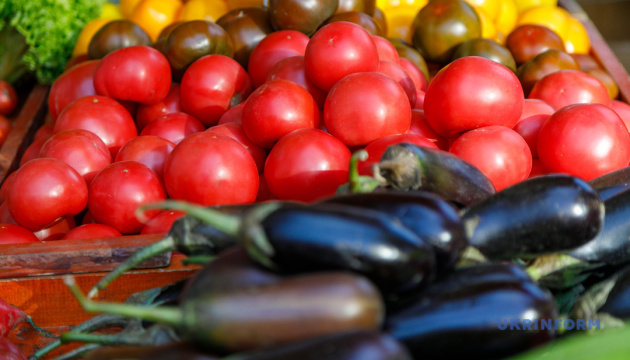
Vegetable imports, by contrast, fell 30 percent to 247 million dollars. The main items were tomatoes, cabbages, cucumbers, potatoes and sweet peppers. Domestic supply of these products typically shrinks at the start of the year as stocks from the previous harvest run down. Cocoa product imports decreased 8 percent to 243 million dollars, while coffee and tea purchases rose 11 percent to 234 million dollars.
Dairy products, eggs and honey imports jumped 22 percent to 214 million dollars. Cheese made up the bulk of this group. Taken together, these product categories represent 70 percent of the country’s agricultural import value.
The Institute of Agrarian Economics linked the rise in import value primarily to higher purchases from EU countries and to increased shipments, in both volume and value terms, across most key product groups. Experts at the institute noted that food import logistics currently face much lower risks, since approximately 80 percent of supplies enter Ukraine by land routes. As a result, there remains a strong possibility that agricultural import levels could reach a new record by the end of 2026.
Separately, the Ministry of Agrarian Policy and Food of Ukraine has asked the European Commission to provide 220 million euros in non repayable support. The funds would compensate interest on loans for small and medium sized agricultural producers. The request comes as vessel access to Ukrainian sea ports was temporarily suspended as of 22 July due to the security situation.
In sterling and euro terms at current rates, the total agricultural import bill of 4.704 billion dollars equates to approximately 3.73 billion British pounds or 4.32 billion euros. Poland’s exports to Ukraine of 568 million dollars represent roughly 450 million pounds or 522 million euros. Germany’s 341 million dollars is about 270 million pounds or 313 million euros. Turkey’s 309 million dollars is approximately 245 million pounds or 284 million euros. Italy’s 221 million dollars is around 175 million pounds or 203 million euros. The Netherlands’ 207 million dollars is about 164 million pounds or 190 million euros. France’s 199 million dollars stands at roughly 158 million pounds or 183 million euros. Norway’s 180 million dollars equates to about 143 million pounds or 165 million euros. Romania’s 161 million dollars is around 128 million pounds or 148 million euros. Ecuador’s 146 million dollars stands at about 116 million pounds or 134 million euros. China’s 136 million dollars is approximately 108 million pounds or 125 million euros.
Fruit and berry imports of 532 million dollars represent about 422 million pounds or 489 million euros. Fish and seafood imports of 501 million dollars equate to roughly 397 million pounds or 460 million euros. Drinks imports of 461 million dollars total about 365 million pounds or 423 million euros. The 220 million euros requested from the European Commission for farm credit support is equivalent to around 240 million dollars or 190 million pounds.