





(NAIROBI, KENYA) – Plans to build Kenya’s first nuclear power plant in Siaya County have drawn opposition from residents and academics who want the project halted pending full public consultation and independent safety reviews.
The proposed facility would be located at Lihundu Beach in Bondo Sub County with construction expected to start next year. The project is valued at several hundred billion shillings.
Residents and scholars from the Lake Victoria region raised concerns over environmental, health and social risks to communities living around the lake. They called for a fresh review of the site before any work begins.
Speaking at Rusinga Island in Suba North Sub County, international law scholar Professor Medo Misama said communities in the lake region had valid concerns about a project that could affect their livelihoods for generations.
Misama was accompanied by sociologist Professor Pius Wawa Acholla, human rights activist Oloo Gor and other residents. He said the government must consider the large population living near the proposed site and assess how the project could affect settlements, livelihoods and economic activity.
Lake Victoria supports millions of people through fishing, transport, agriculture and other economic activities. Misama said any contamination of the lake could have serious consequences for people, livestock, fisheries and the wider ecosystem.
He said the plant would require large volumes of water and warned that placing a nuclear facility on the shores of the lake posed unacceptable risks.
The lake serves as a source of drinking water for communities in Kenya, Uganda and Tanzania. Misama said any accident or leak could affect lives, livestock and the environment on a massive scale.
He also raised concerns over the region’s fishing industry. He argued that even the perception that fish from Lake Victoria could be exposed to nuclear contamination could undermine consumer confidence and damage Kenya’s fish trade in domestic and export markets.
The professor questioned whether residents living within 50 kilometres of the proposed site had been properly consulted. He said communities must be fully informed and involved before major decisions are made.
Acholla questioned the suitability of Nyanza as a location for the facility citing the region’s high population density. He said population density should be a key factor when choosing a site for a nuclear power plant.
He suggested that less densely populated areas such as parts of Baringo and Turkana could be considered for further assessment if Kenya proceeds with nuclear power development.
Acholla also raised concerns over nuclear waste management. He said nuclear byproducts are difficult to handle because they are not biodegradable and can seep into water points if buried in the ground.
He cautioned against presenting the nuclear project as automatically beneficial simply because it is linked to industrialisation. He said development projects should show clear benefits to host communities while accounting for social and environmental costs.
Acholla questioned whether Kenya has sufficient technical capacity, infrastructure and regulatory safeguards to safely construct, operate and manage a nuclear power plant.
He called for increased investment in alternative and environmentally friendly energy sources that protect communities and natural resources.
The group asked the government to stop further steps on the project until comprehensive public participation and independent environmental, health and safety assessments are carried out.
Kenya has been pursuing nuclear power as part of its long term energy strategy. The government has said nuclear energy would help meet growing electricity demand and support industrialisation.
The Nuclear Power and Energy Agency has identified several potential sites across the country. The Siaya site has emerged as a leading candidate for the first plant.
Industry experts estimate that a 1,000 megawatt nuclear plant would cost between $5 billion (KES 646 billion / £3.9 billion / €4.6 billion) and $8 billion (KES 1.03 trillion / £6.3 billion / €7.3 billion) to construct.
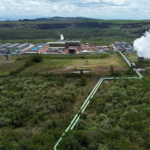
Kenya currently relies on geothermal, hydro, wind and solar sources for most of its electricity generation. Nuclear power would add a new source to the national grid.
The government has said it is committed to following international safety standards and engaging communities before any nuclear project proceeds.
Public hearings on the proposed plant are expected to continue as regulatory agencies review the project application.