





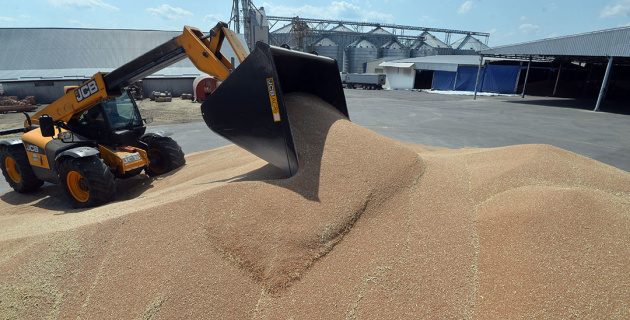
(KYIV, UKRAINE) – A new state financing programme will allow Ukrainian agricultural producers to use harvested grain as collateral for loans, the Ministry of Agrarian Policy and Food has announced. The measure is designed to ease the financial strain caused by the effective halt of maritime grain exports through the ports of Greater Odesa.
Farming businesses are struggling because logistics restrictions have created a large surplus of grain on the domestic market. This surplus has pushed local purchase prices well below levels that would reflect international benchmarks. The new programme aims to give farms access to credit secured against their existing harvests. Producers can then finance the autumn sowing campaign without being forced to sell grain at a steep discount.
Minister of Agrarian Policy and Food Taras Vysotskyi said the government must act quickly. “We have to urgently develop and introduce an affordable financing programme for agricultural producers, in effect for the sowing campaign. They will be able to raise funds using their existing grain stocks as security, ride out this period of crisis, and not sell grain at prices far below its value on international markets,” Vysotskyi stated.
Consultations have already taken place between the ministry, agricultural sector representatives and commercial banks. The programme is being worked on jointly with the Ministry of Economy and the Ministry of Finance, ahead of submission to the Cabinet of Ministers.
Key materials for field work remain available. Seed is mostly produced within Ukraine. Crop protection products are arriving by land routes. Mineral fertilisers and fuel are being imported through alternative logistics channels. The agriculture ministry estimates that the sector has enough resilience to continue operating normally for several more months.
Storage pressure is building, however. Grain volumes continue to accumulate, and by November existing storage capacity may prove insufficient. Should maritime export routes remain closed by that time, the financial pressure on producers will intensify significantly.
The ports of Greater Odesa normally handle about 90 percent of Ukraine’s grain, oilseed and processed product exports. Exports are continuing by rail, road and via Danube river ports, but the combined capacity of these routes cannot replace the deep sea ports.
Without the restoration of maritime export capacity, more than 27 million tonnes of agricultural products could remain unshipped inside Ukraine, the minister warned. Even once a sea corridor resumes operations, the country would still need a considerable period to clear accumulated stocks before the start of the next harvest by summer 2027.
Vessel movements into Ukrainian sea ports were temporarily suspended as of 22 July due to the security situation. In response to daily attacks on infrastructure, the government is working with international partners on measures to protect export logistics.