




(ODESA, UKRAINE) – Most of the Russian strikes on port infrastructure in Odesa during June and July were carried out using a type of loitering munition known as Bandero, and the weapons rely heavily on foreign made parts, including components produced as recently as 2025 and 2026.
Vladyslav Vlasiuk, the Ukrainian presidential commissioner for sanctions policy, told reporters that Russia is continuing series production of the Bandero munition because it has steady access to imported components. He said 16 strikes hit food export infrastructure in Odesa over June and July, and 80 percent of those attacks involved the Bandero model. Each unit carries a warhead of 150 kilogrammes.
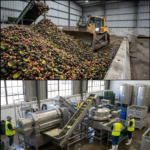
The targets included facilities handling vegetable oil, grain and other food commodities. The commissioner argued that without access to foreign parts, Russia would not be able to sustain output of these weapons. Fresh examples of the Bandero from 2026 have already been documented with foreign components dated 2025 and 2026, showing that the supply chain remains active.
Analysis of Bandero samples from the 2025 production year found a large number of imported parts. The list includes nine components from the United States, four from China, two from Japan, two from Switzerland, two from South Korea and one from Australia. Vlasiuk added that the 2026 models now being used against Odesa show some differences from earlier versions and their composition is still under examination.
No financial estimates for the cost of damage to Odesa port infrastructure were provided in the commissioner’s remarks. Past assessments by Ukrainian authorities have put the total cost of repairing and rebuilding damaged port and agricultural export facilities at several hundred million US dollars. For context, USD 100 million equals roughly GBP 78 million or EUR 91 million, and around 4.1 billion Ukrainian hryvnia at current exchange rates.
Separately, the US Senate voted 86 to 12 on Tuesday evening to advance a procedural motion needed to continue work on a bipartisan sanctions bill targeting both Russia and Iran. The legislative step keeps the measure on track for further debate.
The disclosure about the Bandero munition adds detail to the picture of how Russia is able to keep striking food export routes despite waves of international sanctions. It also raises commercial questions for companies that manufacture dual use electronics, navigation modules and other components found in recovered weapons. Ukrainian officials have long pressed partner governments and firms to tighten controls on parts that can be diverted into Russian weapons programmes.
The concentration of Bandero strikes on Odesa’s food infrastructure points to a deliberate effort to disrupt one of Ukraine’s main export revenue streams. Agricultural products, particularly grains and oils, are a pillar of the Ukrainian economy and a major source of foreign currency. Keeping those supply chains functional remains a priority both for Kyiv and for global food markets.