







(KYIV, Ukraine) – Ukraine is pursuing alternative export corridors through Polish ports as systematic Russian strikes continue to disable the country’s deep water terminals, the Ministry of Agrarian Policy and Food said on Tuesday.
The plan involves routing agricultural goods via rail and road crossings into Poland and onward to the Baltic Sea ports of Gdansk, Szczecin, Swinoujscie and Gdynia. The ministry said the aim is to restore the flow of grain, oilseeds and other food cargoes that previously moved almost entirely through Greater Odesa.
Taras Vysotskyi, Ukraine’s minister of agrarian policy and food, raised the proposal during a meeting with representatives of the Polish embassy in Kyiv. He said the repeated Russian attacks on port and logistics infrastructure had forced Ukraine to find new ways to reach global markets.
“Transit will be useful for everyone, especially under current conditions when sea logistics are significantly complicated and more expensive due to Russian attacks. It is important to jointly examine where throughput capacity for product transit can be increased, involving Ukrzaliznytsia, customs, border, veterinary and phytosanitary services,” Vysotskyi said.
Vysotskyi’s remarks were echoed by deputy minister Denys Bashlyk. He said the immediate priority was to get the humanitarian sea corridor working again. In parallel, he said Ukraine must build out alternative paths, including through solidarity lanes and the ports of other countries. The Polish terminals of Gdansk, Szczecin, Swinoujscie and Gdynia were named as possible destinations. Bashlyk added that the cost of such a routing and its economic viability for Ukrainian exporters still needed to be assessed.
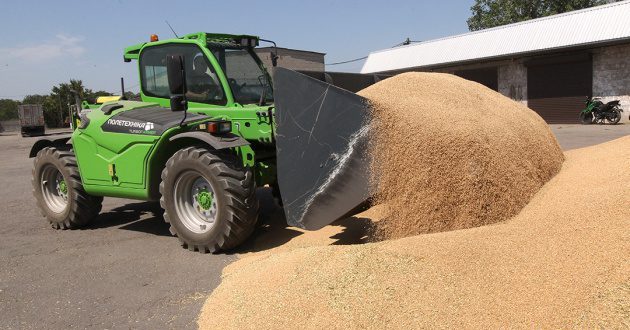
Ukraine’s needs extend beyond shipping routes. The two sides also discussed providing Ukrainian farmers with crop storage capacity. The agriculture ministry estimates a storage deficit of between 7.5 million and 8 million tonnes by November, with a worst case projection of 11 million tonnes. Securing temporary silos and warehouse space is seen as critical ahead of the late autumn harvest peak.
The Polish side at the meeting was represented by Piotr Lukasiewicz, chargé d’affaires of the Republic of Poland in Ukraine, and Zbigniew Ekiert, a counsellor at the embassy.
Ukraine has lost the use of three deep water ports in Greater Odesa following more than 180 Russian strikes on port infrastructure so far in 2026. Those three terminals previously handled more than 90 percent of the country’s agricultural exports. The loss has placed a heavy burden on Ukraine’s export dependent farm sector. The combined value of grain and oilseed exports that normally move through the Black Sea exceeds USD 22 billion (GBP 17.3 billion / EUR 20.1 billion) annually. The shift to overland and river routes has raised logistics costs by an estimated USD 35 to USD 45 (GBP 28 to GBP 35 / EUR 32 to EUR 41) per tonne, eroding margins for farmers and traders.
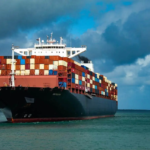
The outreach to Poland comes as Ukraine tries to secure additional capacity ahead of the winter months, when overland border crossings become slower and storage pressures mount. Polish ports already handle some Ukrainian grain under the EU solidarity lanes initiative, but volumes remain far below what the damaged Black Sea terminals can load. A single large bulk carrier leaving Odesa typically carries around 60,000 tonnes. Matching that volume by rail would require roughly 1,000 wagons.