






(THUNDER BAY, ONTARIO) – Ontario’s lithium industry is moving towards a potential first mine, with Rock Tech Lithium targeting initial production from its Georgia Lake project in northwestern Ontario in about two years as several companies compete to develop the province’s largely untapped resources.
Rock Tech is seeking to advance Georgia Lake towards production while Frontier Lithium, Green Technology Metals and Avalon Advanced Materials also develop lithium projects in the region. The competition comes as Canada seeks to build domestic supplies of critical minerals used in electric vehicles, energy storage and other technologies.
Rock Tech Chief Executive Mirco Wojnarowicz said demand for lithium is expanding beyond electric vehicles as battery systems are increasingly used for electricity storage, including applications supporting power grids and data centres.
He said Rock Tech’s aim is to help Canada develop lithium mining and processing capacity and reduce reliance on China for the critical mineral. Canada already has significant lithium resources and ranks among the world’s major producers.
Ontario also offers relatively competitive energy costs, Wojnarowicz said. Lithium processing requires both natural gas and electricity, making access to reliable and competitively priced energy an important factor for new projects.
Rock Tech says Georgia Lake has an infrastructure advantage that could help shorten development times. The project near Beardmore is close to the Trans Canada Highway and has access to high voltage electricity lines.
The existing infrastructure means the company would not have to build major new roads, bridges or rail links to move material from the mine to customers or processing facilities, Wojnarowicz said.
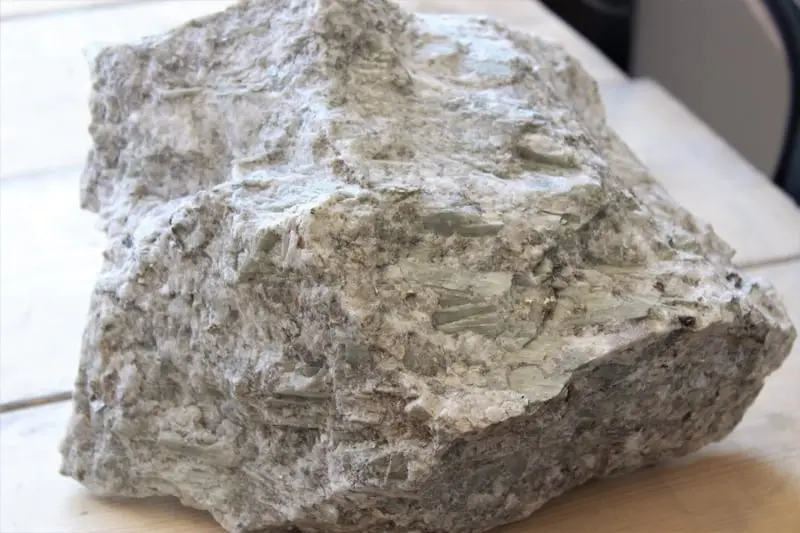
A preliminary feasibility study reported more than 14 million tonnes of lithium oxide after drilling covered about 10% of the property, according to the company. Rock Tech plans to begin a definitive feasibility study later this month and aims to complete it early next year.
The company expects construction could begin about nine months after completion of the study, with initial production targeted roughly two years from now.
“Given that timeline, we expect that we can be first to production in Ontario,” Wojnarowicz said.
Rock Tech also expects part of the future output could remain in Canada, while other volumes could be sold to allied economies as manufacturers seek more secure supply chains for critical minerals.
Priya Tandon, president of the Ontario Mining Association, said at least four major lithium projects are advancing in northwestern Ontario. The group includes Frontier Lithium, Green Technology Metals, Rock Tech Lithium and Avalon Advanced Materials.
Tandon said Rock Tech was well positioned and that competition among the projects was positive for Ontario’s mining sector.
Frontier Lithium is developing its PAK project in the Thunder Bay area and is Rock Tech’s closest major competitor. Frontier has secured letters of intent for C$240 million in government grants, equivalent to about US$172 million or £127 million at current exchange rates. The project has also become the first mine to receive a designation under Ontario’s One Project, One Process framework, which is intended to speed up mine development.
Rock Tech has not received the same fast track designation. Wojnarowicz said, however, that the company has already advanced its permitting work and engagement with Indigenous communities, helping to move the project forward.
For Rock Tech, mining lithium is only one part of the planned business model. The company wants to establish an integrated Ontario supply chain in which lithium is mined and then converted into battery grade chemicals within the province.
The company has secured a C$200 million anchor investment from BMI Group, worth about US$144 million or £106 million at current exchange rates. The investment is supporting development of the planned Red Rock converter in Ontario, which would process spodumene concentrate from Georgia Lake into battery grade lithium chemicals.
Rock Tech plans to use the design of its German lithium converter project as the basis for the Ontario facility. The German plant is designed to convert lithium feedstock into battery grade lithium hydroxide for automotive customers including Mercedes Benz.
The company has also signed an agreement with Swiss commodity trader Transamine covering the planned production from Georgia Lake for an initial seven year period, with an option to extend the arrangement.
The agreement includes access to a development prepayment facility of up to US$80 million, which would provide an additional source of funding for the project.
Wojnarowicz described the agreement as an important commercial step because it provides a foundation for developing the mine.
Tandon said all four major lithium projects in northwestern Ontario were also considering processing rather than simply mining the resource. She said local processing could create additional economic value for the province and Canada.
She pointed to Vale Base Metals and Glencore Canada’s facilities in the Sudbury Basin as examples of the economic contribution that mineral processing can make. Those operations support about C$3.3 billion in direct annual GDP for Ontario, equivalent to about US$2.37 billion or £1.75 billion at current exchange rates.
Despite the investment and development plans, bringing a lithium mine into production remains difficult. Tandon said mining projects in Ontario can sometimes take up to 15 years to build, making faster and more predictable permitting a key issue as the province seeks to increase investment in critical minerals.
Labour is another potential constraint. More proposed mines will compete for skilled workers, while existing mining operations will also need staff as they expand.
Tandon said the industry would need to ensure that enough skilled workers are available if Ontario is to build new mines and expand existing operations.
The lithium race therefore extends beyond the size of individual deposits. Companies must secure financing, permits, infrastructure, processing capacity, customers and skilled labour before projects can reach commercial production. Rock Tech’s existing infrastructure and planned mine to converter model could give it an early advantage, but the company still faces the technical, regulatory and financing steps required to turn its two year production target into an operating mine.
Currency note: Canadian dollar figures have been converted using indicative market rates of about C$1.3936 per US$1 and US$1.3524 per £1 on 12 August 2026. Exchange rates fluctuate.