









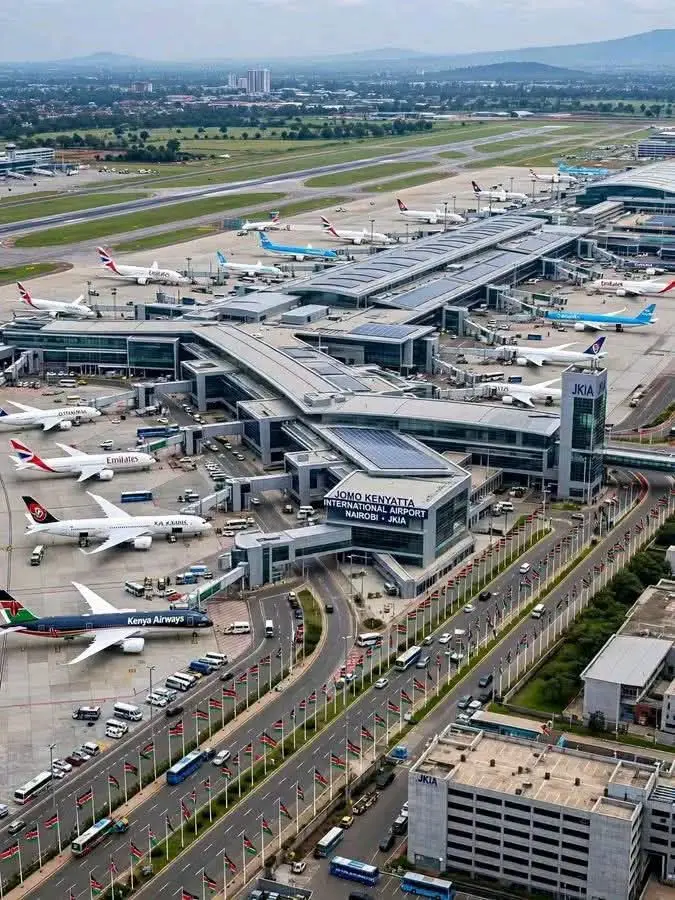
(NAIROBI, KENYA) – Air travel between Kenya and the Middle East rebounded in the third quarter despite the ongoing conflict, with Dubai overtaking London as the top destination for travellers departing from Nairobi.
Departures from Jomo Kenyatta International Airport (JKIA) to Middle Eastern destinations rose 16% to 151,295 in July and August, up from 130,156 a year earlier, according to Kenya National Bureau of Statistics (KNBS) data.
Arrivals from Middle Eastern countries rose 3.8% to 139,175 from 134,033, months after the region’s airspace was fully shut due to the Iran war.
The trend runs against a global slump in travel to and from the Middle East, as tourists and transit passengers reroute amid fears of attacks on airports and other transport infrastructure.
For Kenyan travellers, disruption tends to mean postponement rather than cancellation, with demand rising once services resume.
“Every time there is disruption, especially on Middle Eastern routes, there is a build up of people who want to travel there, and that is why we may be seeing that surge,” said Nicanor Sabula, chief executive of the Kenya Association of Travel Agents.
“Dubai and Abu Dhabi have also been aggressively promoting tourism to rebuild it, and they have eased visa restrictions.”
Global passenger demand for Middle Eastern carriers including Emirates, Qatar and Etihad fell 14.6% in August from a year earlier, according to the International Air Transport Association (IATA).
Dubai Airport, the region’s busiest, handled 31.5 million passengers in the first half of 2026, a 31.3% drop from 46 million a year earlier, reflecting the impact of the Iran war on regional traffic.
For Kenya, departures to Dubai rebounded in July and August, displacing London as the leading destination from JKIA. About 35,994 passengers flew from Nairobi to Dubai in August, compared with 28,598 to London.
Airlines have moved to add frequencies and capacity on the route.
Emirates introduced a third daily Nairobi to Dubai flight in June and plans to deploy an Airbus A350 on two of the three daily services.
Kenya Airways raised its daily Dubai flights to two from September. FlyDubai, an Emirates subsidiary, began daily Nairobi to Dubai flights in October last year.
Travel from Nairobi to Dubai collapsed in March after the joint US and Israeli offensive against Iran, which retaliated by attacking neighbours, including airports and hotels.
Total air travel to the Middle East fell to 20,599 in March, the lowest monthly figure in more than five years, before rebounding from April even as travellers from other regions stayed away.
Sabula said the number of Kenyans travelling to the Middle East in search of jobs has also risen significantly since the war began, adding to demand.