









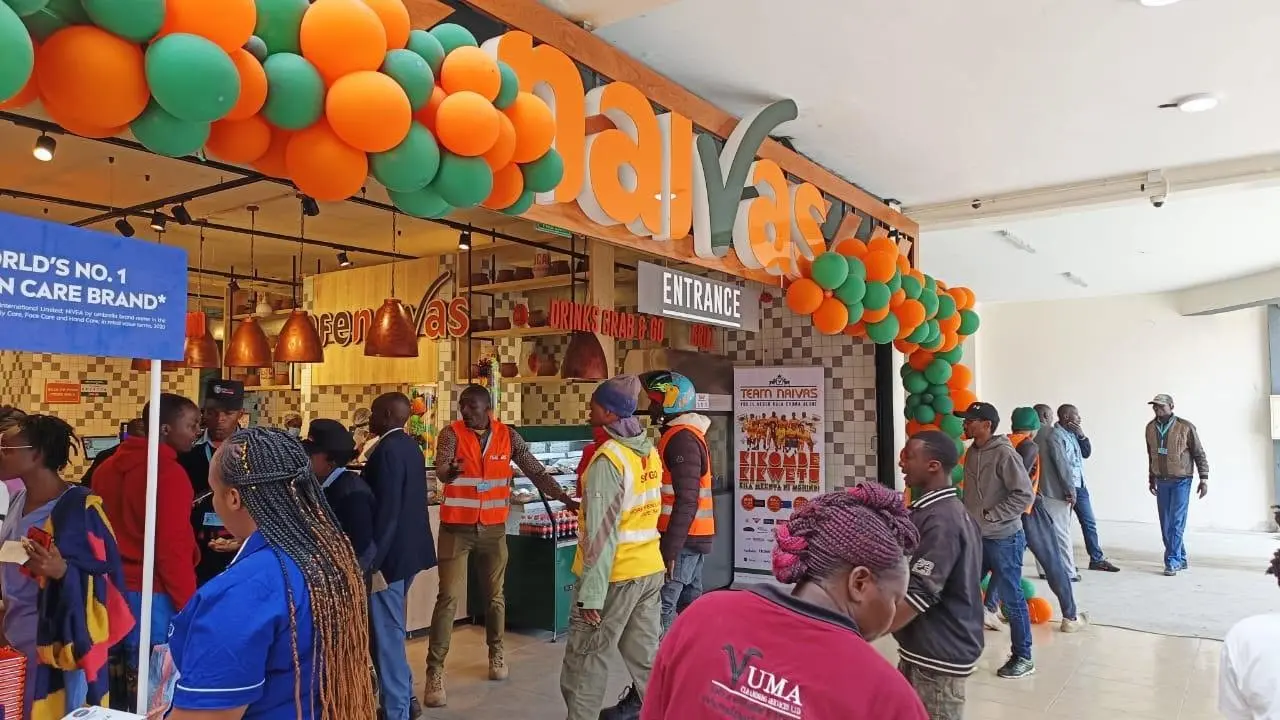
(NAIROBI, KENYA) – Naivas, Quickmart and Carrefour now hold a combined 60% of Kenya’s formal retail market, driven by fast store expansion across the country.
Naivas leads with a 31% market share by estimated revenue in 2025, according to disclosures by Quickmart, citing market intelligence firm Sagaci Research.
Quickmart published the data in connection with its ongoing initial public offering (IPO) to give prospective investors an insight into the business.
Quickmart is second with 15%, followed by Carrefour at 14%, Magunas at 6% and Foodplus at 4%.
The remaining market share is split among smaller players.
“The Kenyan modern grocery retail market is concentrated among a small number of leading chains that together make up 60 percent of the market, and the remaining market share is fragmented across a long tail of smaller operators,” Quickmart said in its information memorandum.
“Competition includes large domestic supermarket chains, regionally focused operators, discount led formats, convenience stores, wholesalers and emerging online platforms. Competition intensity is highest in Nairobi and its surrounding suburban areas, while regional urban centres remain comparatively underserved.”
The three chains rose to replace earlier dominant supermarket operators that collapsed under a mix of fraud, heavy debt and mismanagement.
Nakumatt Holdings was previously the top formal retailer, with a presence in all the major shopping malls in Nairobi and other towns. It went into administration in January 2018 after failing to meet obligations to lenders and suppliers. It later emerged that the retailer had provided soft loans of KES 1 billion ($7.7 million) to its directors before its collapse.
Tusker Mattresses Limited, trading as Tuskys, also collapsed in 2023 under a heavy debt burden. The company also suffered from infighting among shareholders who accused each other of insider dealings that hurt the business.
Uchumi Supermarkets collapsed in 2018 after failing to pay its debt. A forensic audit report also accused management of falsifying books before bankruptcy.
Botswana’s Choppies and South Africa’s Shoprite also closed their Kenyan operations after failing to reach profitability.
The new top three operators have expanded rapidly in Nairobi and other major towns to capture consumer spending amid rising urbanisation.
Naivas has grown to 114 stores. Quickmart had opened 72 branches as of August. Carrefour last disclosed its store count in Kenya at 34.
With net profit margins below 4%, the supermarkets see volumes as a key way to grow earnings. This has driven expansion in major towns and cities.
Carrefour earlier said it would open nine more stores in Kenya this year, raising its network to 43 branches.
Quickmart said urbanisation has come with the expansion of residential developments across Nairobi and its suburbs, creating new and denser consumer catchments.
“This has supported demand for neighbourhood retail formats that provide convenient access to groceries and everyday essentials close to residential areas, particularly for time constrained working households seeking convenient and more frequent shopping options without travelling to larger destination retail centres,” the retailer said.
“The combination of urbanisation, consumer demand for convenience and an increasing number of high density neighbourhoods have driven the industry towards localisation, neighbourhood led formats such as supermarkets and express stores rather than large, destination malls.”
The company added that Kenyan consumers generally have low vehicle ownership, are sensitive to transport costs, face time constraints and limited storage space, and value day to day affordability. This has driven a preference for weekly convenience driven trips over monthly or occasional bulk purchases, Quickmart said.
The company said it added ten stores in each of 2020, 2021 and 2022, reaching its 50th store in 2022.
“Quickmart continued its expansion in subsequent years, increasing its network to 64 stores by 2025 and further to 68 stores as of 30 June 2026,” the company said.
“The company opened four new stores in July and August 2026 increasing its footprint to 72 stores nationwide. This expansion also broadened the company’s geographic reach beyond its initial core markets, with its presence growing from 5 counties to 16, including entry into Kenya’s coastal and eastern regions in 2021 and 2022 respectively.”
Quickmart said competition in formal retail is driven by a few key factors, including price and value.
Others are store location, convenience such as parking and trading hours, and the variety and availability of quality goods.
Some branches open earlier than usual, while others trade for 24 hours to serve more shoppers.
Quickmart added that major chains also use their size to compete better.
“Scale and operational execution, including procurement, supply chain reliability and inventory management, which can support competitive pricing, product availability and margins as retailers expand their store networks,” the company said.