
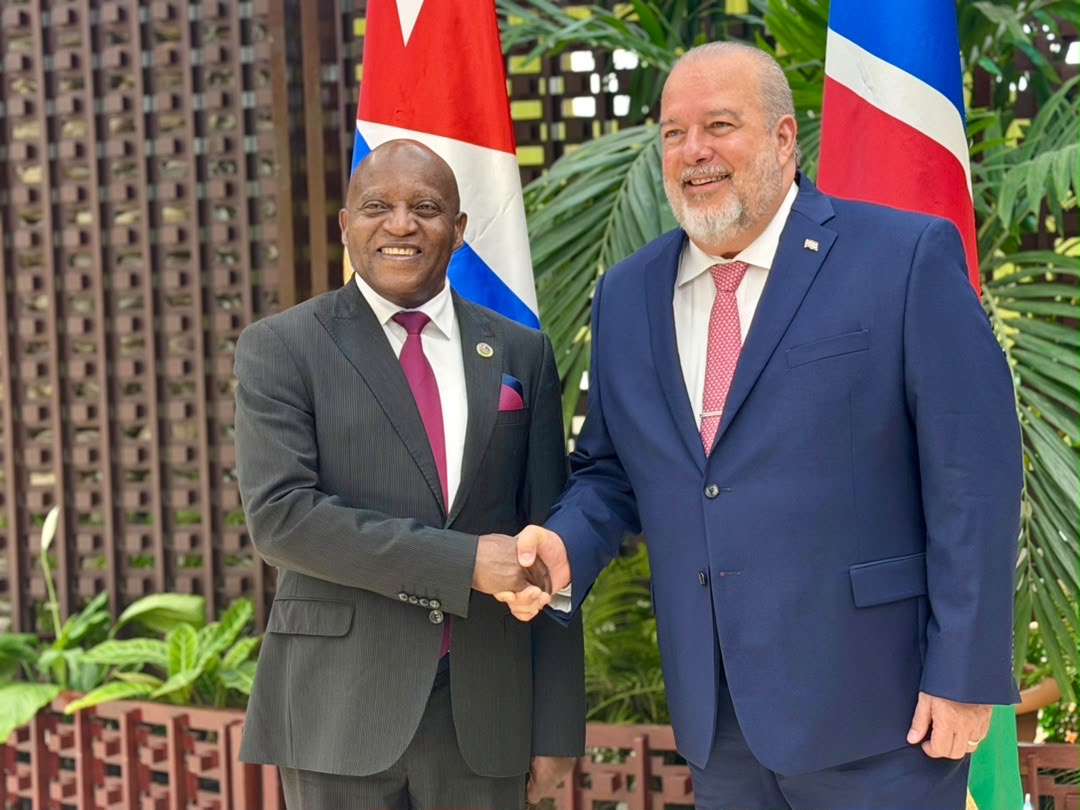
(HAVANA, Cuba) – Namibia and Cuba have begun talks on moving their longstanding political alliance into a new phase focused on economic independence, as Prime Minister Elijah Ngurare started a six day official visit to Havana. The visit runs from 6 to 11 August and includes plans for expanded cooperation in water infrastructure, education, health, youth exchanges and engineering.
Ngurare arrived in Havana on Thursday and told a welcoming dinner that Namibia’s political independence, which Cuba helped to secure, must now be followed by a determined push for economic independence. He said Namibia is ready to scale up bilateral work in areas that directly affect communities.
Water infrastructure emerged as an early priority. Ngurare proposed an exchange of technical and engineering expertise between the two countries, arguing that better water systems could improve food security, especially in areas hit by water shortages and limited farming options. The proposal reflects a wider Namibian challenge of turning technical cooperation into practical solutions that raise living standards.
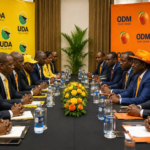
Ngurare briefed Cuban Prime Minister Manuel Marrero Cruz on Namibia’s seven key development priorities, with emphasis on youth development and cultural and educational exchanges. He said young Cubans should feel free to come and study in Namibia.
The Prime Minister, a former youth leader, placed youth engagement at the centre of his programme. He met the first secretary of the Young Communist League of Cuba, Meyvis Estévez Echevarria, and her delegation at the Fidel Castro Museum. Ngurare encouraged Cuban youth to visit Namibia for business, cultural, artistic and educational exchanges. He told them Namibia should be seen as a friendly country where they are welcome. He challenged young people in both nations to carry forward the values of the revolutionary generation and lead what he called an economic revolution. He urged them to “make the impossible possible”, drawing on the legacy of Fidel Castro.
Ngurare also paid tribute to Cuba’s role in Namibia’s liberation struggle, describing the country as an “all weather friend”. He said Namibia remains unapologetic in its support for Cuba, particularly during difficult economic times. He recalled that Cuban internationalist forces fought alongside African liberation movements and sacrificed their lives without seeking anything in return. He said Cuba sent its sons to die for Namibia when it was unfashionable to do so. This history, he added, places a responsibility on the current generation to preserve the relationship while building new forms of cooperation.
The Prime Minister visited the Fidel Castro Centre in Havana, where he was taken through the life and political history of the Cuban revolutionary leader. Ngurare said the visit offered lessons in leadership, determination and commitment to social development. He noted Castro’s focus on healthcare, education, housing, water and other social services, as well as Cuba’s assistance to countries beyond its borders. He remarked on the coincidence that Castro’s revolutionary movement began on 25 November 1956 and he died on 25 November 2016. Castro’s famous 1953 courtroom declaration, “Condemn me, it does not matter, history will absolve me,” echoed through the visit.
Ngurare’s programme also includes meetings with Vice Prime Minister Inés María Chapman, engagements with Namibian students in Cuba, and a scheduled meeting with Cuban President Miguel Díaz Canel. He is expected to visit the Memorial Square, the José Martí Memorial and other historic sites.