









(TAUFKIRCHEN, Germany) – German defence electronics group Hensoldt has seen its order book pass the €10 billion mark for the first time, driven by a doubling of new contracts in the first half of 2026. The milestone reflects a rapid translation of higher European defence budgets into firm industrial orders.
New orders reached €2.812 billion in the six months to 30 June, twice the figure recorded in the same period a year earlier. The total order backlog climbed to a record €10.356 billion. In US dollar and sterling terms, the half year order intake stands at approximately $3.07 billion or £2.39 billion, while the full backlog equates to roughly $11.31 billion or £8.81 billion.
Revenue at the group rose 23.6 percent compared with the first half of 2025, reaching €1.167 billion. That is equivalent to about $1.27 billion or £0.99 billion.
Oliver Dörre, chief executive of Hensoldt, said political decisions to raise defence expenditure are now taking concrete shape in the company’s contracts. The speed at which those orders turn into actual military capability depends on how quickly industry can deliver, he added.
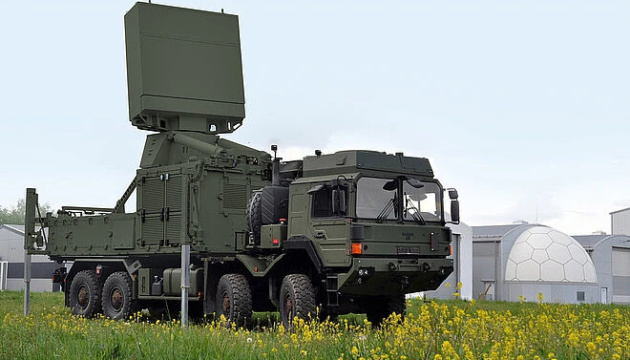
The Sensors division recorded a 57.6 percent jump in new orders to €1.979 billion. Growth came from expanded contracts for Eurofighter Mk1 radars, an order for the Knifefish electronic attack system and fresh procurement of TRML-4D radars. The Optronics segment saw new orders rise almost sixfold, from €164 million to €971 million. Large contracts to equip Puma infantry fighting vehicles and Schakal wheeled combat vehicles with digital optoelectronic systems accounted for most of that increase.
Hensoldt expects full year revenue for 2026 to come in at around €2.75 billion, or approximately $3.00 billion and £2.34 billion. The company specialises in radars, optoelectronic systems, electronic warfare equipment and software for air, land, sea, cyber and space platforms.
The group has also been building ties with Ukraine’s defence sector. Hensoldt and Ukrainian company Fire Point signed a memorandum of understanding to work together on integrating components into the Freya ground based air defence system, which is designed to detect and intercept ballistic missiles.