









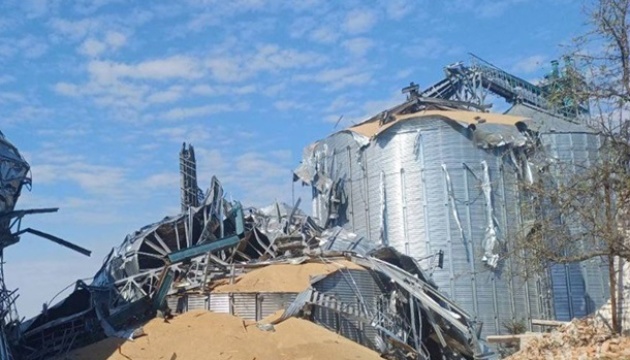
(KYIV, UKRAINE) – Ukraine’s central bank has moved to shield agricultural businesses from loan defaults, responding to severe damage to export infrastructure caused by intensified Russian attacks. The National Bank of Ukraine announced new rules allowing banks to avoid classifying a borrower as in default if the debtor completes a short term debt restructuring of up to one year. This measure applies when financial troubles are directly linked to the war.
The changes form part of a wider set of actions designed to keep credit flowing to businesses in strategically important parts of the economy, particularly the agricultural sector. The central bank’s approach draws on the successful use of similar preventive restructurings after the crises of 2020 and 2022. The regulator said these short term debt adjustments would not affect financial stability and would help a large number of borrowers stabilise their operations.
The relaxed rules cover restructurings carried out between 1 July 2026 and 1 September 2027. They apply when a bank has reason to believe that borrowers can overcome temporary difficulties and resume servicing their debt.
The National Bank has also introduced new features for how banks should treat agricultural goods used as collateral, effective until 1 September 2027. This responds directly to the disruption of logistics chains for agricultural exports. The liquidity coefficient for agricultural product collateral rises from 0.4 to 0.75. Banks can now value product collateral based on actual stock levels as of the date of credit risk calculation. The total term of a loan agreement with such collateral is also extended from 12 to 18 months.
In changes to the regulation on how Ukrainian banks calculate credit risk for active banking operations, the National Bank introduced unified approaches for portfolio based guarantee instruments. These instruments have two levels of coverage and allow for partial reimbursement to the guarantor from funds recovered through other forms of security, not just the guarantee itself. The central bank noted that these changes were prepared in consultation with international partners.
The regulator also clarified requirements for counting days past due on a loan to an individual borrower when partial or full repayment has occurred through an overdraft or credit card facility.
National Bank Governor Andriy Pyshnyi said the central bank’s task was to react in time and prevent temporary difficulties from cutting viable businesses off from finance. This was especially important, he said, given the recent large scale destruction of maritime export infrastructure and logistics centres. He stressed that the decisions do not remove the need for responsible risk assessment. Rather, they give banks more flexibility and give viable businesses a chance to get through a difficult period, maintain production and preserve jobs.
The changes were introduced by National Bank board resolutions No. 88 and No. 89 dated 7 August 2026, which come into force on 8 August.
The moves come as Ukrainian banks expect further growth in corporate and household loan portfolios over the next 12 months and rising demand for all types of loans, according to a central bank survey. Separate reports indicate Ukraine could lose up to $3 billion in the agricultural sector due to Russian attacks on ports. The government has also recently streamlined conditions for its affordable lending programme for farmers.
The agricultural sector is a cornerstone of Ukraine’s economy. Before the full scale invasion, agricultural products accounted for about 40 percent of total export revenue. In 2025, agricultural exports reached $23.2 billion, equivalent to roughly £18.5 billion or €21.3 billion. Disruption to Black Sea shipping routes and attacks on port infrastructure in the Odesa region have repeatedly threatened this vital income stream.