








(KYIV, UKRAINE) – Ukraine’s summer harvest sharply reduced prices for many staple vegetables in July, helping ease food inflation as domestic supplies from open field farms replaced imported produce and greenhouse crops. However, prices remained uneven across the fruit and vegetable market, with some berries, greenhouse vegetables and imported fruit continuing to command higher prices because of weather conditions, energy costs and supply pressures.
July traditionally marks a turning point for Ukraine’s food market as large volumes of locally grown produce reach shops and markets. This seasonal increase in supply changes pricing across the country and reduces reliance on imports.
The wider availability of vegetables from household farms and commercial agricultural producers steadily lowered average prices for fresh produce. Agricultural market analysts said vegetables became the main factor slowing food inflation during the month.
Despite the overall decline, prices did not move in the same direction across every product category. Weather conditions in key farming regions, electricity costs for refrigerated storage and changes in harvesting schedules all affected pricing. While some products reached seasonal lows, others became temporarily more expensive because of limited supply or strong demand.
The biggest price reductions were recorded among vegetables commonly used in Ukraine’s traditional borscht soup.
Early and medium early potatoes became significantly cheaper compared with June. Wholesale prices fell to between UAH10 and UAH15 per kilogram, equal to approximately US$0.24 to US$0.36 and £0.18 to £0.27.
Cabbage followed a similar pattern as increased supplies from open fields pushed wholesale prices down to UAH18 to UAH25 per kilogram, equivalent to around US$0.43 to US$0.60 and £0.32 to £0.45.
By the end of July, young potatoes were selling in major supermarket chains for between UAH14.79 and UAH22.00 per kilogram, equal to US$0.36 to US$0.53 or £0.27 to £0.40. The average retail price stood at UAH16.80 per kilogram, about US$0.40 or £0.30, representing a monthly decline of UAH16.88, equivalent to roughly US$0.41 or £0.31.
Pink potato varieties remained more expensive, averaging UAH22.70 per kilogram, around US$0.55 or £0.41, although prices were UAH6.10 lower than in June.
Carrots and beetroot recorded some of the fastest monthly declines. Earlier in the summer, remaining stocks from the previous harvest and limited early supplies had kept prices high. Fresh July harvests reduced wholesale beetroot prices to UAH10 to UAH15 per kilogram, equal to US$0.24 to US$0.36 and £0.18 to £0.27. Carrots fell to UAH22 to UAH28 per kilogram, around US$0.53 to US$0.67 and £0.40 to £0.50.
By 31 July, carrots averaged UAH31.70 per kilogram, approximately US$0.76 or £0.57, down UAH18.20, equivalent to about US$0.44 or £0.33, from June.
Young beetroot sold in major supermarkets for between UAH12.59 and UAH13.90 per kilogram, equal to US$0.30 to US$0.33 and £0.23 to £0.25. Market prices averaged UAH13.16, around US$0.32 or £0.24, a monthly decline of UAH13.07, or about US$0.31 and £0.24.
Onions also became more stable as harvests from southern and central Ukraine reached the market. Wholesale prices declined to between UAH16 and UAH20 per kilogram, equivalent to US$0.39 to US$0.48 and £0.29 to £0.36.
Retail supermarket prices remained higher, ranging from UAH31.20 to UAH36.90 per kilogram, around US$0.75 to US$0.89 and £0.56 to £0.67.
Red onions continued to attract premium prices at between UAH74.99 and UAH82.16 per kilogram, equal to roughly US$1.81 to US$1.98 and £1.36 to £1.49. The average July price reached UAH77.52, around US$1.87 or £1.40.
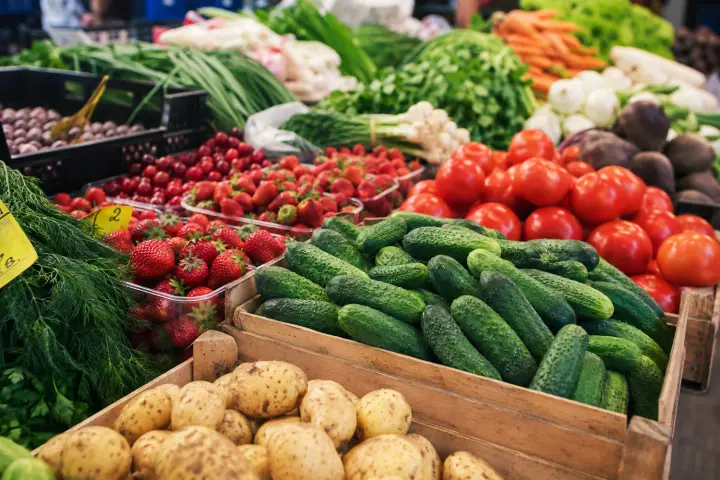
The peak cucumber season significantly reduced prices for field grown cucumbers to between UAH15 and UAH30 per kilogram, equivalent to US$0.36 to US$0.72 and £0.27 to £0.54. Average prices fell by almost UAH10, about US$0.24 or £0.18, during the month.
Prices varied by variety. Smooth cucumbers were the most expensive, reaching UAH69.00 per kilogram, around US$1.66 or £1.25, and actually increased by UAH6.02, about US$0.15 or £0.11, compared with June.
Prickly cucumbers were priced at UAH34.50 per kilogram, around US$0.83 or £0.62, while short cucumbers averaged UAH29.80, approximately US$0.72 or £0.54.
Tomato prices remained less predictable. The transition from greenhouse production to open field harvests, combined with hot weather, kept prices between UAH40 and UAH75 per kilogram, equal to US$0.96 to US$1.81 and £0.72 to £1.36, depending on quality and variety.
Prices also declined during July for garlic, cauliflower, sweet corn and several fresh herbs including dill and parsley.
Ukraine’s fruit and berry market also changed as seasonal supplies expanded.
While June was dominated by strawberries and cherries, July marked the peak season for berries, stone fruit and early apples and pears.
The second half of July is traditionally the busiest period for blueberries and raspberries. Strong domestic supply pushed blueberry prices down to their seasonal low of UAH120 to UAH160 per kilogram, equivalent to US$2.89 to US$3.86 and £2.18 to £2.90.
Raspberries became more affordable at UAH200 to UAH220 per kilogram, around US$4.82 to US$5.30 and £3.63 to £3.99. Blueberries were priced between UAH200 and UAH280 per kilogram, equivalent to US$4.82 to US$6.75 and £3.63 to £5.08.
Domestic apricot and peach prices depended heavily on regional harvests. Poor spring weather reduced yields in several regions, forcing traders to increase imports from Türkiye, Greece and Moldova. This helped keep average prices elevated.
Apricots sold for UAH50 to UAH90 per kilogram, equal to US$1.21 to US$2.17 and £0.91 to £1.63. Peaches ranged from UAH40 to UAH90 per kilogram, equivalent to US$0.96 to US$2.17 and £0.72 to £1.63. Minimum prices for both fruits increased by between UAH5 and UAH10, or around US$0.12 to US$0.24 and £0.09 to £0.18, over the previous week.
The first Ukrainian watermelons and melons also reached retailers during July.
Prices were initially high because of limited volumes but fell sharply as larger harvests from southern Ukraine entered the market. Watermelons dropped to UAH13 to UAH15 per kilogram, equal to US$0.31 to US$0.36 and £0.23 to £0.27, compared with UAH20 to UAH30, around US$0.48 to US$0.72 and £0.36 to £0.54, a week earlier.
Melons were selling for UAH30 to UAH50 per kilogram, equivalent to US$0.72 to US$1.21 and £0.54 to £0.91.
Early summer apples and pears also entered the market, gradually replacing imported fruit and stocks from the previous season.
Pears sold for between UAH40 and UAH65 per kilogram, around US$0.96 to US$1.57 and £0.72 to £1.18. Apples ranged from UAH20 to UAH50 per kilogram, equivalent to US$0.48 to US$1.21 and £0.36 to £0.91, depending on region and variety.
Despite broad seasonal price reductions, several factors continued to keep some food prices elevated.
Hot weather and prolonged dry conditions affected yields of tomatoes, peppers and melons. High temperatures damaged crops and reduced the share of premium quality produce available for sale.
Electricity costs also remained a significant factor. Farmers, wholesalers and retailers relied heavily on refrigeration systems during the summer, while higher electricity tariffs and the use of backup power supplies increased operating costs that were passed on to consumers.
Fuel prices and more expensive transport from southern regions to central and western Ukraine also increased logistics costs.
Agricultural producers continued to face labour shortages for manual harvesting of vegetables and berries, forcing them to offer higher wages and increasing production costs.
Market analysts expect vegetable prices to continue falling until the middle of August as harvest volumes increase further.
Prices for vegetables used in the traditional borscht basket, field grown tomatoes, peppers and watermelons are expected to reach their seasonal low between late August and early September. This period is likely to provide the best value for households preparing preserved foods for winter.
From the second half of September, prices are expected to begin rising as harvesting ends and produce moves into storage facilities. Analysts said storage costs and the stability of Ukraine’s electricity supply will become the main factors shaping fruit and vegetable prices through autumn and winter.
The trend follows developments seen in June, when Ukraine’s fruit and vegetable market began its seasonal transition to summer supplies. Early vegetables, strawberries, cherries and young potatoes were among the first products to record significant price declines as new harvests reached consumers.