








(MOMBASA, KENYA) – Kenya could save up to KES 86 billion ($593 million / £465 million) this financial year alone if all government entities fully adopt the electronic government procurement (EGP) system, procurement officials have said.
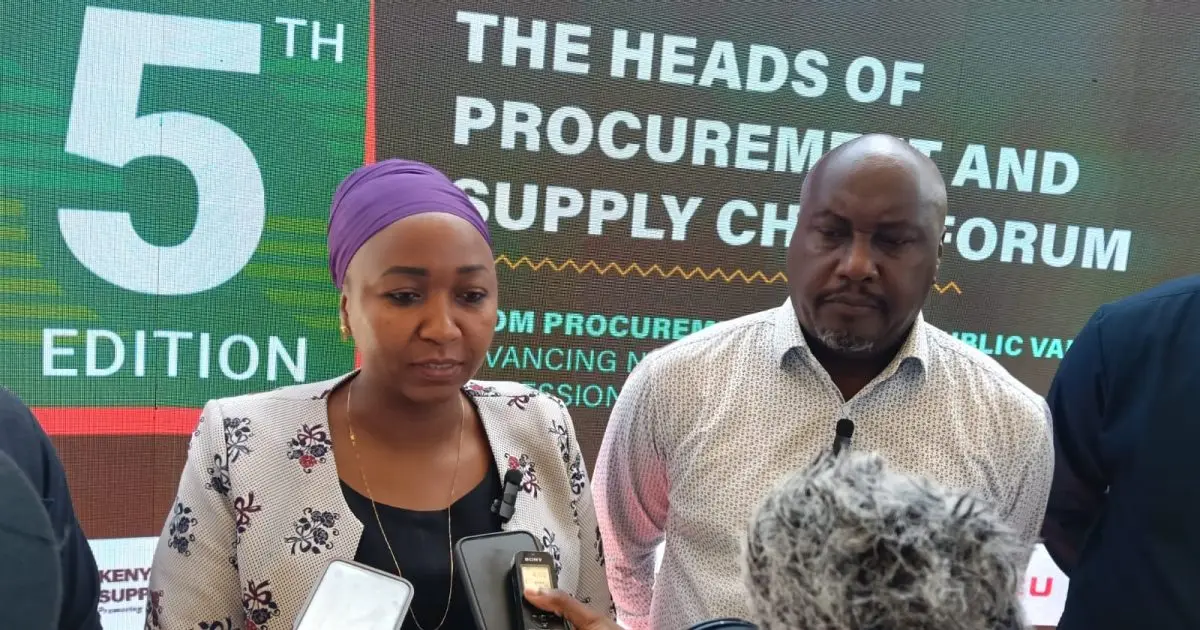
The projection was made at the close of the 5th Annual Heads of Procurement Conference in Mombasa. The event was organised by the Kenya Institute of Supplies Management (KISM) and brought together more than 500 heads of procurement and supply chain management from both the public and private sectors over five days.
Speaking during the closing ceremony, Deputy Head of the Public Service Amos Gathecha said the government had turned to digitalisation to seal loopholes that have long fuelled corruption in public procurement.
“To strengthen integrity, the government has adopted digitalisation because technology is the way to go,” Gathecha said. He added that the e-GP system now combines both budgeting and procurement plans on a single platform.
He explained that the system allows anyone participating in a tender to track the process from start to finish. The move is expected to boost transparency and value for money in public spending.
“We believe that in the fullness of time, this system is going to save government 10% of the procurement budget that we spend,” Gathecha said.
He added that funds disbursement had also been tied to the digital platform. Ministries and agencies can now only access money from the National Treasury for goods and services they have actually procured, rather than being issued blank cheques.
Gathecha said the government was deliberately partnering with professional bodies such as KISM, the Institute of Certified Public Accountants of Kenya (ICPAK), the Institute of Human Resource Management and the Law Society of Kenya. He described them as the first line of accountability for their members.
KISM Chairperson Jennifer Cirindi Njiro said the conference, which drew high level speakers including members of the National Assembly and the Senate, resolved to fully back the rollout of the EGP system. She noted that over 1,500 government entities have already been registered on the platform.
She said the forum also resolved to push for a full legislative review to professionalise procurement. This includes updating the Supplies Practitioners Management Act of 2007, the Supplies Practitioners Management Regulations, and the pending Public-Private Partnerships (PPP) Regulations. The aim is to have the laws enacted before Parliament proceeds on recess next year.
Njiro added that procurement officers had also resolved to mainstream Environmental, Social and Governance (ESG) principles into tendering processes nationwide to support environmental sustainability.
“We’ve also looked at issues of Environmental Social Governance, and we shall be streamlining environmental issues in our tenders across the country so that we support our planet as well,” Njiro said.