






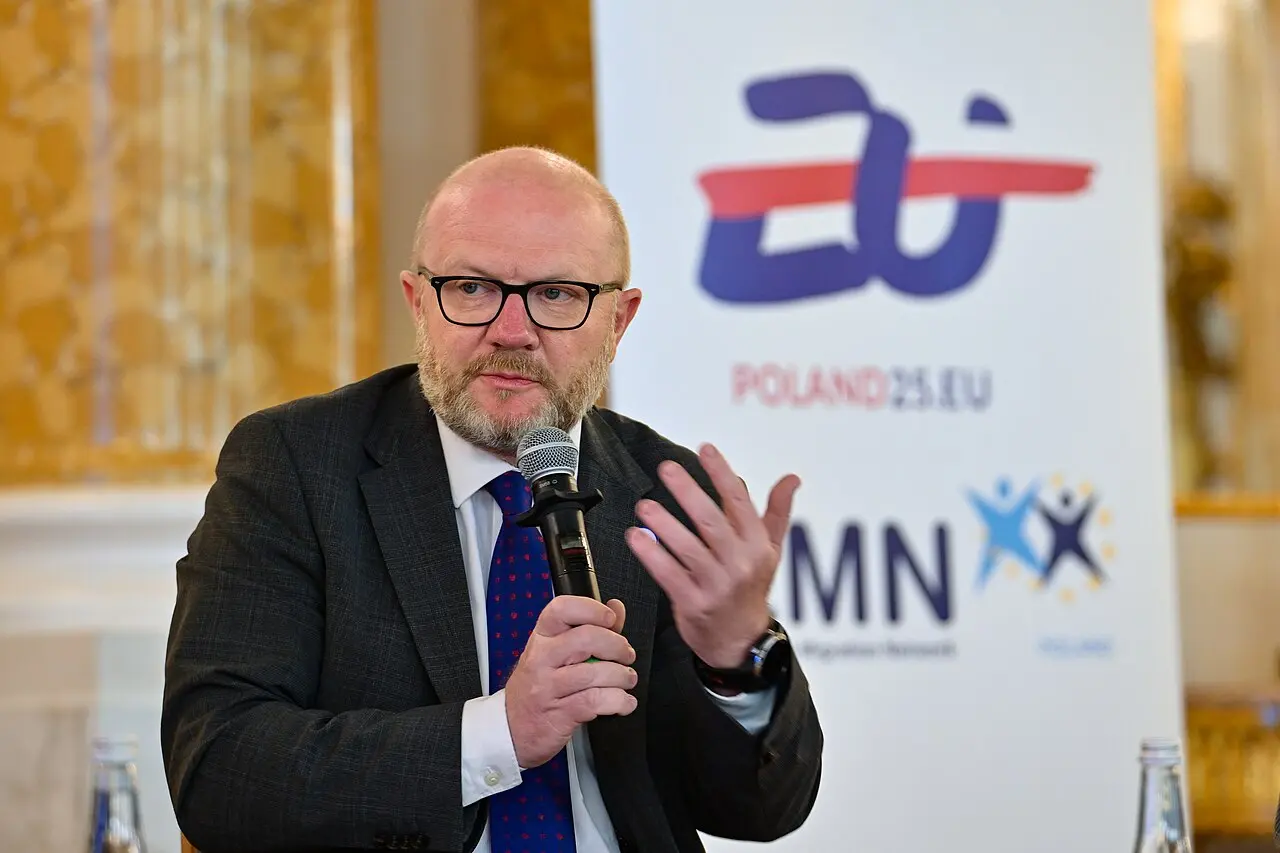
(WARSAW, POLAND) – Poland’s economy depends heavily on Ukrainian workers and would face serious disruption without them, according to Deputy Minister of the Interior and Administration Maciej Duszczyk. He said Ukrainians now fill labour gaps in trade, construction, transport and services across the country.
Duszczyk made the comments on the “Gość Wydarzeń” programme on Polsat News. He said the absence of Ukrainian workers would be felt immediately in daily life. “If it were not for Ukrainian citizens, we would wait 10 minutes for a bus instead of five. Because they fill the gaps in the Polish labour market. Therefore, a certain part of the Polish economy depends on refugees from Ukraine. If all Ukrainians united one day and did not go to work, the Polish economy would come to a standstill,” Duszczyk said.
The deputy minister also criticised a proposal by the Law and Justice party to deport unemployed Ukrainian men of conscription age from Poland. Public discussions mentioned a figure of around 3,000 people. Duszczyk said that number would make little difference. “Three thousand is a small brigade. Let me remind you that 900,000 people have been mobilized in Ukraine, so this is no help at all. In fact, those who do not work in Poland are people caring for their children with disabilities, or those who were wounded on the front line and are undergoing rehabilitation in Poland,” he said.
Duszczyk said a large share of Ukrainians may stay in Poland after the war ends. He said those who enrol their children in Polish schools, learn the language and work build stronger social and economic ties with the country. “In my opinion, the chances that many Ukrainians will return home are small, although there will be a return on such a scale; they will return, but their vital interests will be in Poland,” he said.
The comments come as Polish social media shows rising hostility toward Ukrainians. An analysis by the European analytical group Res Futura found that in July 2026, half of the comments about Ukrainians on Polish social media were hostile or negative. Michał Fedorowicz of Res Futura said the negative attitude has become an established trend.
“We are observing a rise in anti Ukrainian sentiment, and this trend has already become firmly established. Today, every second comment about Ukrainians in Poland is hostile or negative in nature. From our point of view, the key factor is the very widespread distribution of video content containing anti Ukrainian messages. In July, the topic of violence against Ukrainians undoubtedly dominated,” Fedorowicz said.
The analysis found that Ukrainians are most often defended by users over the age of 45 with pro European views. “The number of comments defending Ukrainians rose from 0.6% to almost 6%. This is not much, but it is the first noticeable increase in the number of comments defending Ukrainians in the past few months,” Fedorowicz added.
Over the past three months, the war in Ukraine itself has almost disappeared from Polish social media discussions. The focus has shifted to Polish Ukrainian relations and the Ukrainian minority in Poland.
Earlier on August 9, 2026, demonstrations under the slogan “Don’t be indifferent” took place in 22 Polish cities. The events were organised by the Committee for the Defence of Democracy as a response to rising violence against Ukrainians and other minorities. Protests were held in Warsaw, Kraków, Gdańsk, Poznań, Wrocław, Katowice, Rzeszów, Lublin, Łódź, Szczecin, Białystok and Kielce.
Organisers distributed stickers bearing the words “Don’t Be Indifferent” to be placed on shop doors, establishments and cars. The stickers were meant to signal to Ukrainians that they can count on help and feel safe in those places.
The demonstrations followed a series of violent incidents across Poland in recent weeks. These included the beating of a Ukrainian couple in Wrocław, an attack involving a baseball bat in Gliwice and insults directed at Ukrainian children on a bus in Bielsko Biała.
On August 8, 2026, a demonstration titled “My Poland Does Not Hit, Insult, or Harass” was held in Warsaw. Organisers submitted a petition signed by more than 11,000 people to the Chancellery of the Prime Minister and the Ministry of the Interior and Administration. The petition demanded decisive government action against brutal attacks on Ukrainian citizens.
On July 28, 2026, Prime Minister Donald Tusk called for an end to xenophobic attacks on Ukrainians in Poland. On July 19, 2026, a man attacked a 15 year old Ukrainian and his friend in Poland because they were speaking Ukrainian. Earlier on August 6, 2026, a man in Gdańsk attacked a Ukrainian and Poles, calling them “Banderites”.
Research centres including Res Futura and the University of Warsaw have pointed to a sharp increase in hate speech on Polish social media in May and June 2026.