









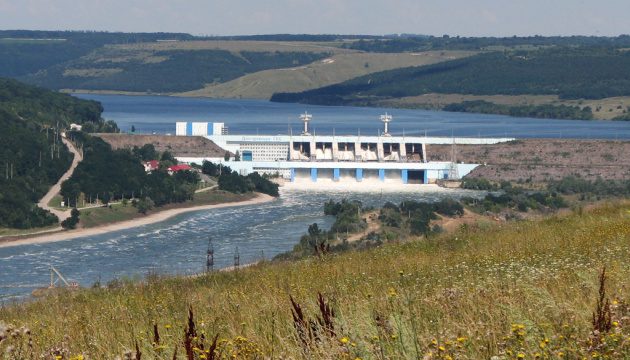
(KYIV, UKRAINE) – Ukraine and Moldova have agreed to reduce the water release from the Dnister hydroelectric complex to 75 cubic metres per second, down from 85 cubic metres per second set only days earlier, as the hydrological situation in the river basin continues to worsen.
The decision was taken during the fifth extraordinary meeting of the Commission for the Sustainable Use and Protection of the Dnister River Basin. Natural water inflow into the Dnister reservoir remains critically low and forecasts do not point to any improvement in the near term.
Ukraine has been restricting water use on its territory since June. Limitations now apply to 92 water users. Iryna Ovcharenko, deputy minister of economy and environment of Ukraine, said the severity of the situation demands a particularly responsible approach to every joint decision on water release from the Dnister complex.
The Ukrainian side also raised the matter of the Dubasari reservoir in Moldova, on which the water supply for the city of Chisinau depends. According to available information, total inflow into that reservoir stands at roughly 90 cubic metres per second, pointing to the existence of a lateral inflow below the Dnister reservoir. Ukraine asked the Moldovan side to provide more detailed information on actual water use from the Dubasari reservoir and for what purposes it is drawn.
Participants separately discussed meeting the drinking water needs of Chisinau. Ukraine said it remains ready to cooperate closely with Moldova, but stressed that any decisions must take into account the current critical water level in the Dnister and the operational limits of the Dnister reservoir.
The two sides agreed to continue round the clock monitoring of the Dnister’s water levels. Should conditions get worse, the Commission will convene again for an extraordinary session. A regular meeting of the Commission is scheduled for the end of August.
Data from the Ukrainian Hydrometeorological Centre shows that at the beginning of August the average inflow into the Dnister reservoir was 48 cubic metres per second, or 19 percent of the monthly norm. On 7 August the figure fell to 42 cubic metres per second, equivalent to 17 percent of the norm. That marks the lowest inflow recorded since the reservoir was first filled in 1985.
At the previous extraordinary meeting on 31 July, the Commission had set the release from the Dnister complex at 85 cubic metres per second. On 4 August, at the invitation of Ovcharenko, a Moldovan delegation visited the Dnister reservoir to assess the hydrological conditions on the ground and their effect on water supplies for communities in Ukraine.